How To Determine The Charge of Elements and Ions - Chemistry
TL;DR
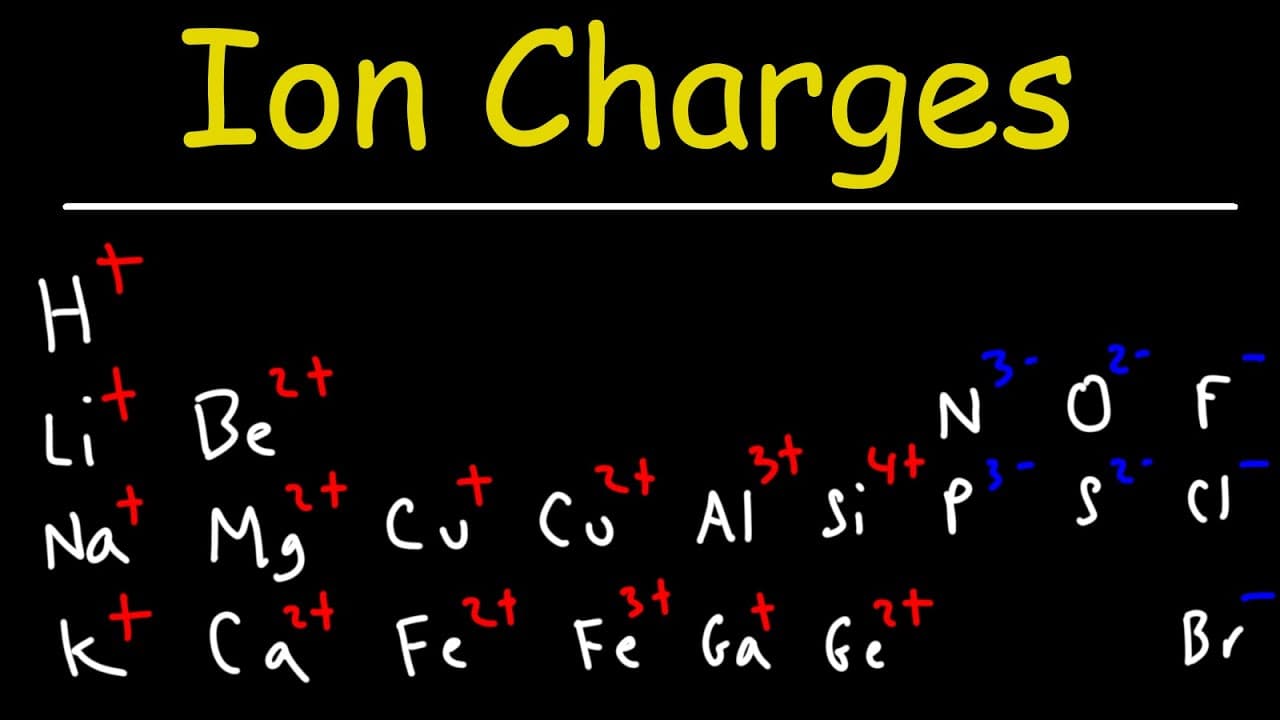
This lesson explains how to determine the charge of elements when they become ions based on the number of valence electrons.
Transcript
in this lesson we're going to talk about how to determine the charge of an element when it becomes an ion so the first thing you need to be familiar with is the monoatomic ions based on a periodic table so if you go to Google images and if you download a periodic table you'll see these elements on the left you have hydrogen after that is lithium so... Read More
Key Insights
- 😑 The number of valence electrons in an atom can determine the charge it will have when it becomes an ion.
- 💁 Metals typically form positively charged ions, while non-metals form negatively charged ions.
- 🈂️ Group 3A elements can have both +1 and +3 charges, while group 4A elements can have both +2 and +4 charges.
- 😑 Polyatomic ions, such as sulfite and nitrite, have different charges than their corresponding monoatomic ions.
Install to Summarize YouTube Videos and Get Transcripts
Explore YouTube Video Summarizer or Get YouTube Transcript Extractor
Questions & Answers
Q: How do the alkali metals acquire a positive charge when they become ions?
Alkali metals (e.g. sodium) have one valence electron. When they react and give up this electron, they acquire a positive charge, typically +1.
Q: How do alkaline earth metals form ions with a +2 charge?
Alkaline earth metals (e.g. calcium) have two valence electrons. When they react and give up these two electrons, they acquire a +2 charge.
Q: Are there elements in group 3A that can have both +1 and +3 charges?
Yes, elements in group 3A (e.g. gallium) with three valence electrons can either give up all three electrons and have a +3 charge or give up only one electron and have a +1 charge, depending on the reaction conditions.
Q: How do group 4A elements determine their charge when becoming ions?
Group 4A elements (e.g. silicon) with four valence electrons can either give up all four electrons and have a +4 charge or give up only two electrons and have a +2 charge.
Summary & Key Takeaways
-
Monoatomic ions are elements that have acquired a positive charge when they become ions, such as alkali metals (e.g. sodium) which typically have a +1 charge.
-
Alkaline earth metals (e.g. calcium) have two valence electrons and typically form a +2 charge when they become ions.
-
Group 3A (e.g. gallium) elements with three valence electrons can form a +1 or +3 charge depending on the reaction conditions.
-
Group 4A elements (e.g. silicon) with four valence electrons can form a +2 or +4 charge.
-
Non-metals, such as group 5A (e.g. nitrogen) and group 6A (e.g. oxygen), form negatively charged ions with the number of valence electrons determining the charge.
Read in Other Languages (beta)
Share This Summary 📚
Summarize YouTube Videos and Get Video Transcripts with 1-Click
Try YouTube Summary with ChatGPT & Claude or YouTube Transcript Generator
Explore More Summaries from The Organic Chemistry Tutor 📚


Summarize YouTube Videos and Get Video Transcripts with 1-Click
Try YouTube Summary with ChatGPT & Claude or YouTube Transcript Generator