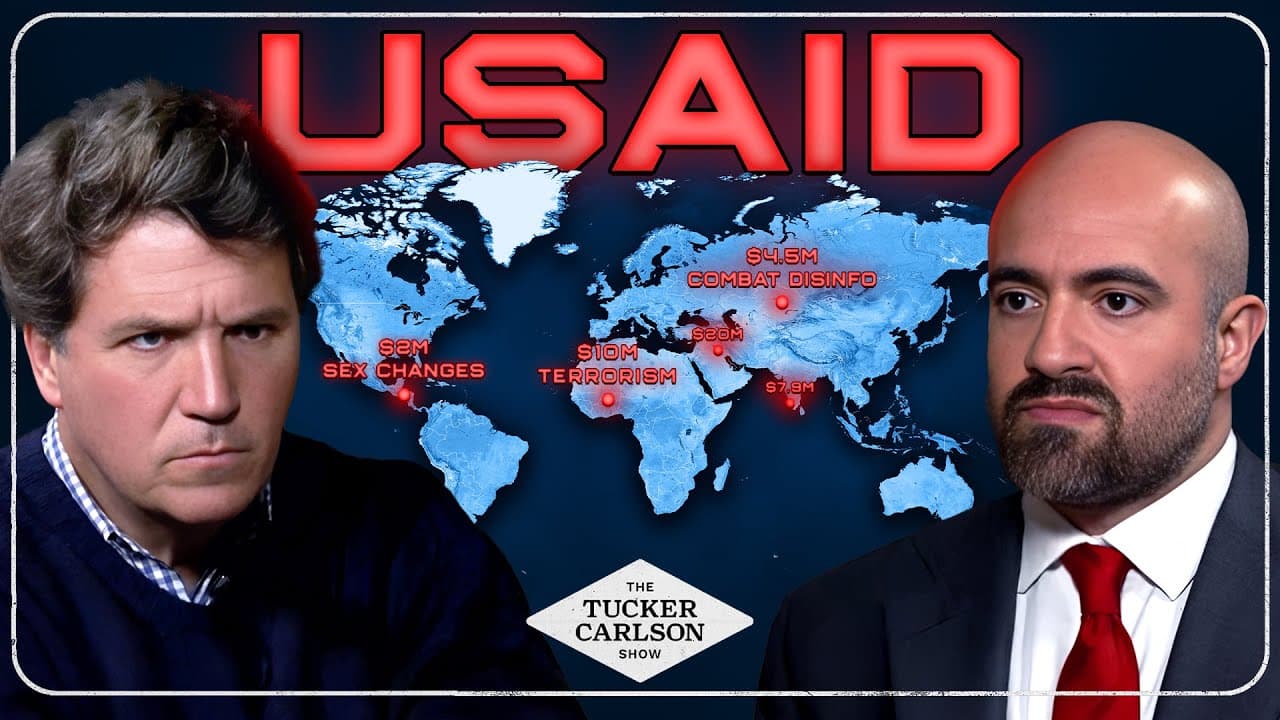
Mike Benz Takes Us Down the USAID Rabbit Hole (It’s Worse Than You Think)
TL;DR
USAID's covert operations impact global politics and domestic policies.
Transcript
so you more than anyone for the past couple of years have been Awakening the rest of the country and the world to this Nexus between public and private sector NOS nonprofits US government agencies whose acronyms you don't recognize and you've described an entire complex that affects sensorship regime change all kinds of sinister unc... Read More
Key Insights
- USAID's operations are deeply intertwined with both foreign and domestic political agendas, often influencing regime changes and media narratives.
- The revelation of USAID's influence has sparked a national consciousness, questioning the morality and transparency of its actions.
- USAID's funding is often disguised as humanitarian aid, yet it supports strategic interests that may not align with its public image.
- The agency's actions have been compared to covert operations, bypassing traditional oversight and accountability mechanisms.
- USAID's influence extends to media and social platforms, shaping public perception and policy both domestically and internationally.
- The agency's operations have financial ties to major corporations, raising concerns about the intersection of public policy and private profit.
- USAID's activities have been linked to social unrest, drawing parallels between foreign and domestic protest movements.
- The current political climate presents an opportunity to reform USAID, aligning its actions with transparent and ethical governance.
Install to Summarize YouTube Videos and Get Transcripts
Explore YouTube Video Summarizer or Get YouTube Transcript Extractor
Questions & Answers
Q: What is the primary concern regarding USAID's operations?
The primary concern is USAID's covert operations, which have significant influence on global politics and domestic policies. These actions often bypass traditional oversight mechanisms, raising questions about accountability and transparency. The agency's funding is frequently disguised as humanitarian aid, yet it supports strategic interests that may not align with its public image.
Q: How has USAID's influence affected domestic politics?
USAID's influence extends to domestic politics through its impact on media and social platforms, shaping public perception and policy. The agency's operations have been linked to social unrest, drawing parallels between foreign and domestic protest movements. This has led to a reevaluation of USAID's role and its impact on American politics.
Q: What opportunity does the current political climate present regarding USAID?
The current political climate presents an opportunity to reform USAID, aligning its actions with transparent and ethical governance. There is a growing national consciousness about the agency's influence, prompting discussions on the morality of its actions. Comprehensive reform could address concerns about accountability and transparency in its operations.
Q: How are USAID's operations linked to major corporations?
USAID's operations have financial ties to major corporations, raising concerns about the intersection of public policy and private profit. The agency's actions often benefit corporate interests, which may not align with its public image as a humanitarian organization. This relationship highlights the need for transparency and accountability in USAID's funding and operations.
Q: What parallels can be drawn between USAID's foreign and domestic influence?
USAID's influence in foreign countries often involves covert operations that bypass traditional oversight, similar to its impact on domestic policies. The agency's actions have been linked to social unrest, drawing parallels between foreign and domestic protest movements. This similarity raises questions about the agency's role in shaping political agendas both globally and within the United States.
Q: How has the revelation of USAID's influence impacted public perception?
The revelation of USAID's influence has sparked a national consciousness, prompting discussions on the morality of its actions. There is growing awareness of the agency's covert operations and their impact on global politics and domestic policies. This has led to a reevaluation of USAID's role and calls for comprehensive reform to ensure transparency and accountability.
Q: What are the implications of USAID's funding being disguised as humanitarian aid?
USAID's funding is often disguised as humanitarian aid, yet it supports strategic interests that may not align with its public image. This raises concerns about the agency's transparency and the true intentions behind its operations. The implications include potential misuse of funds and the need for reform to ensure that USAID's actions align with ethical and transparent governance.
Q: What is the significance of USAID's impact on media narratives?
USAID's impact on media narratives is significant as it shapes public perception and policy both domestically and internationally. The agency's influence extends to media and social platforms, which can sway public opinion and political agendas. This highlights the need for transparency in USAID's operations and its relationship with media outlets to ensure unbiased and accurate reporting.
Summary & Key Takeaways
-
USAID's covert operations have been exposed, revealing their significant influence on global politics and domestic policies. These actions often bypass traditional oversight, raising questions about accountability and transparency. The agency's funding is frequently disguised as humanitarian aid, yet it supports strategic interests that may not align with its public image.
-
The revelation of USAID's influence has sparked a national consciousness, prompting discussions on the morality of its actions. The agency's operations are deeply intertwined with both foreign and domestic political agendas, influencing regime changes and media narratives. This has led to a reevaluation of USAID's role and its impact on American and global politics.
-
The current political climate presents an opportunity to reform USAID, aligning its actions with transparent and ethical governance. The agency's influence extends to media and social platforms, shaping public perception and policy. Its financial ties to major corporations raise concerns about the intersection of public policy and private profit, highlighting the need for comprehensive reform.
Read in Other Languages (beta)
Share This Summary 📚
Summarize YouTube Videos and Get Video Transcripts with 1-Click
Try YouTube Summary with ChatGPT & Claude or YouTube Transcript Generator
Explore More Summaries from Tucker Carlson 📚

Summarize YouTube Videos and Get Video Transcripts with 1-Click
Try YouTube Summary with ChatGPT & Claude or YouTube Transcript Generator