The hippest internet cafe of 1995
TL;DR
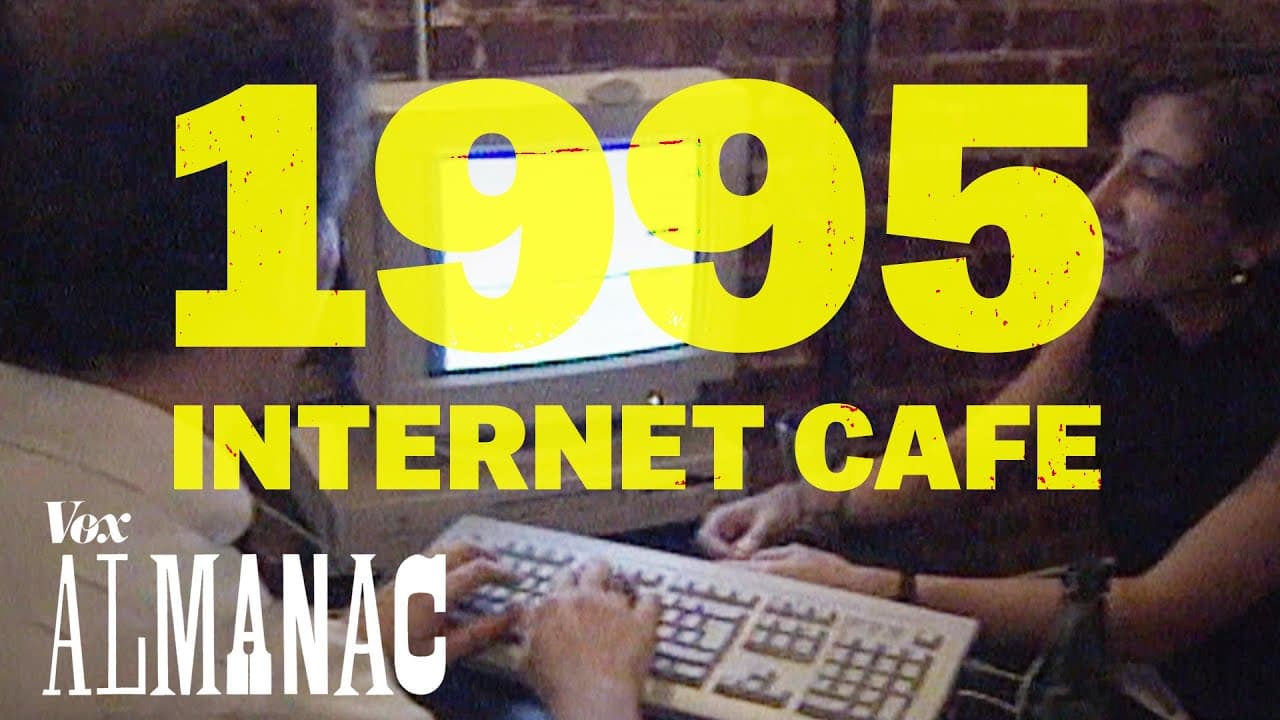
The @ Cafe was a pioneering internet cafe in 1995.
Transcript
"Dude it was called @ Cafe — and they didn't know what the @ symbol was." "Welcome to @ Cafe, as in that little a with a circle around it." "I was actually bitter that I named it @ Cafe. I had to explain to everybody, every reporter, every human, every — even people who came to work there — I had to explain what the @ symbol was." "That little mark... Read More
Key Insights
- The @ Cafe was one of New York's first internet cafes, opening in 1995, when the internet was still a novelty for many.
- The founders faced challenges explaining the @ symbol's relevance to email, highlighting early internet unfamiliarity.
- The cafe's location at 12 St. Marks Place was historically significant, previously housing a bookstore and a German-American club.
- The founders were inspired by Japanese tabletop video game culture, envisioning a similar social space for internet use.
- Despite its pioneering status, the cafe struggled financially, partly due to high costs of a T1 internet connection.
- The cafe attracted a diverse clientele, including artists, hackers, and students, making it a cultural hotspot.
- The business closed in 1996, unable to sustain itself financially, but it was a visionary project ahead of its time.
- Today, 12 St. Marks Place is home to apartments and a yoga studio, a far cry from its past as an internet cafe.
Install to Summarize YouTube Videos and Get Transcripts
Explore YouTube Video Summarizer or Get YouTube Transcript Extractor
Questions & Answers
Q: What inspired the founders to create @ Cafe?
The founders of @ Cafe were inspired by the Japanese tabletop video game culture, where people could socialize over games in cafes. Having experienced this culture firsthand, they envisioned a similar space for internet use, where people could explore the new medium in a social environment, despite the public's unfamiliarity with the internet.
Q: Why was the @ symbol significant in the cafe's name?
The @ symbol in the cafe's name was significant because it represented email, a concept that was still new to many people at the time. The founders often had to explain its relevance, as the symbol was not widely understood. This highlights the early stage of internet adoption and the challenges of introducing new technology to the public.
Q: What challenges did the cafe face in its operation?
The @ Cafe faced several challenges, including high operational costs, especially for the T1 internet connection, which was expensive at $9000 a month. Additionally, the founders had limited resources and knowledge about running an internet cafe, leading to creative but makeshift solutions like using ice to cool the server room. These challenges contributed to the cafe's financial struggles.
Q: Who were some of the cafe's notable patrons?
The @ Cafe attracted a diverse and notable clientele, including artists, college students, and hackers. One of the most famous patrons was Phiber Optik, a well-known hacker who frequented the cafe after his release from jail. The cafe became a cultural hub, drawing media attention and visitors from as far as Japan, eager to experience the unique internet space.
Q: How did the cafe's location contribute to its significance?
The cafe's location at 12 St. Marks Place contributed to its significance due to the site's rich history. Previously, it housed a German-American club and a bookstore, adding a layer of cultural and historical depth. The founders saw this as symbolic of the internet's new media status, choosing the location to align with their vision of creating a physical space for virtual exploration.
Q: What role did the cafe play in the early internet culture?
The @ Cafe played a pivotal role in early internet culture by offering a space where people could experience the internet's potential. It hosted web launch parties and served as a gathering place for tech enthusiasts, artists, and students. The cafe helped demystify the internet, fostering a community around this emerging technology and contributing to the cultural shifts of the 1990s.
Q: Why did the @ Cafe ultimately close?
The @ Cafe ultimately closed due to a combination of financial challenges and the difficulty of sustaining a business model that was ahead of its time. Despite its cultural impact and innovative concept, the cafe struggled to break even, partly due to the high cost of maintaining a T1 internet connection. Additionally, running a restaurant posed its own set of challenges, contributing to the decision to close.
Q: What is the current state of 12 St. Marks Place?
Today, 12 St. Marks Place no longer serves as an internet cafe. The building has been repurposed and now houses apartments, a yoga studio, and a Latin organic vegan restaurant. This transformation reflects the changing landscape of the area and the evolution of internet culture, moving from communal spaces like @ Cafe to more private internet access in homes and other venues.
Summary & Key Takeaways
-
In 1995, @ Cafe opened as one of New York's first internet cafes, offering a social space for people to explore the burgeoning internet. Despite its innovative concept, the cafe struggled financially due to high operational costs and ultimately closed in 1996, leaving a legacy as a cultural hotspot.
-
The cafe was located at 12 St. Marks Place, a site with a rich history, previously housing a German-American club and a bookstore. The founders drew inspiration from Japanese gaming culture, aiming to create a similar environment for internet users, but faced challenges in educating the public about the internet.
-
The cafe attracted a diverse crowd, including artists, hackers, and students, and hosted numerous web launch parties. Despite its closure, the cafe was a pioneering venture that highlighted the early days of internet adoption and the cultural shifts it brought. Today, the location serves different purposes, reflecting the passage of time.
Read in Other Languages (beta)
Share This Summary 📚
Summarize YouTube Videos and Get Video Transcripts with 1-Click
Try YouTube Summary with ChatGPT & Claude or YouTube Transcript Generator
Explore More Summaries from Vox 📚



Summarize YouTube Videos and Get Video Transcripts with 1-Click
Try YouTube Summary with ChatGPT & Claude or YouTube Transcript Generator