Life in Flammable Ice
TL;DR
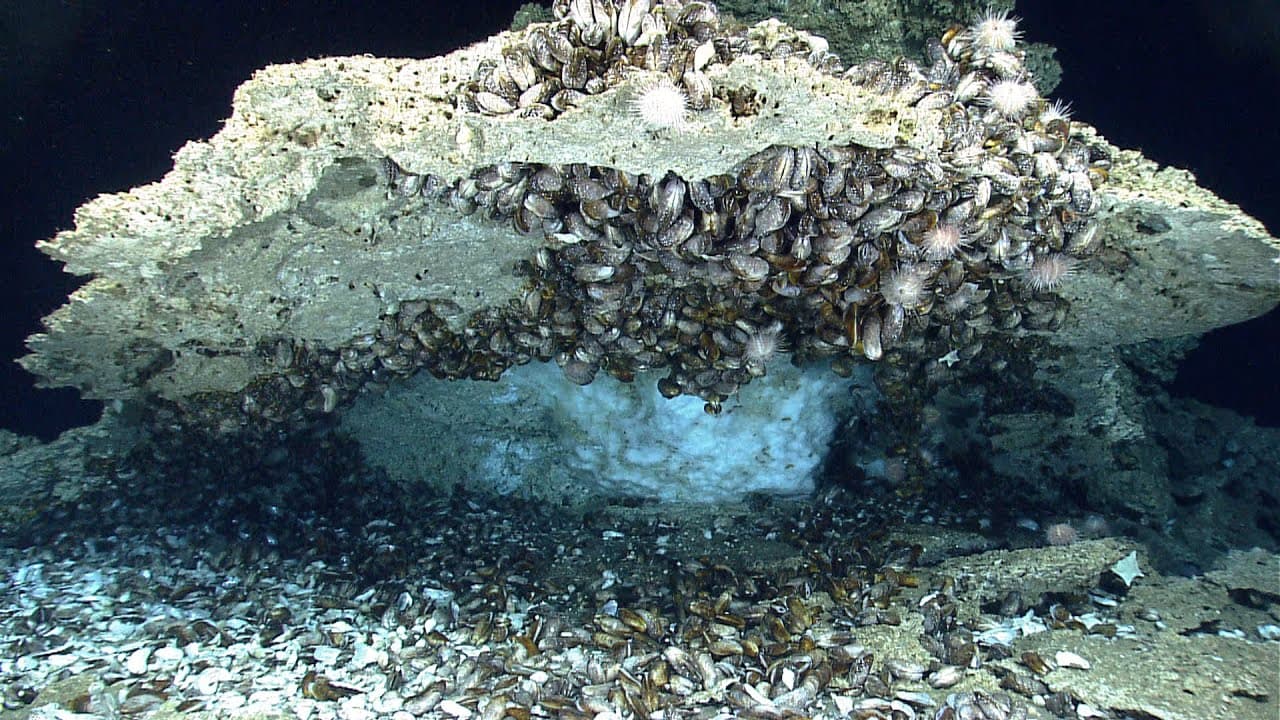
Methane clathrate, or flammable ice, is discovered on Earth and is found to potentially harbor microbial life in extreme conditions. This has implications for the possibility of life on exoplanets.
Transcript
One of the strangest substances to be found on planet earth is a material that was once thought to be impossible outside of the very cold outer solar system. That was until oceanic deposits of it were found here on earth in the 1960’s. It’s methane clathrate, or also often termed methane hydrate, or flammable ice. This substance occurs where methan... Read More
Key Insights
- 😘 Methane clathrate, or flammable ice, is a substance formed when methane gas is trapped within a lattice of water molecules under high pressure and low temperature conditions.
- 👻 Methane hydrate deposits on Earth can host microbial life in extreme conditions, expanding the possibilities for habitable environments.
- 🤨 The presence of methane hydrate on exoplanets, especially in cold and icy environments, raises the possibility of finding life beyond Earth.
- 💆 Methane clathrates have been implicated in past mass extinctions on Earth, but recent studies suggest this hypothesis is unlikely.
- 🤕 Methane release from clathrates may have affected the Earth's climate and played a role in warming periods during the last ice age.
- ❓ The effects of methane clathrates on future extinctions and climate events on Earth are still uncertain.
- 😚 Detecting microbial life within methane hydrate or similar environments on exoplanets would require close examination, making it a challenging endeavor.
Install to Summarize YouTube Videos and Get Transcripts
Explore YouTube Video Summarizer or Get YouTube Transcript Extractor
Questions & Answers
Q: What is methane clathrate and how is it formed?
Methane clathrate, or flammable ice, is a substance formed when methane gas is trapped within a lattice of water molecules under high pressure and low temperature conditions. It occurs naturally in oceanic deposits and is also produced as a byproduct of microbial activity.
Q: How was the discovery of microbial life within methane hydrate made?
The discovery of microbial life within methane hydrate was accidental. Researchers studying the material for another purpose noticed odd discolored spheroids or bubbles within the methane hydrate that didn't look normal. Further study revealed that these bubbles contained living microorganisms.
Q: What is the astrobiological significance of methane hydrate?
Methane hydrate on Earth is partially produced by microbes consuming organic materials within the ocean. This suggests that similar environments on exoplanets, such as cold ice shell worlds like Europa, could potentially host life. The presence of methane hydrate expands the range of habitable environments that could support life.
Q: How likely is it to find similar life forms on exoplanets?
Finding microbial life within methane hydrate or similar environments on exoplanets would be challenging. Current detection methods would not be able to detect such life from a distance. A close examination of the exoplanet's ices would be necessary to find any evidence of life.
Summary & Key Takeaways
-
Methane clathrate, also known as flammable ice, is a substance found on Earth in the form of ice where methane is trapped in the presence of water under high pressure.
-
These deposits are relatively common and act as a reservoir for extracting natural gas.
-
Surprisingly, methane hydrate deposits have been found to host microbial life in high-pressure and low-temperature conditions.
Read in Other Languages (beta)
Share This Summary 📚
Summarize YouTube Videos and Get Video Transcripts with 1-Click
Try YouTube Summary with ChatGPT & Claude or YouTube Transcript Generator
Explore More Summaries from John Michael Godier 📚



Summarize YouTube Videos and Get Video Transcripts with 1-Click
Try YouTube Summary with ChatGPT & Claude or YouTube Transcript Generator