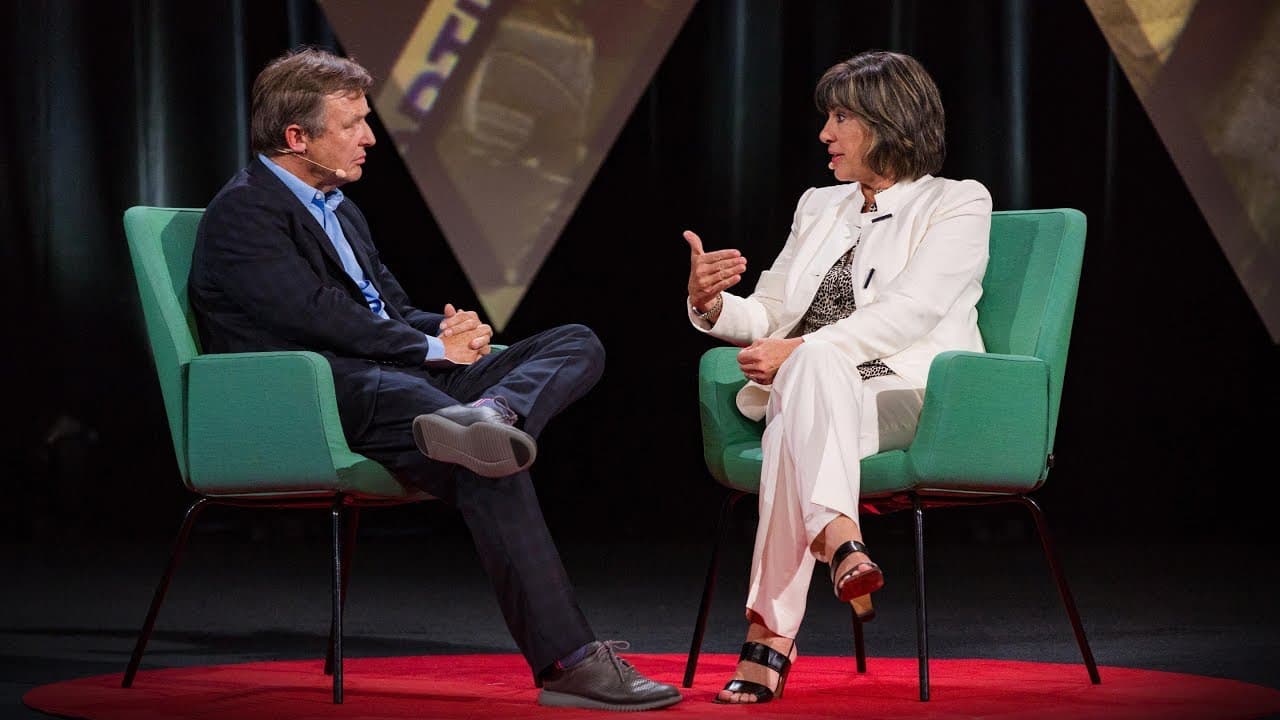
How to seek truth in the era of fake news | Christiane Amanpour
TL;DR
Christiane Amanpour discusses the alarming rise of fake news and the importance of truth and responsible news consumption.
Transcript
Chris Anderson: Christiane, great to have you here. So you've had this amazing viewpoint, and perhaps it's fair to say that in the last few years, there have been some alarming developments that you're seeing. What's alarmed you most? Christiane Amanpour: Well, just listening to the earlier speakers, I can frame it in what they've been saying: clim... Read More
Key Insights
- 🌍 Climate change is a major threat to our environment and lives, and distinguishing between truth and fake news is crucial for solving the issue.
- 🗞️ Journalists need to understand objectivity, which means giving all sides an equal hearing, but not treating all sides equally when there is a clear moral or factual distinction.
- 📰 The rise of fake news is alarming, especially when it is propagated by world leaders like the President of the United States, as it has a negative impact on credibility and people's perceptions.
- 🖥️ Technology and social media platforms like Facebook and Twitter have contributed to the spread of fake news, but they need to take responsibility and create algorithms or filters to fight it.
- 🤔 The internet and technology, despite its promise of democratizing information, have actually led to the proliferation of misinformation and biased narratives.
- 💡 Technology needs a moral compass and should be guided by the values of truth and accuracy to combat the spread of fake news.
- 🌐 The world is currently experiencing a leadership vacuum, and it is essential to have leaders like Emmanuel Macron who are willing to confront nationalism, tribalism, and anti-globalization.
- 📚 Taking responsibility for the information we consume and sticking to trusted sources is crucial in a world filled with severe crises and challenges that require global citizens to be well-informed.
Install to Summarize YouTube Videos and Get Transcripts
Explore YouTube Video Summarizer or Get YouTube Transcript Extractor
Questions & Answers
Q: What has alarmed Christiane Amanpour the most in recent years?
Christiane Amanpour is most alarmed by the spread of fake news and the inability to distinguish between the truth and false information. This has made it more difficult to solve important issues such as climate change and threatens our ability to make informed decisions.
Q: In the past, Christiane Amanpour has spoken out against neutrality. Does she believe that journalists today are ignoring this advice?
Christiane Amanpour believes that journalists today may not fully understand the concept of objectivity. While it is important to give all sides an equal hearing, she emphasizes that this does not mean treating all sides equally. There are situations, such as during the Balkan Wars, where being neutral would make one an accomplice to grave violations of human rights.
Q: How does Christiane Amanpour characterize the phenomenon of fake news?
Christiane Amanpour sees the rise of fake news as a major problem, particularly in the age of social media and algorithms. She believes that the internet, instead of exponentially expanding access to more democracy and information, has led to the proliferation of false and biased information that goes unchecked. The lack of curation and mediation by trusted sources is a dangerous development.
Q: If she had the opportunity, what would Christiane Amanpour say to the leaders of Facebook, Twitter, and Google?
Christiane Amanpour would urge the leaders of major tech companies to address the issue of fake news and filter out false information. She acknowledges that while these platforms have connected people and revolutionized communication, they need to take responsibility for the impact they have on the spread of misinformation. A "moral technology" or algorithm that filters out deliberate lies and maintains a code of professional ethics is necessary.
Q: Who has Christiane Amanpour been impressed and inspired by in terms of leadership?
Christiane Amanpour was impressed by the French president, Emmanuel Macron, during their interview. She found his willingness to answer questions without spin or evasion refreshing. Macron's stance against nationalism and his recognition of the dangers it poses impressed her. Additionally, she mentioned the outgoing president of Liberia, Ellen Johnson Sirleaf, who plans to step down after her prescribed term as a lesson in leadership.
Q: What idea does Christiane Amanpour believe everyone should take to heart?
Christiane Amanpour encourages individuals to be careful about where they get their information and to take responsibility for seeking out trusted sources. She emphasizes the importance of appreciating the truth, understanding science, empirical evidence, and facts as global citizens. Alongside the pursuit of truth, she also highlights the need to cultivate love and empathy, as demonstrated in her conversation with Emmanuel Macron about the importance of having someone who tells you the truth at home.
Summary & Key Takeaways
-
Christiane Amanpour discusses the alarming developments surrounding climate change, fake news, and the erosion of truth in today's society.
-
She argues that objectivity in journalism does not mean treating all sides equally, but rather giving all sides an equal hearing while maintaining a commitment to the truth.
-
Amanpour calls on technology companies to develop algorithms that filter out fake news and uphold a moral compass in order to combat the spread of misinformation.
Read in Other Languages (beta)
Share This Summary 📚
Summarize YouTube Videos and Get Video Transcripts with 1-Click
Try YouTube Summary with ChatGPT & Claude or YouTube Transcript Generator
Explore More Summaries from TED 📚


Summarize YouTube Videos and Get Video Transcripts with 1-Click
Try YouTube Summary with ChatGPT & Claude or YouTube Transcript Generator