How to Train a Dog for Competitive Retrieval
TL;DR
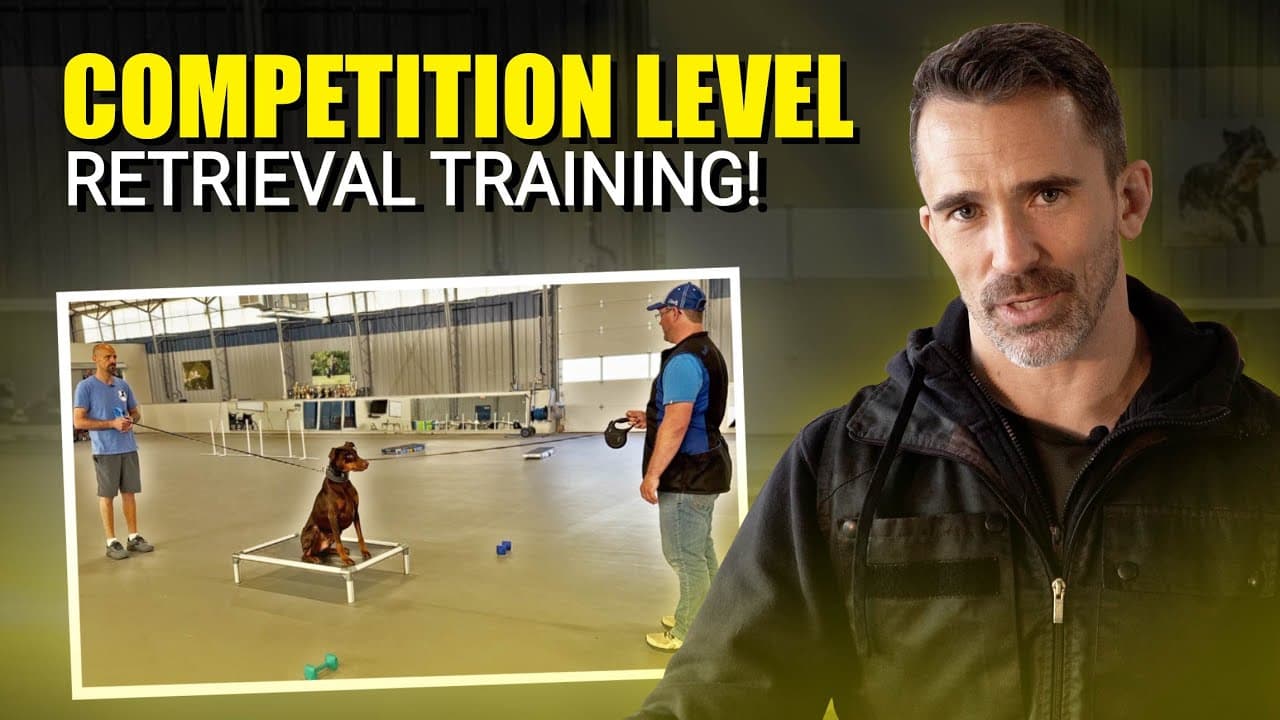
To train a dog for competitive retrieval, use two identical dumbbells and a climb. Start by guiding the dog with directional cues and rewarding the desired behavior. Consistently challenge the dog by directing them opposite to their natural inclination, ensuring they follow commands even under distraction, and gradually increase the complexity of the tasks.
Transcript
welcome back to another episode Nate Sher certified professional Master dog trainer we are here at kennelwood Academy working with one of my very first mentors excellent dog trainer I've looked up to him for a long time Dave Aden garding and we're going to be doing some retrieval training so let's not waste any time and Jump Right In All right so h... Read More
Key Insights
- Competitive retrieval training involves using two identical dumbbells and a climb to guide the dog.
- Directional cues are crucial for teaching the dog to retrieve specific items.
- Rewarding the dog for correct actions reinforces desired behaviors and enhances training reliability.
- Challenging the dog by directing them opposite to their natural inclination improves obedience.
- Consistency in commands and rewards helps the dog understand expectations and improve performance.
- Training requires patience and gradual increase in task complexity to ensure success.
- Using a helper can prevent mistakes and aid in correcting the dog's actions during training.
- Understanding the dog's behavior and adjusting techniques accordingly is key to effective training.
Install to Summarize YouTube Videos and Get Transcripts
Explore YouTube Video Summarizer or Get YouTube Transcript Extractor
Questions & Answers
Q: How to train a dog for competitive retrieval?
Training a dog for competitive retrieval involves using two identical dumbbells and a climb to guide the dog. Start by giving directional cues and rewarding the dog for correct actions. Consistently challenge the dog by directing them opposite to their natural inclination, ensuring they follow commands even under distraction. Gradually increase the complexity of tasks to improve reliability and performance.
Q: What are the key elements of competitive retrieval training?
The key elements of competitive retrieval training include using directional cues, rewarding desired behaviors, and challenging the dog by directing them opposite to their natural inclination. Consistency in commands and rewards is crucial to enhance obedience and reliability. Gradually increasing task complexity and using a helper to prevent mistakes can further aid in training.
Q: Why is consistency important in dog training?
Consistency is important in dog training because it helps the dog understand expectations and reinforces desired behaviors. By consistently using the same commands and rewards, the dog learns to associate specific actions with positive outcomes, improving obedience and reliability. Consistency also reduces confusion and enhances the overall effectiveness of training.
Q: How can directional cues improve dog training?
Directional cues improve dog training by guiding the dog to perform specific actions or retrieve certain items. These cues help the dog understand which direction to go and what is expected of them. By consistently using directional cues, trainers can enhance the dog's ability to follow commands, even under distraction, and improve overall training reliability.
Q: What role does rewarding play in competitive retrieval training?
Rewarding plays a crucial role in competitive retrieval training by reinforcing desired behaviors and encouraging the dog to repeat them. By rewarding the dog for correct actions, trainers can enhance obedience and reliability. Rewards serve as positive reinforcement, motivating the dog to follow commands and perform tasks as expected, ultimately improving performance.
Q: How to challenge a dog during retrieval training?
To challenge a dog during retrieval training, direct them opposite to their natural inclination, ensuring they follow commands even when it's not their preferred action. This approach helps improve obedience and reliability. Gradually increase the complexity of tasks, such as varying the distance or introducing distractions, to further challenge the dog and enhance their training.
Q: What techniques can help prevent mistakes in dog training?
Using a helper can prevent mistakes in dog training by providing additional guidance and correcting the dog's actions. Consistency in commands and rewards helps the dog understand expectations, reducing confusion. Anticipating potential issues and adjusting techniques accordingly can also prevent mistakes and enhance the overall effectiveness of training.
Q: Why is understanding dog behavior important in training?
Understanding dog behavior is important in training because it allows trainers to adjust techniques and approaches based on the dog's responses. By recognizing the dog's natural inclinations and preferences, trainers can tailor their methods to effectively guide the dog and improve performance. This understanding enhances the overall success and reliability of the training process.
Summary & Key Takeaways
-
Competitive retrieval involves training a dog to follow specific commands using directional cues and rewards. The process begins with guiding the dog using two identical dumbbells and a climb, challenging them to follow commands even when opposite to their natural inclination. Consistent training with gradual complexity increases reliability and performance.
-
The key to successful competitive retrieval training is consistency in commands and rewards. By directing the dog opposite to their natural inclination and rewarding correct actions, trainers can enhance obedience and reliability. Using a helper can prevent mistakes and aid in correcting the dog's actions during training.
-
Understanding the dog's behavior and adjusting techniques accordingly is crucial for effective training. Patience and gradual increase in task complexity ensure success. Training requires using directional cues, rewarding desired behaviors, and challenging the dog to follow commands even under distraction to improve performance.
Read in Other Languages (beta)
Share This Summary 📚
Summarize YouTube Videos and Get Video Transcripts with 1-Click
Try YouTube Summary with ChatGPT & Claude or YouTube Transcript Generator
Explore More Summaries from Nate Schoemer 📚



Summarize YouTube Videos and Get Video Transcripts with 1-Click
Try YouTube Summary with ChatGPT & Claude or YouTube Transcript Generator