How to Balance Advanced Redox Equations Effectively
TL;DR
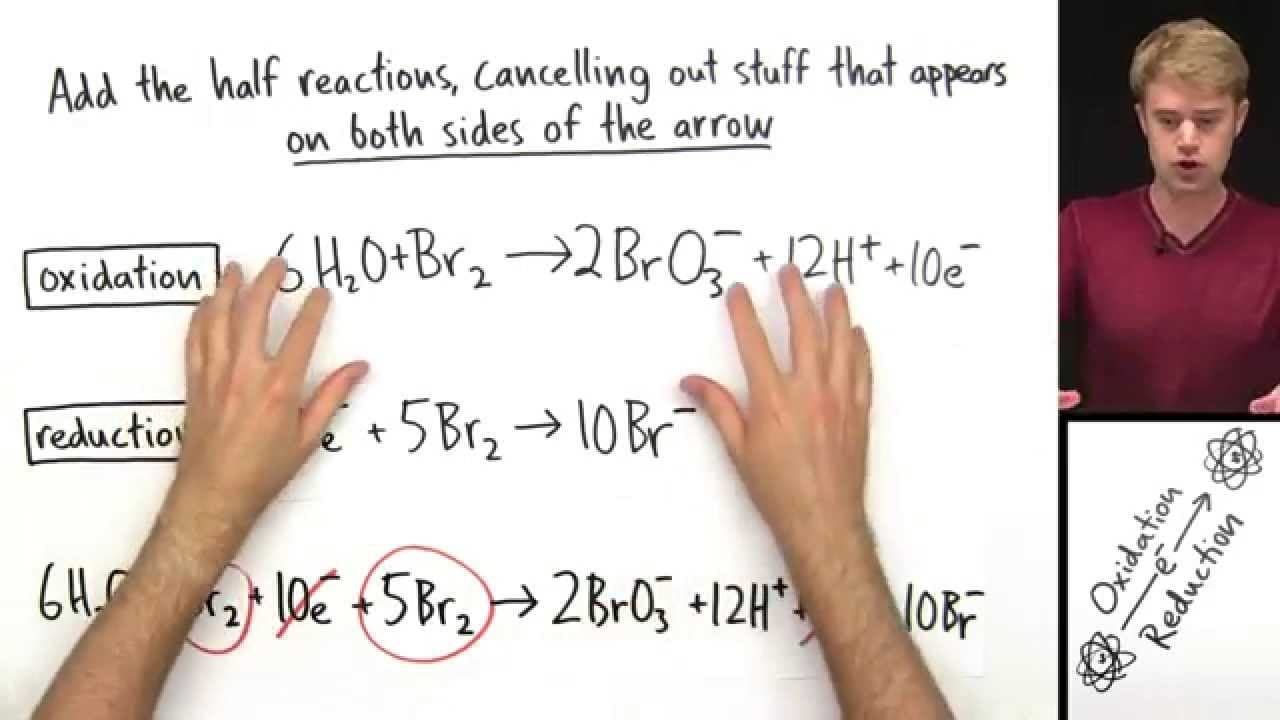
To effectively balance advanced redox equations, determine oxidation numbers and write half-reactions for oxidation and reduction. Balance all atoms and charges, then combine the half-reactions, ensuring the number of electrons is equal. Finally, perform a final check to confirm the accuracy of the balanced equation.
Transcript
here's another practice problem we are going to be balancing the equation here now this example is more advanced than the previous ones but it represents a really common type of question where we have one compound here that is both getting oxidized and reduced at the same time we'll talk more about that later but the point is if you work through th... Read More
Key Insights
- ⚖️ Balancing advanced redox equations involves determining oxidation numbers and writing half reactions for oxidation and reduction.
- 🎁 Bromine can have different oxidation numbers depending on the compound it is present in.
- ⚖️ Balancing atoms other than oxygen and hydrogen is the first step in balancing a redox equation.
- ⚖️ Balancing oxygens and hydrogens through the addition of H2O and H+ is crucial in achieving a balanced equation.
- ⚖️ The final step is balancing charges by adding electrons and ensuring an equal number in both half reactions.
- 🟰 Combining the half reactions requires adjusting coefficients to make the number of electrons equal.
- 🎭 Performing a final check is important to ensure the balanced equation is accurate.
Install to Summarize YouTube Videos and Get Transcripts
Explore YouTube Video Summarizer or Get YouTube Transcript Extractor
Questions & Answers
Q: Why is it possible for a compound to be both oxidized and reduced?
In a chemical reaction, multiple atoms of a compound can undergo different processes. Some can be oxidized, while others are reduced, depending on their specific oxidation numbers.
Q: How do you determine the oxidation number of an element in a compound?
The oxidation number of an element can be determined based on its usual oxidation rules. In this case, bromine usually has an oxidation number of -1 in compounds with other elements, but it can be positive when combined with oxygen.
Q: What are the steps involved in balancing a redox equation?
The steps include determining oxidation numbers, writing half reactions for oxidation and reduction, balancing atoms other than oxygen and hydrogen, balancing oxygens by adding H2O, balancing hydrogens by adding H+, balancing charges by adding electrons, and finally, combining the half reactions by making the number of electrons equal.
Q: Why is it important to perform a final check when balancing redox equations?
Balancing redox equations can be tricky, and even small mistakes can lead to imbalances in atoms and charges. The final check helps ensure that the equation is correctly balanced before considering it as the final answer.
Summary & Key Takeaways
-
This content demonstrates how to balance a more advanced redox equation that involves a compound being both oxidized and reduced at the same time.
-
The steps used are the same as in previous problems: determining oxidation numbers, writing half reactions for oxidation and reduction, balancing atoms and charges, and combining the half reactions.
-
The key to solving this type of problem is understanding that different atoms within the compound can undergo oxidation and reduction.
Read in Other Languages (beta)
Share This Summary 📚
Summarize YouTube Videos and Get Video Transcripts with 1-Click
Try YouTube Summary with ChatGPT & Claude or YouTube Transcript Generator
Explore More Summaries from Tyler DeWitt 📚
Summarize YouTube Videos and Get Video Transcripts with 1-Click
Try YouTube Summary with ChatGPT & Claude or YouTube Transcript Generator