Why Is the Netherlands a Top Tax Haven?
TL;DR
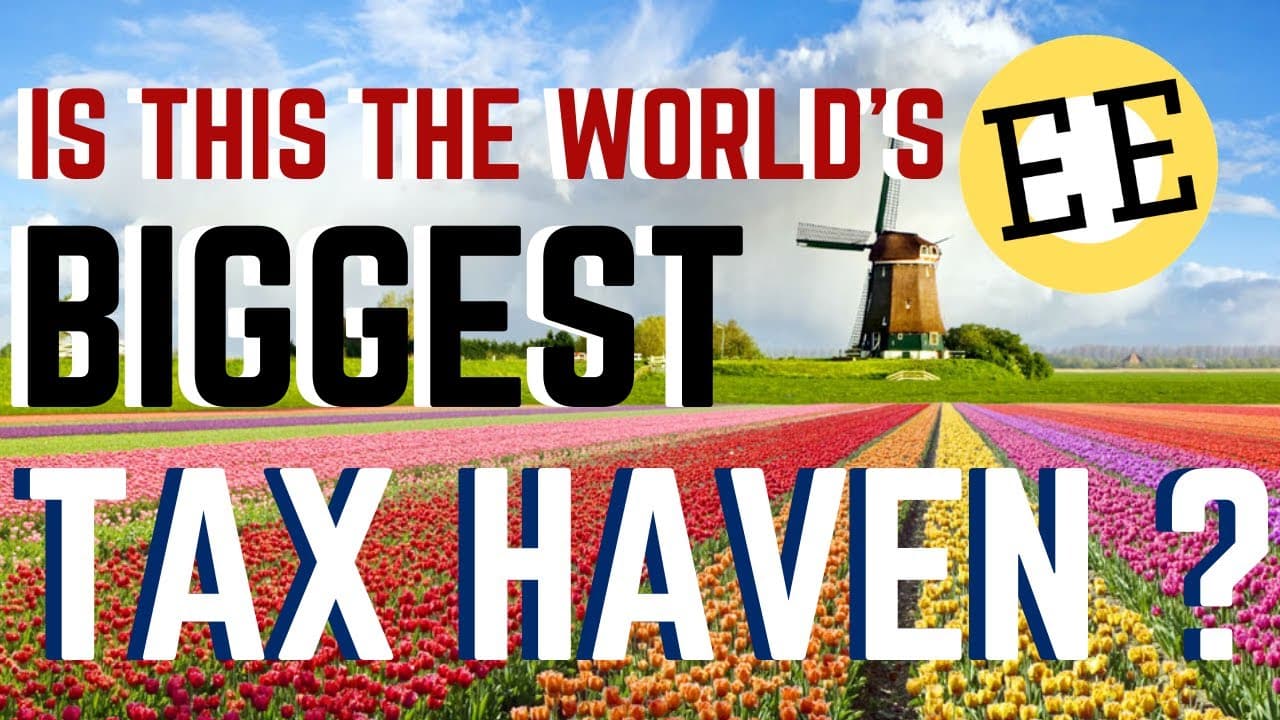
The Netherlands is a major tax haven due to its favorable tax laws, allowing multinational corporations to minimize tax liabilities through complex structures. Despite high income and corporate tax rates, specific laws facilitate tax avoidance, making it attractive for companies. This setup, however, raises moral and economic questions about fairness and sustainability.
Transcript
this is the Netherlands a fine country full of flowers windmills and loose regulations around the finer things in life this country is in many ways like a lot of very developed European countries where you have explored earlier on the channel very high living standards good social mobility a strong economy and healthy levels of inequality but the N... Read More
Key Insights
- The Netherlands is one of the largest tax havens globally due to its complex tax structures.
- High income and corporate tax rates in the Netherlands do not hinder its status as a tax haven.
- Multinational corporations use intricate schemes like the 'Double Irish with a Dutch Sandwich' to minimize taxes.
- The Dutch tax system allows for nearly zero percent tax on intellectual property revenue.
- Ireland's tax laws permit profit transfers to countries like Bermuda, avoiding double taxation.
- Tax avoidance schemes, while legal, are often criticized for being unethical and unfair.
- New Dutch tax laws post-2021 aim to close loopholes like the 'Double Irish with a Dutch Sandwich'.
- The debate continues on whether such tax avoidance practices are necessary evils or moral failings.
Install to Summarize YouTube Videos and Get Transcripts
Explore YouTube Video Summarizer or Get YouTube Transcript Extractor
Questions & Answers
Q: How do companies use the Netherlands as a tax haven?
Companies use the Netherlands as a tax haven by exploiting its favorable tax laws, such as low taxes on intellectual property revenue and agreements that allow tax-free money transfers across European countries. This enables them to reduce their overall tax liabilities by routing profits through Dutch subsidiaries, often as part of complex structures like the 'Double Irish with a Dutch Sandwich'.
Q: What is the 'Double Irish with a Dutch Sandwich'?
The 'Double Irish with a Dutch Sandwich' is a tax avoidance strategy used by multinational corporations. It involves setting up a series of companies in Ireland, the Netherlands, and a tax haven like Bermuda. Profits are shifted among these entities to take advantage of low or zero tax rates, thereby minimizing the corporation's overall tax burden.
Q: Why is the Netherlands attractive for tax avoidance?
The Netherlands is attractive for tax avoidance due to its tax laws that allow for low taxes on intellectual property and facilitate tax-free transfers between European countries. These regulations enable companies to reduce their taxable profits significantly, making it a preferred location for setting up subsidiaries as part of broader tax minimization schemes.
Q: What role do intellectual property laws play in tax avoidance?
Intellectual property laws in the Netherlands play a crucial role in tax avoidance by allowing companies to pay minimal taxes on income derived from patents and trademarks. This encourages companies to transfer their intellectual property rights to Dutch subsidiaries, where they can benefit from lower tax rates on the resulting revenue.
Q: How do Irish tax laws complement Dutch tax strategies?
Irish tax laws complement Dutch tax strategies by allowing profits to be transferred to foreign parent companies without additional taxes, provided they have been taxed once, even at a minimal rate. This facilitates the movement of profits through the Netherlands to tax havens, reducing the overall tax liability for multinational corporations.
Q: What are the ethical concerns around using tax havens?
Ethical concerns around using tax havens include the perception of unfairness, as companies benefit from public services without paying their fair share of taxes. This practice can undermine public trust and create an uneven playing field, where companies that do not engage in such strategies are at a competitive disadvantage.
Q: How is the Dutch government addressing tax avoidance schemes?
The Dutch government is addressing tax avoidance schemes by implementing new laws post-2021 to close loopholes like the 'Double Irish with a Dutch Sandwich'. These measures aim to reduce the attractiveness of the Netherlands as a tax haven by tightening regulations and ensuring that companies pay taxes proportionate to their economic activities.
Q: What impact do tax avoidance strategies have on global economies?
Tax avoidance strategies impact global economies by shifting tax burdens away from multinational corporations to smaller businesses and individuals. This can lead to reduced public revenue for essential services and infrastructure, increasing inequality and potentially destabilizing economic systems by eroding the tax base in countries where profits are generated.
Summary & Key Takeaways
-
The Netherlands is a major tax haven due to its favorable tax regulations that allow multinational corporations to minimize their tax liabilities. Despite its high income and corporate tax rates, specific laws, such as low taxes on intellectual property, make it attractive for companies looking to avoid taxes. This has led to complex tax structures like the 'Double Irish with a Dutch Sandwich'.
-
These tax avoidance schemes, while legal, raise moral and economic questions about fairness, as companies benefit from public infrastructure without contributing proportionately to taxes. The Dutch government has been pressured to close loopholes, with new laws post-2021 targeting these structures.
-
The ongoing debate questions the morality of tax avoidance, weighing the economic benefits against ethical considerations. While some argue it's a necessary strategy for companies to remain competitive, others see it as undermining public trust and fairness in the tax system.
Read in Other Languages (beta)
Share This Summary 📚
Summarize YouTube Videos and Get Video Transcripts with 1-Click
Try YouTube Summary with ChatGPT & Claude or YouTube Transcript Generator
Explore More Summaries from Economics Explained 📚


Summarize YouTube Videos and Get Video Transcripts with 1-Click
Try YouTube Summary with ChatGPT & Claude or YouTube Transcript Generator