How to Calculate Rate Analysis for Damp Proof Course
TL;DR
To calculate the rate analysis for a damp proof course (DPC) in cement mortar, first determine the quantities of materials required based on proportions and area. For 100 m² of 2.5 cm thick DPC, the total cost, including materials and labor, is ₹24,290.80, resulting in a per-square-meter cost of ₹243.
Transcript
hello everyone in this video we are going to see a numerical on rate analysis for damp proof cross in short it is called as dpc work and the thickness given here will be 2.5 centimeter so first let's see what is the problem statement it says prepare a rate analysis for damp proof course that is dpc 2.5 centimeter thick in cement mortar and the prop... Read More
Key Insights
- 🏛️ Damp proof courses (DPCs) are essential for protecting buildings from moisture and dampness.
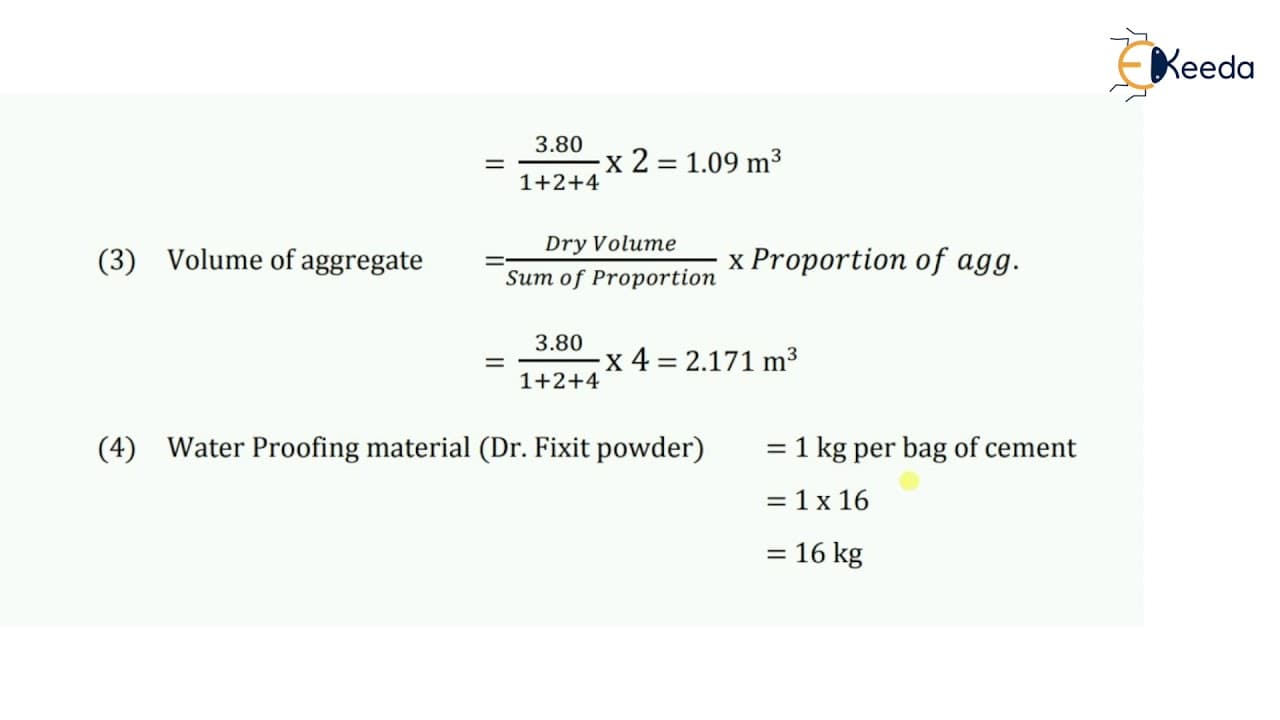
- 🥪 The quantity of cement, sand, and aggregate required for the DPC can be calculated based on the given proportions and area.
- 🫠 Waterproofing materials, such as dr fixit powder, are added to the DPC mix to enhance its damp-proofing properties.
- 🕵️♀️ Labor costs, including head mason, male mason, female mason, and bisti, are considered in the rate analysis.
- 💦 The total cost of material and labor, plus contractor's profit and water charges, gives the grand total for the DPC work.
- 🤒 The per meter square cost of the DPC can be obtained by dividing the grand total by the area of the DPC.
Install to Summarize YouTube Videos and Get Transcripts
Explore YouTube Video Summarizer or Get YouTube Transcript Extractor
Questions & Answers
Q: What is a damp proof course (DPC) and why is it necessary?
A DPC is a layer of materials such as cement mortar or bituminous material that is installed horizontally in a building's walls to prevent moisture or dampness from rising. It is necessary to protect the building from water damage and ensure its durability.
Q: How is the quantity of cement calculated for the DPC work?
The quantity of cement is calculated by dividing the dry volume of concrete required by the sum of the proportions of cement, sand, and aggregate. The proportion of cement in the mix is multiplied by the dry volume to obtain the volume of cement needed. This volume is then divided by the volume of one bag of cement to determine the number of bags required.
Q: What is the rate of the waterproofing material used in the DPC?
The rate of the waterproofing material can vary depending on the brand and location. In this video, the rate is mentioned as 70 rupees per kilogram. However, it is essential to consider the current market rates or refer to the District Schedule Rate (DSR) book for accurate pricing.
Q: How is the total cost of material and labor calculated?
The total cost of materials is obtained by multiplying the quantity of each material by its respective rate and summing up the amounts. The total cost of labor is determined by multiplying the number of each type of labor required by their respective rates and adding any additional miscellaneous costs. The material cost and labor cost are then added together to get the total cost of material and labor.
Summary & Key Takeaways
-
The video explains how to calculate the quantities and costs of materials required for a damp proof course (DPC) in cement mortar.
-
It provides step-by-step instructions for determining the quantities of cement, sand, coarse aggregate, and waterproofing material needed.
-
The video also discusses the calculation of labor costs and includes factors such as head mason, male mason, female mason, and bisti.
Read in Other Languages (beta)
Share This Summary 📚
Summarize YouTube Videos and Get Video Transcripts with 1-Click
Try YouTube Summary with ChatGPT & Claude or YouTube Transcript Generator
Explore More Summaries from Ekeeda 📚


Summarize YouTube Videos and Get Video Transcripts with 1-Click
Try YouTube Summary with ChatGPT & Claude or YouTube Transcript Generator