Do Soldiers Really Shoot to Kill?
TL;DR
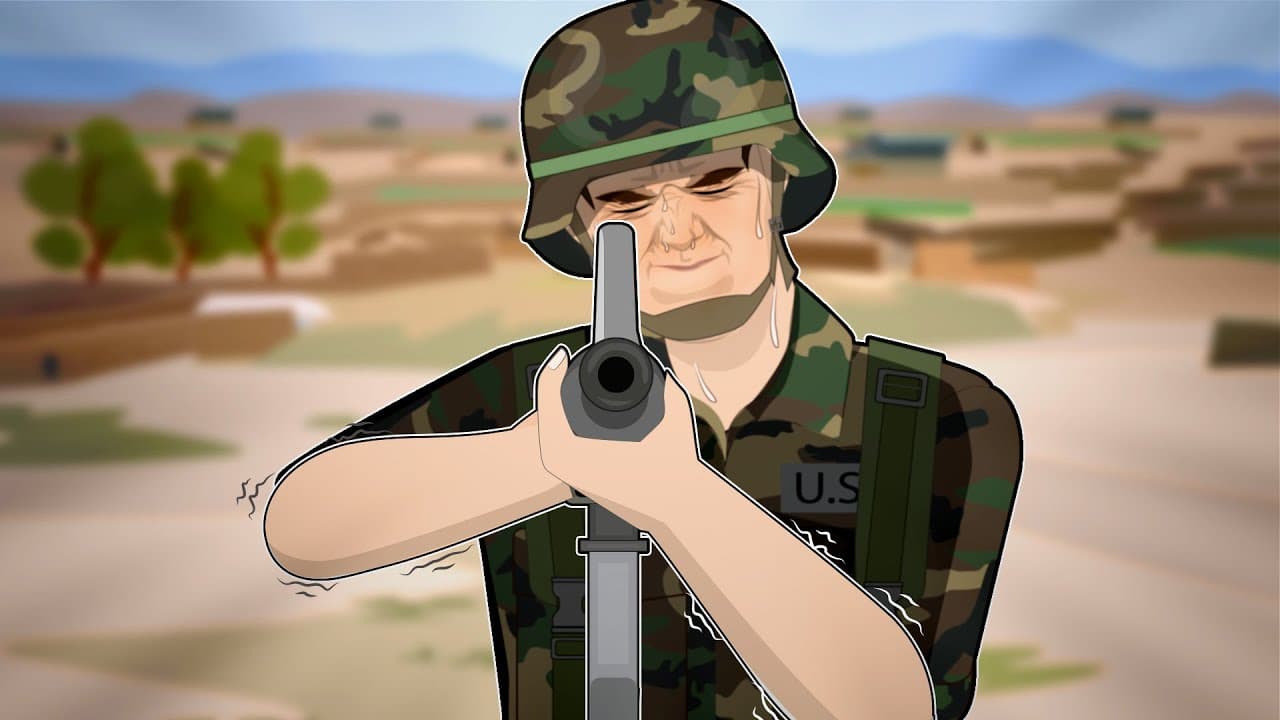
Soldiers' willingness to shoot to kill in warfare varies throughout history and is influenced by factors such as societal norms, propaganda, and training methods.
Transcript
do soldiers really shoot to kill in 2003 US Navy Seals sniper Chris Kyle made his first kill in the Iraq War it marked the start of a long and deadly career that earned him the moniker American Sniper whil certain branches of services and Specialists like Kyle build their career off their number of kills the average foot soldier has to confront the... Read More
Key Insights
- ❓ Soldiers have different options in warfare, including fighting, fleeing, posturing, or surrendering.
- 🧑🏭 The act of killing another human is psychologically challenging due to societal norms and potential threats to survival.
- 🎖️ Military training aims to override natural hesitation through repetition and drilling.
- 🌠 Soldiers' willingness to shoot to kill differs throughout history and is influenced by propaganda, indoctrination, and training methods.
- 🌠 Studies into soldiers' willingness to shoot to kill are inconclusive and often biased, making it difficult to determine the true prevalence.
- 🫵 Training methods in modern armies include dehumanization of the enemy and conditioning soldiers to view them as targets, increasing the likelihood of shooting to kill.
Install to Summarize YouTube Videos and Get Transcripts
Explore YouTube Video Summarizer or Get YouTube Transcript Extractor
Questions & Answers
Q: Why do soldiers find it easier to shoot at planes or snipers rather than directly at enemy soldiers?
Psychologically, it is easier to shoot at objects or individuals that are not perceived as fellow humans. The act of directly shooting at an enemy soldier can trigger natural hesitation and reluctance to take a human life.
Q: How did soldiers in World War I cope with the psychological impact of killing?
Many soldiers in World War I experienced emotional exhaustion and struggled with the horrors they witnessed. They often refrained from sharing their true emotions due to societal expectations and the fear of being labeled cowards.
Q: Did soldiers in World War II have a higher willingness to shoot to kill compared to World War I?
While soldiers in World War II may have been more prepared to shoot to kill due to propaganda and indoctrination, studies have shown that the actual percentage of soldiers who shot to kill is inconclusive and may vary based on individual experiences.
Q: How did training methods change in the Vietnam War in terms of soldiers' willingness to shoot to kill?
In the Vietnam War, the US army shifted its tactics to condition soldiers to shoot first and think later, removing natural inhibitions. Historian Grossman suggests that by the end of the war, over 90% of troops were willing to shoot to kill.
Summary & Key Takeaways
-
Historian Dave Gman argues that in war, soldiers have four options: fight, flight, posture, or submit. Posturing, or trying to mislead or intimidate the enemy, is a common strategy.
-
Humans generally find the act of killing another human psychologically abhorrent due to societal norms, moral beliefs, and a potential threat to their own survival.
-
Military training involves repetitive drilling to override natural hesitation and create muscle memory, enabling soldiers to perform actions automatically that they would hesitate to do in any other context.
Read in Other Languages (beta)
Share This Summary 📚
Summarize YouTube Videos and Get Video Transcripts with 1-Click
Try YouTube Summary with ChatGPT & Claude or YouTube Transcript Generator
Explore More Summaries from Simple History 📚
Summarize YouTube Videos and Get Video Transcripts with 1-Click
Try YouTube Summary with ChatGPT & Claude or YouTube Transcript Generator