Cultural Syncretism in Central Asia | World History | Khan Academy
TL;DR
South Central Asia in 280 BCE was a region of cultural syncretism, where Greek and Indian influences mixed, particularly in the art and religion of the Greco-Bactrian kingdom.
Transcript
- [David] Hello historians and welcome to South Central Asia circa 280 BCE. We're looking at two empires that occupied some of the same area. We've got the Mauryan Empire here. You can see that this is the expansion that took place under Ashoka around 250 BCE. The Mauryan Empire encompasses the Indus River Valley. This is today what is Pakistan. Ov... Read More
Key Insights
- 🥺 South Central Asia during 280 BCE was a region where the Mauryan and Seleucid Empires coexisted, leading to cultural exchange.
- 🥋 The Greco-Bactrian kingdom, formed by the secession of Bactria, experienced a combination of Greek and Indian influences in its art and culture.
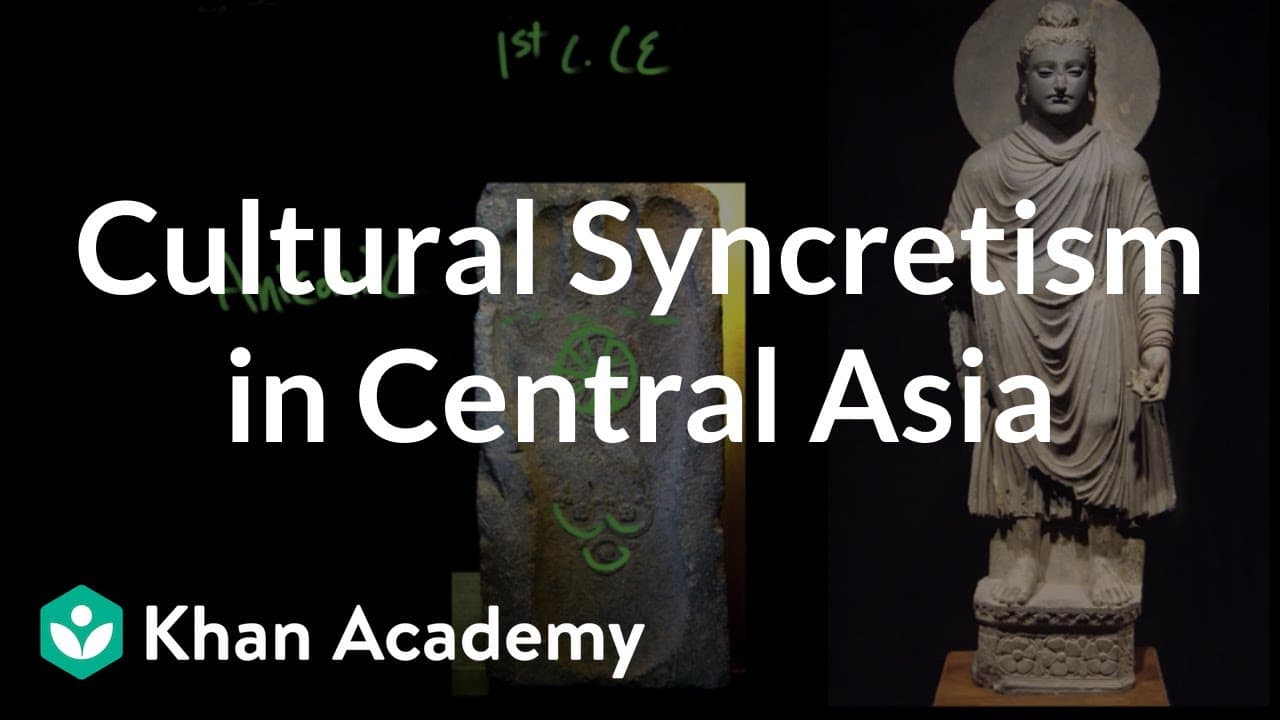
- 🥰 Syncretism was evident in the blending of Greek and Buddhist elements in the art of the region.
- 🖐️ The Silk Road played a significant role in the transmission of Buddhism and cultural syncretism across South Central Asia.
- 🇮🇴 Indian thinkers, known as the Gymnosophists, had an impact on Greek philosophy during this period.
- 🕴️ Nestorian Christianity adapted its teachings to suit the beliefs and traditions of the Chinese population, incorporating Daoist and Buddhist concepts.
- 👶 Syncretism involves taking new ideas and recasting them to fit the context of a new situation.
Install to Summarize YouTube Videos and Get Transcripts
Explore YouTube Video Summarizer or Get YouTube Transcript Extractor
Questions & Answers
Q: Why was the region of South Central Asia important for cultural syncretism?
The region was a crossroads for trade along the Silk Road, connecting the West and China, allowing for the exchange of ideas and cultures.
Q: How did Greek culture influence Buddhism in the region?
Greek cultural elements, such as Greek clothing styles, were incorporated into Buddha statues, showcasing the blending of Greek and Buddhist influences.
Q: What impact did Indian thinkers have on Greek philosophy during this period?
Indian thinkers, known as the Gymnosophists, influenced Greek philosophy, particularly through their emphasis on asceticism and pursuit of knowledge.
Q: How did Nestorian Christianity adapt to the Chinese population?
Nestorian Christianity incorporated Daoist and Buddhist concepts into its teachings, presenting Christianity in a way that resonated with the Chinese people.
Summary & Key Takeaways
-
The Mauryan Empire and Seleucid Empire occupied the same region in South Central Asia, leading to cultural exchange and syncretism.
-
The Greco-Bactrian kingdom, which seceded from the Seleucid Empire, experienced a combination of Greek and Indian influences in its culture.
-
The art of the region showcased the blending of Buddhist philosophy with Greek aesthetic styles.
Read in Other Languages (beta)
Share This Summary 📚
Summarize YouTube Videos and Get Video Transcripts with 1-Click
Try YouTube Summary with ChatGPT & Claude or YouTube Transcript Generator
Explore More Summaries from Khan Academy 📚



Summarize YouTube Videos and Get Video Transcripts with 1-Click
Try YouTube Summary with ChatGPT & Claude or YouTube Transcript Generator