Christina Curtis, Stanford University - Stanford Big Data 2015
TL;DR
Recent advancements in cancer genomics have revealed that human tumors are highly diverse and exhibit extensive intratumor heterogeneity, challenging the traditional model of tumor growth.
Transcript
so one in three people in the Western World will develop cancer and one in five will die from their disease making this the most common genetic disorder today I'm going to talk about an essentially new way of thinking about human how human tumors progress with several clinical implications so recent years have yielded many advances in understanding... Read More
Key Insights
- 🅰️ Human tumors are highly diverse, with significant variation in somatic alterations across tumor types and within individual tumors.
- 💊 Extensive intratumor heterogeneity poses challenges for precision medicine and treatment selection.
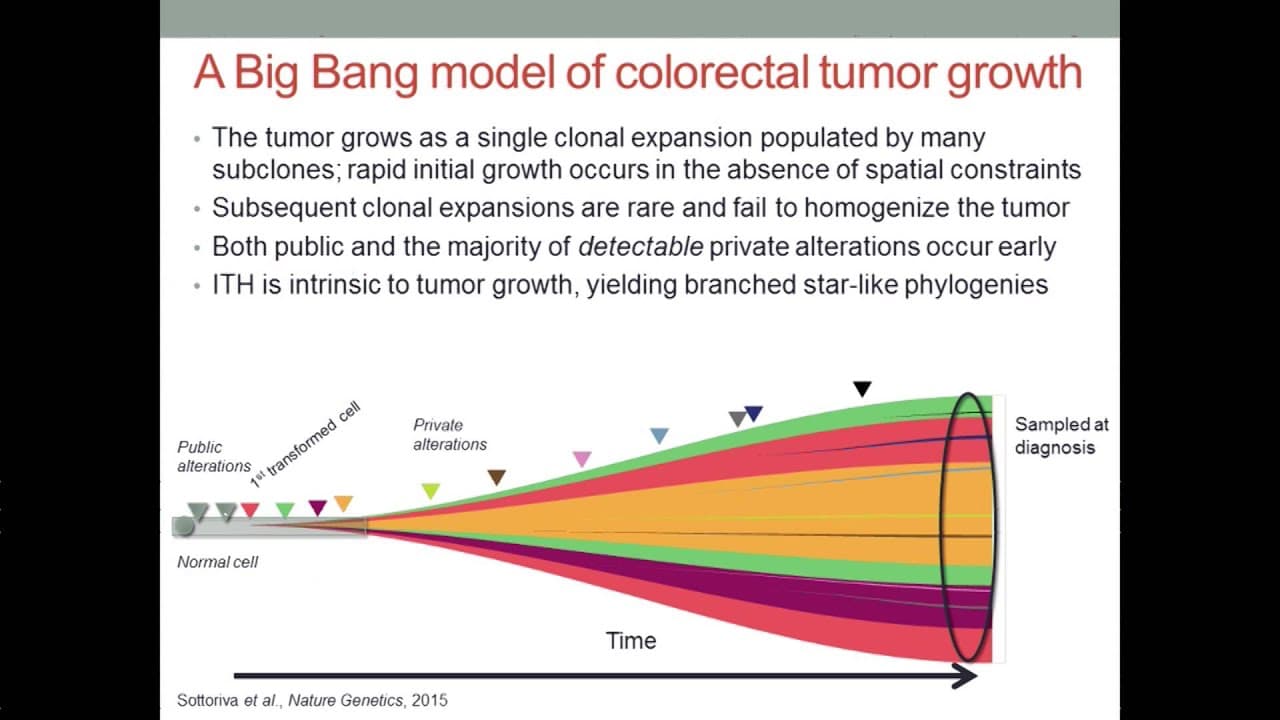
- 💗 The Big Bang model of tumor growth suggests that tumors grow as a single clonal expansion with early events dominating the genomic landscape.
- 🔒 Private alterations, which represent the full spectrum of intratumor heterogeneity, occur early in tumor development and may go undetected using current imaging modalities.
- 🥺 Understanding clonal dynamics in tumors can lead to improved prognostication, treatment strategies, and earlier detection and intervention efforts.
Install to Summarize YouTube Videos and Get Transcripts
Explore YouTube Video Summarizer or Get YouTube Transcript Extractor
Questions & Answers
Q: Why is understanding tumor heterogeneity important for precision medicine efforts?
Tumor heterogeneity poses challenges for precision medicine as molecular subtypes may vary within different samples from the same individual, leading to difficulties in treatment selection and personalized care.
Q: What is the Big Bang model of tumor growth?
The Big Bang model suggests that tumors grow as a single clonal expansion with extensive heterogeneity, in which early events dominate the genomic landscape and subsequent clonal expansions are rare.
Q: How do the findings of this study impact early detection and intervention strategies?
The study suggests that some tumors may be "born to be bad," meaning that malignant potential is determined very early. This opens up avenues for earlier detection and intervention strategies to improve outcomes.
Q: How can understanding clonal dynamics in human tumors inform treatment efforts?
Quantifying clonal dynamics can provide insights into the development of resistance and inform improved prognostication and treatment strategies, ultimately leading to better outcomes for patients.
Summary & Key Takeaways
-
One in three people in the Western world will develop cancer, making it the most common genetic disorder today.
-
Advances in understanding somatic alterations in cancer genomes have been made through initiatives like the Cancer Genome Atlas.
-
Tumors are incredibly diverse, with up to a 1,000-fold variation in the frequency of somatic alterations across tumor types and within individual tumors.
Read in Other Languages (beta)
Share This Summary 📚
Summarize YouTube Videos and Get Video Transcripts with 1-Click
Try YouTube Summary with ChatGPT & Claude or YouTube Transcript Generator
Explore More Summaries from Stanford 📚




Summarize YouTube Videos and Get Video Transcripts with 1-Click
Try YouTube Summary with ChatGPT & Claude or YouTube Transcript Generator