Design Aspects And Formulae In Cotter Joints Part 2
TL;DR
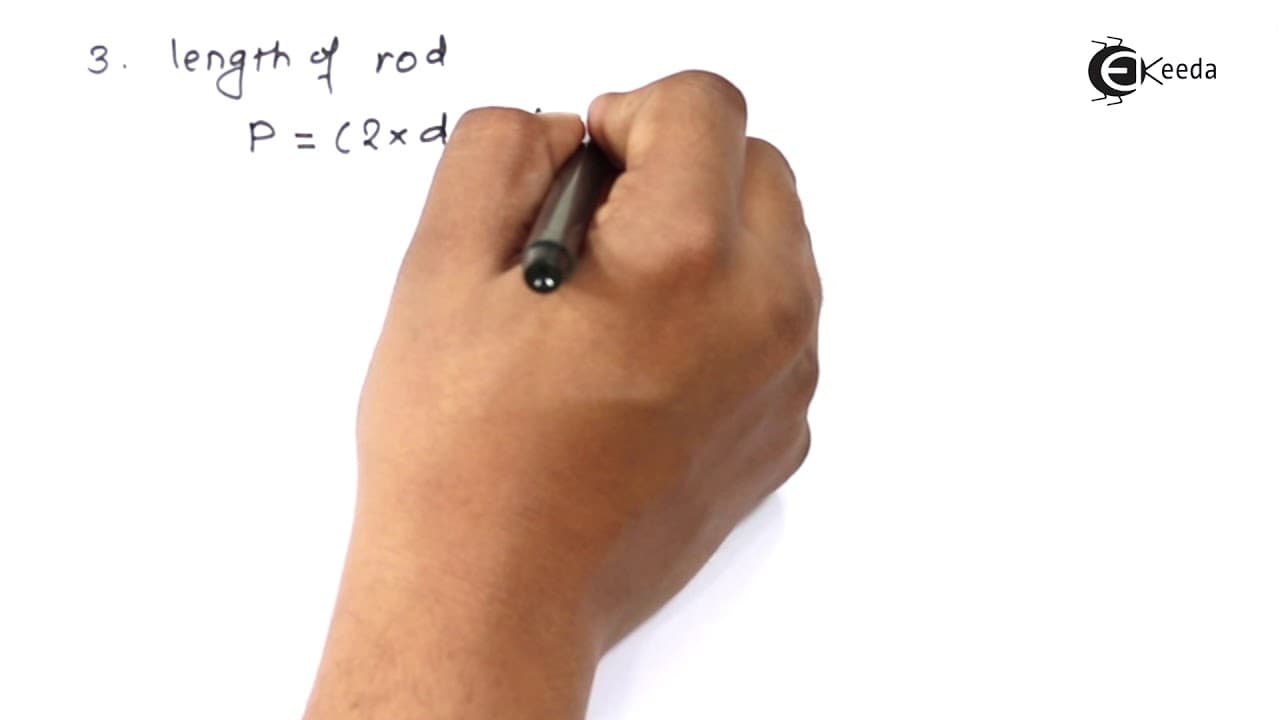
This video discusses the design aspects of a cotter joint and how failures occur in them.
Transcript
click the bell icon to get latest videos from akira hello friends welcome to the subject of machine design 1 we are right now in the model number 3 where we are learning design of the parts which are facing static loads that is design against static loading the first part that we have considered its Cotter joint in a last lecture we have seen what ... Read More
Key Insights
- ✊ A cotter joint is a machine element used for connecting shafts for power transmission.
- 🧑🏭 The joint consists of a cotter, socket, and spigot, with the cotter acting as a locking mechanism.
- 🎨 Designing a cotter joint involves considering dimensions such as the diameter, thickness, and length of the cotter, socket, and spigot.
- 😍 Failure modes in a cotter joint include tensile, shear, and crushing stress.
Install to Summarize YouTube Videos and Get Transcripts
Explore YouTube Video Summarizer or Get YouTube Transcript Extractor
Questions & Answers
Q: What is a cotter joint and why is it used?
A cotter joint is a machine element used for connecting shafts for power transmission. It is used to securely join two shafts together.
Q: What are the components of a cotter joint?
A cotter joint consists of a cotter, a socket, and a spigot. The cotter is a pin-like element inserted into the joint, while the socket and spigot provide the cavity for the cotter to fit into.
Q: How does a cotter joint work as a locking mechanism?
The cotter joint acts as a locking mechanism by having a draft in the cavity of both the socket and spigot. Once the cotter is properly fitted, it cannot go beyond the draft, securing the joint.
Q: What types of loads can cause failure in a cotter joint?
The cotter joint can fail under static loads, mainly due to tensile forces applied on the cotter, shear stress on the socket and spigot, and crushing stress on the quarter.
Summary & Key Takeaways
-
The video discusses the design of a cotter joint, which is used for connecting shafts for power transmission.
-
It explains the components of a cotter joint, including the cotter, socket, and spigot.
-
The video focuses on the design aspects of the cotter and socket spigot joint, providing important formulas for calculating dimensions.
Read in Other Languages (beta)
Share This Summary 📚
Summarize YouTube Videos and Get Video Transcripts with 1-Click
Try YouTube Summary with ChatGPT & Claude or YouTube Transcript Generator
Explore More Summaries from Ekeeda 📚



Summarize YouTube Videos and Get Video Transcripts with 1-Click
Try YouTube Summary with ChatGPT & Claude or YouTube Transcript Generator