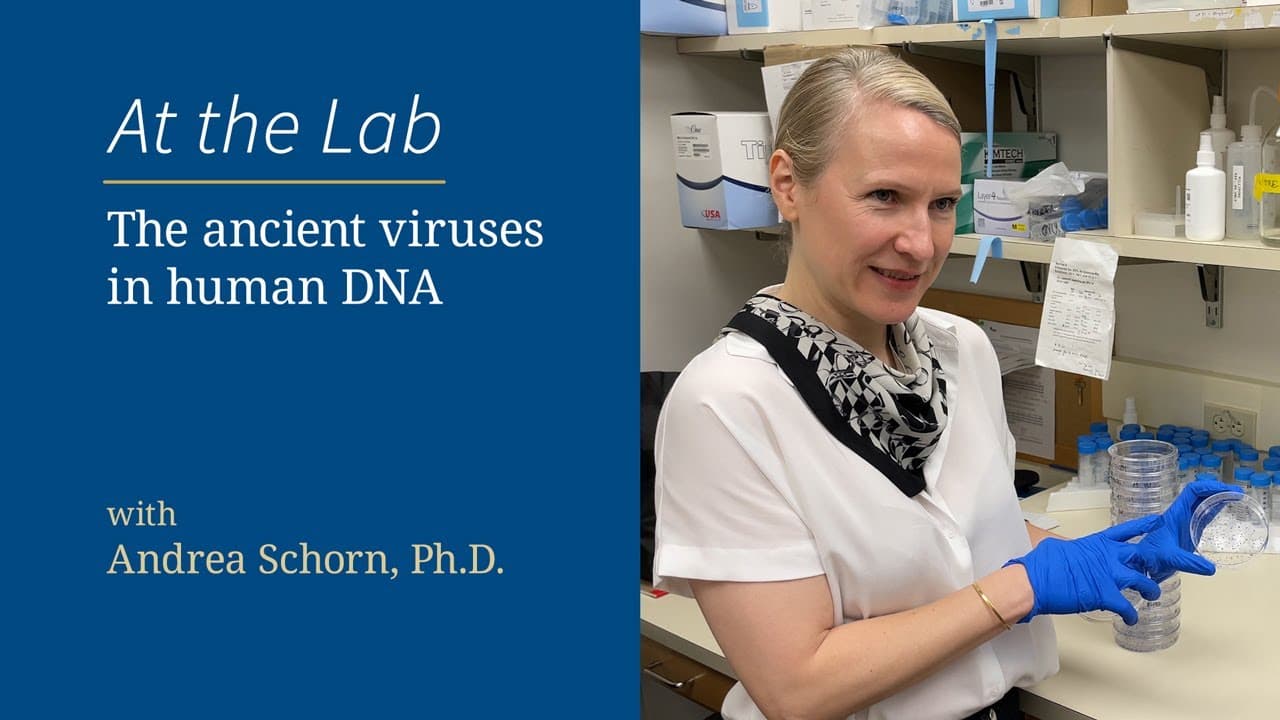
The ancient viruses in human DNA
TL;DR
Retroviruses in DNA influence evolution and may aid in cancer treatment.
Transcript
[music] The transposable elements we are interested in are old retroviruses that infected genomes millions of years ago, sometimes decades ago, and they are directly related to HIV. We're really interested in how RNA can recognize a good or bad retrovirus or transposon. Basically half of our DNA are these transposable elements and old retroviruses... Read More
Key Insights
- Retroviruses have integrated into human DNA over millions of years, influencing genetic evolution and functionality.
- Transposable elements, like retroviruses, make up about half of human DNA and can be both beneficial and harmful.
- The host genome has adapted to incorporate essential genes from retroviruses, making them a crucial part of genetic infrastructure.
- Transfer RNAs (tRNAs) play a significant role in the replication of retroviruses and are considered ancient molecular components.
- tRNA fragments are involved in recognizing and regulating retroviruses, overlapping with RNA silencing pathways.
- RNA silencing acts as a primitive immune system, sorting beneficial transposons from harmful ones in evolutionary terms.
- Understanding retrovirus mechanisms could help prevent infections and manage retrovirus-related diseases.
- High transposon expression in cancer cells suggests potential for using RNA molecules to control and improve cancer treatment outcomes.
Install to Summarize YouTube Videos and Get Transcripts
Explore YouTube Video Summarizer or Get YouTube Transcript Extractor
Questions & Answers
Q: What are transposable elements and why are they significant?
Transposable elements are sequences in the genome that can change positions within the DNA. They are significant because they make up about half of the human genome and include ancient retroviruses. These elements can influence genetic evolution and functionality, acting as both beneficial and potentially harmful components of our DNA.
Q: How do retroviruses become part of the human genome?
Retroviruses integrate into the human genome through infection events that occurred millions of years ago. Once integrated, these viral sequences can become permanent fixtures in the DNA, passed down through generations. Over time, some of these viral genes have been co-opted by the host genome to serve essential functions.
Q: What role do transfer RNAs (tRNAs) play in retrovirus replication?
Transfer RNAs (tRNAs) are crucial for retrovirus replication as they are used by retroviruses to replicate within host cells. tRNAs are ancient molecules that facilitate the translation of genetic information into proteins. Their involvement in retrovirus replication highlights their evolutionary significance and potential as targets for therapeutic interventions.
Q: What is RNA silencing and how does it relate to retroviruses?
RNA silencing is a cellular process that regulates gene expression and defends against viral infections. It acts as a primitive immune system by identifying and silencing harmful genetic elements, such as retroviruses and transposons. Understanding RNA silencing can provide insights into how cells distinguish between beneficial and harmful genetic elements.
Q: Why is understanding retrovirus mechanisms important for disease management?
Understanding retrovirus mechanisms is crucial for disease management because it can lead to the development of strategies to prevent infections and manage diseases related to retroviruses. By studying how retroviruses interact with host cells, researchers can identify potential therapeutic targets to control or inhibit viral activity, improving health outcomes.
Q: How might retrovirus research impact cancer treatment?
Retrovirus research could significantly impact cancer treatment by identifying ways to control transposon activity, which is often high in cancer cells. By understanding the molecular mechanisms regulating these elements, researchers aim to develop therapies that inhibit transposon expression, potentially improving cancer care and patient outcomes.
Q: What evolutionary insights can be gained from studying tRNA fragments?
Studying tRNA fragments can provide evolutionary insights into how ancient molecules contributed to the development of life and the regulation of genetic elements like retroviruses. These fragments overlap with RNA silencing pathways, offering clues about the evolution of cellular defense mechanisms and the co-evolution of host genomes with viral elements.
Q: What are the potential applications of understanding retrovirus and transposon regulation?
Understanding retrovirus and transposon regulation has potential applications in preventing viral infections, managing diseases, and improving cancer treatments. By identifying how these elements are controlled within the genome, researchers can develop targeted therapies to mitigate their harmful effects, enhance immune responses, and explore new avenues for treating genetic disorders.
Summary & Key Takeaways
-
Retroviruses have been part of the human genome for millions of years, contributing to genetic evolution. They can be beneficial or harmful, depending on their activity. The host genome has adapted to use genes from these viruses, making them essential for genetic infrastructure and evolution.
-
Transfer RNAs (tRNAs) are crucial in retrovirus replication and are ancient molecules. They are involved in RNA silencing pathways, which act as a primitive immune system. Understanding how tRNAs regulate retroviruses can provide insights into evolutionary processes and potential disease management.
-
Retroviruses and transposable elements are highly expressed in cancer cells. Studying RNA molecules that regulate these elements could lead to advancements in cancer treatment. By controlling transposon activity, researchers aim to improve cancer care and outcomes, offering new therapeutic possibilities.
Read in Other Languages (beta)
Share This Summary 📚
Summarize YouTube Videos and Get Video Transcripts with 1-Click
Try YouTube Summary with ChatGPT & Claude or YouTube Transcript Generator
Explore More Summaries from Cold Spring Harbor Laboratory 📚

Summarize YouTube Videos and Get Video Transcripts with 1-Click
Try YouTube Summary with ChatGPT & Claude or YouTube Transcript Generator