How to Make Croissants from Scratch at Home
TL;DR
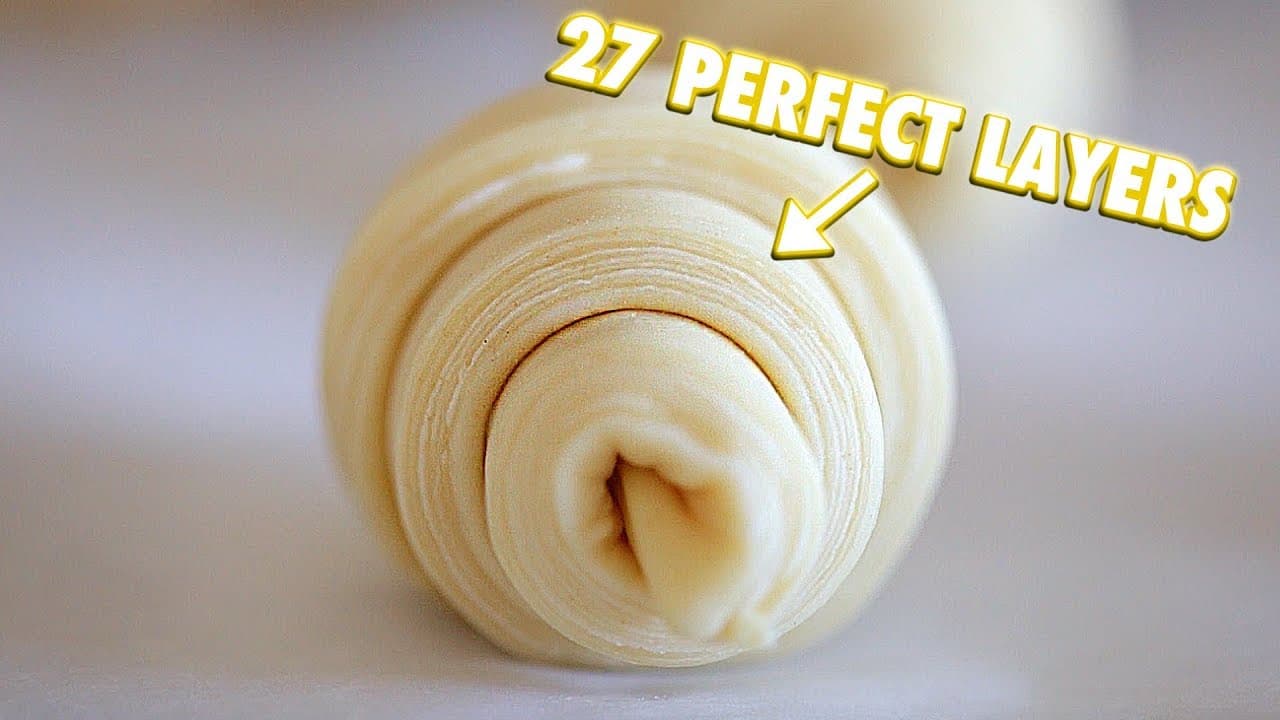
To make croissants from scratch, allow for a two to three-day process involving resting and laminating the dough. Key steps include using precise measurements, rolling and folding the dough for layers, and allowing it to proof until doubled in size before baking for a flaky texture. Using high-quality European butter enhances flavor and layering.
Transcript
Ever had your home smell like European butter and fresh-baked croissants? Do you want it to? ('Vivre' by Saib) Croissants made from scratch. There's no quick way to a really good croissant. I hate to break it to you. But there just isn't. These take time. Two to three days to be exact. The majority of that time is almost completely inactive and obv... Read More
Key Insights
- 🥐 Making homemade croissants requires time and effort, but the results are worth it for a delicious, flaky pastry.
- 🍩 Accurate measurements and careful handling of the dough are crucial for achieving the desired texture.
- 👋 European butter is recommended for the best layering and flavor.
- 🫠 Resting the dough at various stages allows the gluten to relax and prevents the butter from melting.
- 🥐 The croissants need to proof until they double in size before baking.
- 🥐 Inverting another baking sheet over the croissants during proofing helps create the ideal environment.
- ⌛ Baking time and temperature may vary depending on the type of oven used.
Install to Summarize YouTube Videos and Get Transcripts
Explore YouTube Video Summarizer or Get YouTube Transcript Extractor
Questions & Answers
Q: Why does the recipe require blooming the yeast?
Blooming the yeast in warm water activates it, ensuring that it will successfully leaven the dough and contribute to a light and airy texture in the croissants.
Q: Can I use sourdough instead of active dry yeast?
The recipe recommends against using sourdough as it can impart a sour taste that does not pair well with croissants. It is best to stick with active dry yeast for this recipe.
Q: Why is European butter recommended?
European butter has a higher butterfat percentage, which results in better layering and flakiness in the croissants. Cheaper varieties with lower butterfat percentages may contain more water, which affects the texture of the final product.
Q: How should I handle the dough during shaping to preserve the layers?
It's important to be gentle when rolling and shaping the dough to avoid pressing out the layers of butter. Lightly press the dough or give it time to rest in the fridge if it resists too much.
Summary & Key Takeaways
-
Making homemade croissants is a time-consuming process that takes two to three days, but most of the time is inactive.
-
The recipe requires specific measurements in grams to ensure accuracy and achieve the best results.
-
The croissant dough needs to be rolled, folded, and chilled multiple times to create the perfect layers for a flaky texture.
Read in Other Languages (beta)
Share This Summary 📚
Summarize YouTube Videos and Get Video Transcripts with 1-Click
Try YouTube Summary with ChatGPT & Claude or YouTube Transcript Generator
Explore More Summaries from Joshua Weissman 📚





Summarize YouTube Videos and Get Video Transcripts with 1-Click
Try YouTube Summary with ChatGPT & Claude or YouTube Transcript Generator