How to Fry Food Perfectly Like a Pro Chef
TL;DR
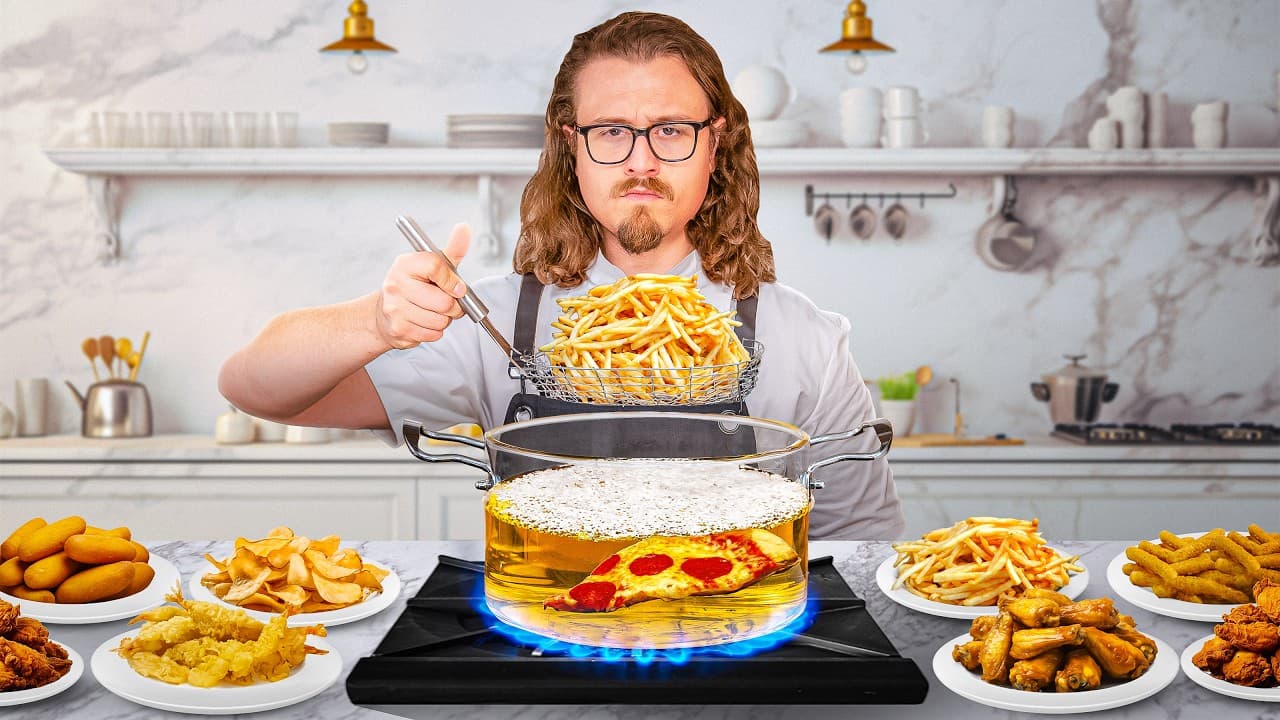
To fry food perfectly, maintain oil temperature at 350°F, avoid overcrowding, and use a minimum of 60% oil depth in the pot. Techniques vary from straight frying to multi-layer breading for different crunch levels. Essential tips include keeping water away from hot oil and reusing oil safely for multiple fry sessions.
Transcript
I've always wondered why is fried food the most addictive food in the whole world no matter what you do you just can't stop eating it one more crispy Wing one more crunchy french fry one more salty potato chip and it's about one thing and one thing only crunch but can anyone just toss something in some hot fat and it magically becomes delicious is ... Read More
Key Insights
- 😋 Frying food creates a satisfying crunch that can be addictive and difficult to resist.
- 🛢️ Maintaining the right oil temperature, avoiding overfilling the pot, and keeping liquids away from hot oil are crucial for safe and successful frying.
- 🎚️ Different frying techniques and ingredients can result in varying levels of crunchiness and texture.
- 🛢️ The choice of oil, such as high-heat oils or animal fats, can affect the flavor and outcome of fried food.
- 😋 Certain foods, like brussel sprouts and potato chips, benefit greatly from frying, enhancing their flavor and texture.
- 😋 Three-tier frying and thick batters can provide a more substantial and pronounced crunch to fried food.
- 🥳 The par cooking method is the secret to achieving perfectly crispy french fries.
Install to Summarize YouTube Videos and Get Transcripts
Explore YouTube Video Summarizer or Get YouTube Transcript Extractor
Questions & Answers
Q: Why is fried food so addictive?
Fried food is often addictive due to the crunchiness it offers. The rapid exposure of moisture and rapid drying of the exterior creates a satisfying texture that keeps us wanting more.
Q: What are the three rules of frying?
The three rules of frying are: maintaining oil temperature, not overfilling the pot, and keeping water and other liquids away from hot oil to prevent the risk of fire.
Q: What are the key differences between deep frying and shallow frying?
Deep frying involves fully submerging the food in hot fat, while shallow frying, also known as pan frying, only partially submerges the food. The depth of the fat affects the cooking method and results.
Q: What is the ideal temperature for frying?
Most foods are fried at a temperature of 350°F (176°C), but it's important to double-check the recommended temperature for each recipe.
Q: What are some alternative oils that can be used for frying?
Aside from high-heat oils like high-heat canola oil and avocado oil, animal fats and other oils that can withstand high temperatures, such as peanut oil and vegetable oil, can be used for frying.
Q: How can I achieve a crunchier coating on my fried food?
For a crunchier coating, consider using different batters or breading techniques, such as dusting with flour, using a thick batter, or three-tier frying with breadcrumbs.
Q: Can I reuse frying oil?
Frying oil can be reused a few times as long as it is strained, cooled, and stored properly. However, it is recommended to discard the oil after one to two uses for safety and taste reasons.
Q: What is the key to achieving perfectly crunchy french fries?
The key to crispy french fries is a two-step frying process known as par cooking. The fries are first parboiled, then frozen, and finally deep-fried for a second time until they reach the desired crunchiness.
Summary & Key Takeaways
-
The video explores various frying techniques, including straight frying, dusting with flour, wet marinades, three-tier frying, thick batters, and more.
-
Each technique is demonstrated with different foods, such as lamb, chicken wings, brussel sprouts, and potato chips, showcasing the different results and crunch levels.
-
The video also offers tips for maintaining the oil temperature, avoiding overfilling the pot, and preventing accidents when frying.
Read in Other Languages (beta)
Share This Summary 📚
Summarize YouTube Videos and Get Video Transcripts with 1-Click
Try YouTube Summary with ChatGPT & Claude or YouTube Transcript Generator
Explore More Summaries from Joshua Weissman 📚

Summarize YouTube Videos and Get Video Transcripts with 1-Click
Try YouTube Summary with ChatGPT & Claude or YouTube Transcript Generator