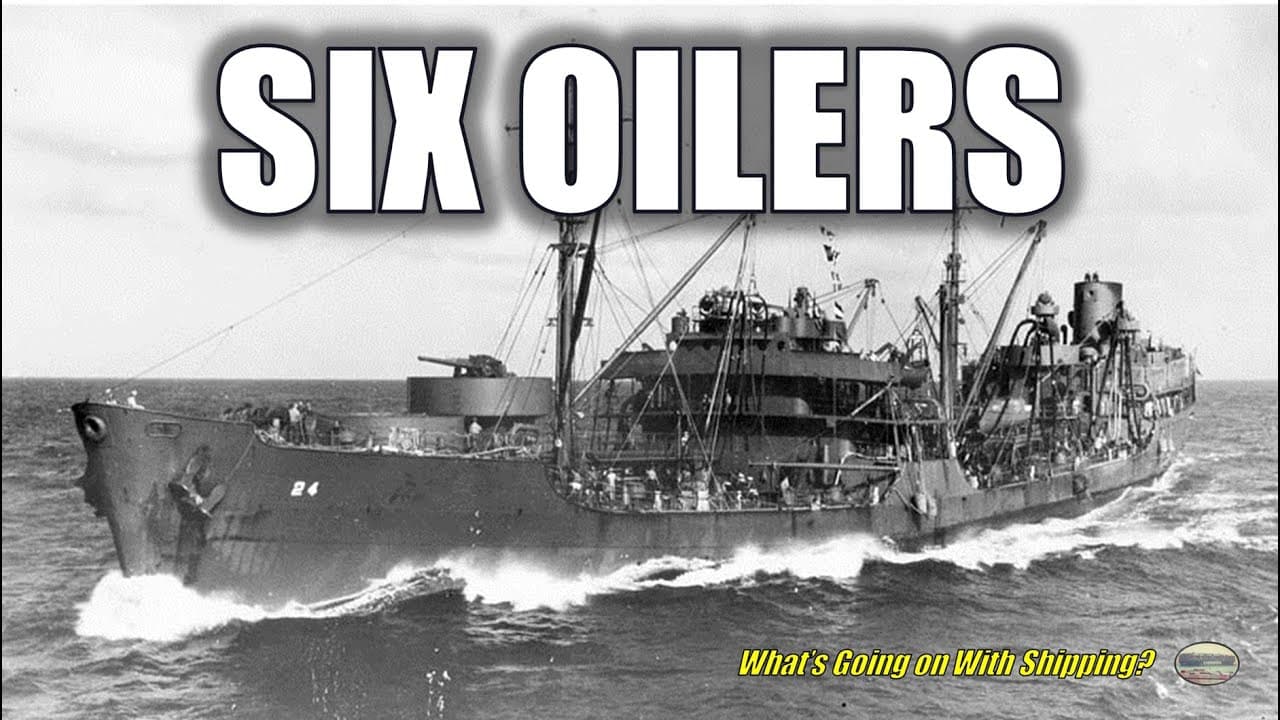
Six Oilers - How American Fast Tankers Supplied Hawaii, Australia and the US Navy
TL;DR
Six Navy Oilers were crucial in WWII Pacific logistics.
Transcript
and today's episode of what's going on with shipping a little Naval History as we look at six Navy Fleet Oilers that change the course of World War II early in the Pacific hi I'm your host Salma coglano welcome to today's episode so back in April I went on World War II TV on YouTube Paul woodage hosts this site it is... Read More
Key Insights
- The six Navy Oilers played a pivotal role in maintaining supply lines between America, Hawaii, and Australia during the early stages of World War II.
- The technology and methods of underway replenishment evolved significantly from World War I, improving the efficiency of naval operations in the Pacific.
- The fast Oilers were crucial in sustaining the US Navy's fast carrier task forces, enabling them to operate effectively across the vast distances of the Pacific Ocean.
- Logistics were a critical component of the US strategy in the Pacific, with a focus on maintaining supply lines to Australia and supporting naval operations against Japanese advances.
- The US Navy's experience in World War I influenced its logistical strategies in World War II, particularly in terms of refueling and supply chain management.
- The attack on Pearl Harbor highlighted the vulnerability of fuel supplies, prompting the US to prioritize the protection and efficient use of its Oilers.
- The conversion of some tankers into escort carriers provided the US Navy with additional flexibility and capability during the war.
- The seamless operation of logistics and supply lines was essential to the success of US naval operations, often going unnoticed due to its effectiveness.
Install to Summarize YouTube Videos and Get Transcripts
Explore YouTube Video Summarizer or Get YouTube Transcript Extractor
Questions & Answers
Q: What role did the six Navy Oilers play in World War II?
The six Navy Oilers were critical in maintaining the supply lines between the United States, Hawaii, and Australia during the early months of World War II. They ensured that the US Navy's fast carrier task forces had the necessary fuel to operate across the vast distances of the Pacific Ocean, supporting naval operations against Japanese advances.
Q: How did the technology of underway replenishment evolve from World War I?
Underway replenishment technology evolved significantly from World War I, with improvements in methods and equipment allowing for more efficient fuel transfer. The US Navy developed techniques to refuel larger vessels like carriers and cruisers, increasing the distance between ships during replenishment and enhancing safety and efficiency.
Q: Why was maintaining the supply line to Australia important for the US during World War II?
Maintaining the supply line to Australia was crucial for the US as it ensured the continued support and involvement of Australia in the war effort. With the Japanese threat severing traditional supply routes, the US had to provide Australia with essential resources, including fuel, to sustain its military and civilian needs.
Q: What impact did the attack on Pearl Harbor have on US naval logistics?
The attack on Pearl Harbor highlighted the vulnerability of US fuel supplies, prompting a reassessment of logistical priorities. The US Navy recognized the importance of protecting its Oilers and ensuring efficient fuel use to support naval operations, leading to strategic changes in how fuel was managed and distributed.
Q: How did the conversion of some tankers into escort carriers benefit the US Navy?
The conversion of some tankers into escort carriers provided the US Navy with additional flexibility and capability. These converted vessels could serve dual roles, offering both fuel and air support, which was crucial in maintaining naval operations and filling gaps in carrier availability during critical periods of the war.
Q: What lessons from World War I influenced US naval logistics in World War II?
Lessons from World War I, such as the importance of underway replenishment and forward logistics, heavily influenced US naval strategies in World War II. The experience gained in refueling destroyers and managing supply chains during World War I informed the development of more advanced and efficient logistical operations in the Pacific theater.
Q: How did the US Navy ensure the effectiveness of its logistics operations?
The US Navy ensured the effectiveness of its logistics operations by developing a comprehensive system of underway replenishment, utilizing fast Oilers, and establishing strategic bases for fuel distribution. This seamless operation allowed for uninterrupted support of naval operations, often going unnoticed due to its effectiveness and reliability.
Q: What challenges did the US face in sustaining its naval operations in the Pacific?
The US faced significant challenges in sustaining naval operations in the Pacific, including vast distances, the need for efficient fuel transfer, and the threat of Japanese advancements. The strategic focus on logistics, including the use of fast Oilers and the establishment of supply bases, was essential in overcoming these challenges and maintaining operational readiness.
Summary & Key Takeaways
-
The six Navy Oilers were instrumental in maintaining supply lines between the US, Hawaii, and Australia during the early months of World War II, ensuring the operational readiness of the US Navy's fast carrier task forces.
-
Technological advancements in underway replenishment, developed from World War I experiences, played a crucial role in the effectiveness of naval logistics in the Pacific, allowing for efficient fuel transfer even under challenging conditions.
-
The strategic focus on logistics and maintaining sea lines of communication to Australia was vital for the US, as it faced the challenge of supplying distant bases and countering Japanese advancements in the Pacific.
Read in Other Languages (beta)
Share This Summary 📚
Summarize YouTube Videos and Get Video Transcripts with 1-Click
Try YouTube Summary with ChatGPT & Claude or YouTube Transcript Generator
Explore More Summaries from What's Going on With Shipping? 📚
Summarize YouTube Videos and Get Video Transcripts with 1-Click
Try YouTube Summary with ChatGPT & Claude or YouTube Transcript Generator