Mississippi River Near Historic Lows Putting Grain Exports at Risk
TL;DR
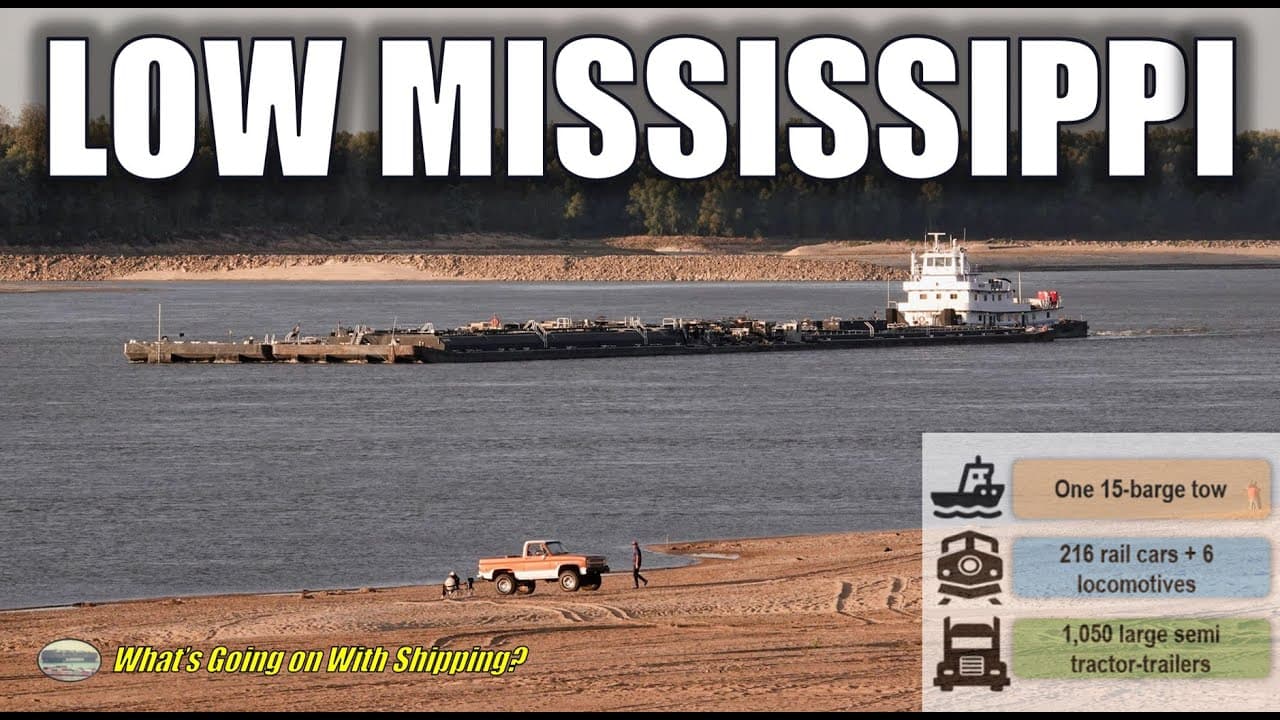
The Mississippi River is experiencing near-record low levels, affecting the export of grain, particularly corn and soybeans, and posing a competition challenge against Brazil.
Transcript
on today's episode of what's going on with shipping the Mississippi is near one of its lowest levels ever hi I'm your host Alma coglano welcome to today's episode so this is not an unusual story we have talked about low levels on the Mississippi River before but this current level of the Mississippi River is near record and that is impacting the ex... Read More
Key Insights
- 🌊 The Mississippi River is currently at near-record low levels, which is affecting the export of grain and other bulk materials.
- 🚢 The low water levels are impacting the ability to transport crops like corn and soybeans via barges, leading to lighter loads and potential delays.
- 📉 The low water levels have led to multiple river closures and groundings along the Mississippi, causing disruptions in shipping.
- 💧 Drought conditions in the rivers and tributaries that feed into the Mississippi River are a major factor in the low water levels.
- ⚓ Inland waterway transportation, particularly along the Mississippi River, plays a vital role in transporting goods, including grains, throughout the United States.
- 🌽 Corn and soybeans make up a significant portion of the grain being transported, with soybeans accounting for about two-thirds of the total grain shipped.
- 💰 Low water levels can lead to increased freight rates, impacting both the cost of food and the profitability of shipping companies.
- 🛣️ While the interstate highway system and railways are crucial for transportation, the inland waterways system, including the Mississippi River, is a key component of moving bulk products like grain.
Install to Summarize YouTube Videos and Get Transcripts
Explore YouTube Video Summarizer or Get YouTube Transcript Extractor
Questions & Answers
Q: What factors are contributing to the low water levels on the Mississippi River?
The low water levels on the Mississippi River are primarily due to drought in the areas that feed into the river, especially on its northern side and along tributaries like the Missouri River.
Q: How does the low water level affect the transportation of grain?
The low water level reduces the capacity for barges to carry grain, as they have to be loaded lighter and cannot accommodate as many barges at once. This creates challenges in efficiently transporting grain to the market.
Q: How many times has the river been closed due to low water levels recently?
Over the past month, portions of the Mississippi River have been closed 22 times, with at least 36 groundings reported by the Coast Guard due to low water levels.
Q: What is the impact of the low water levels on grain export competition?
With the Mississippi River experiencing low water levels, the competition for U.S. grain export increases, particularly from Brazil, which can pose challenges for U.S. farmers in accessing global markets.
Q: Who oversees the maintenance and navigation of the inland waterways, including the Mississippi River?
The U.S. Army Corps of Engineers is responsible for maintaining and managing the inland waterways, such as the Mississippi River, ensuring navigation and aids of navigation.
Answer: The U.S. Army Corps of Engineers is responsible for maintaining and managing the inland waterways, such as the Mississippi River, ensuring navigation and aids of navigation.
Q: What is the significance of the inland waterway system for the transportation of goods?
The inland waterway system, particularly the Mississippi River, plays a crucial role in transporting bulk goods, such as grain. It can carry large quantities of cargo, equivalent to multiple rail cars and hundreds of semi-tractor trailers, making it a cost-effective and efficient mode of transportation.
Q: How does the current infrastructure bill address the challenges faced by the inland waterway system?
The infrastructure bill passed during the Biden Administration allocates funds to various aspects of infrastructure but does not focus significantly on the inland waterway system. Many experts argue that more investment is needed in dredging, lock improvements, and other areas to support and enhance the efficiency of the inland waterway system.
Summary & Key Takeaways
-
The Mississippi River is nearing historic low levels, impacting the transportation of bulk materials, especially grain.
-
Low water levels have forced tow boats and barges to lighten their loads, reducing the transportation capacity for grain.
-
This comes at a crucial time for U.S. farmers who are trying to get their corn and soybeans to the market, while facing competition from Brazil.
Read in Other Languages (beta)
Share This Summary 📚
Summarize YouTube Videos and Get Video Transcripts with 1-Click
Try YouTube Summary with ChatGPT & Claude or YouTube Transcript Generator
Explore More Summaries from What is Going on With Shipping? 📚

Summarize YouTube Videos and Get Video Transcripts with 1-Click
Try YouTube Summary with ChatGPT & Claude or YouTube Transcript Generator