Extinction | Adaptation and environmental change | High school biology | Khan Academy
TL;DR
Human activities, such as habitat destruction, overfishing, and pollution, are causing a rapid increase in species extinction rates, leading to a loss of biodiversity and fragile ecosystems.
Transcript
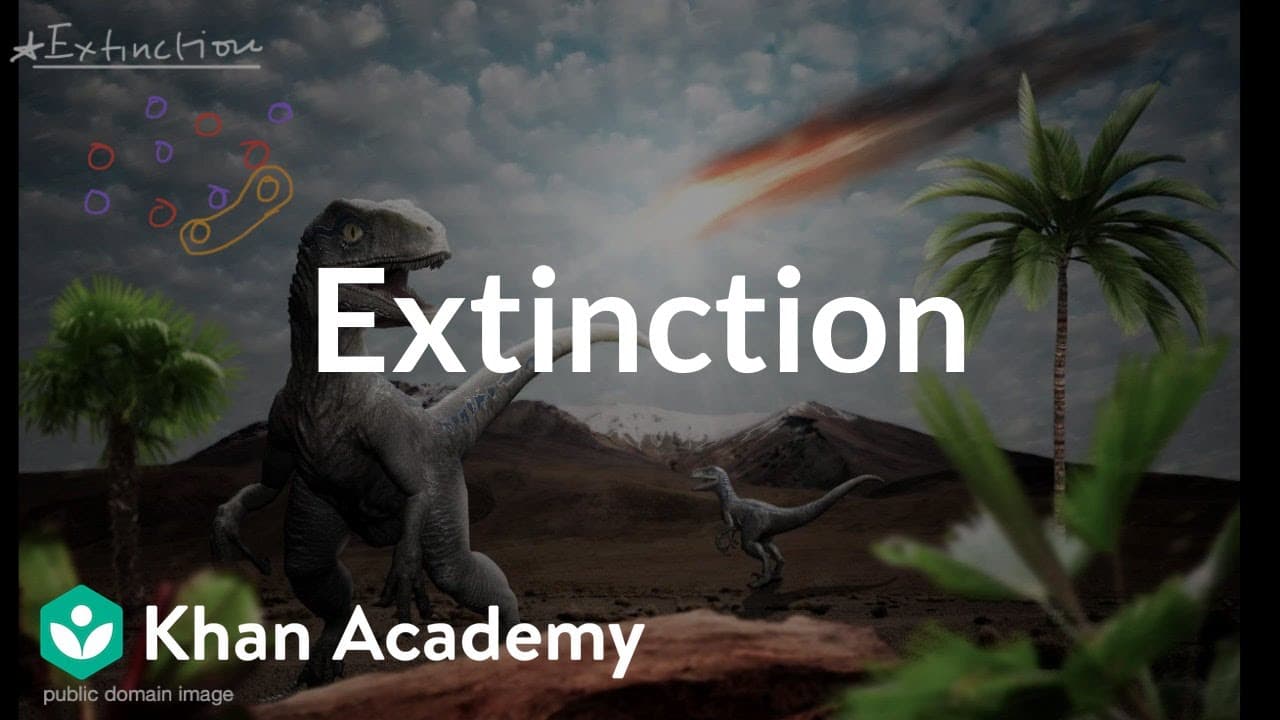
- [Instructor] When we think of the term extinction, we tend to think of events like what happened, what we believe happened 63 million years ago when a large meteor hit the earth and killed most of the dinosaurs. And I say most of them, because a lot of animals that we know today especially birds, birds like chickens, we believe are actually desce... Read More
Key Insights
- 💱 Extinction can occur gradually due to incremental changes in the environment, or suddenly due to cataclysmic events like meteor impacts.
- ☠️ Human activities, such as habitat destruction, overfishing, pollution, and climate change, are the main drivers of current accelerated extinction rates.
- 🐕🦺 Loss of species and reduced biodiversity weaken the resilience of ecosystems, making them more vulnerable to further disturbances and less capable of providing essential ecosystem services.
- 🧑⚕️ Maintaining biodiversity is crucial for the health and stability of ecosystems, as well as for the long-term survival and prosperity of human societies.
- ❓ Urgent action is required to mitigate the impacts of human activities and protect endangered species and ecosystems.
- 🛟 Conservation efforts and sustainable practices can help restore and preserve biodiversity, ensuring a healthier and more sustainable future for both nature and humanity.
- 🎓 Education and awareness about the importance of biodiversity are essential for motivating action and fostering a collective responsibility for environmental stewardship.
Install to Summarize YouTube Videos and Get Transcripts
Explore YouTube Video Summarizer or Get YouTube Transcript Extractor
Questions & Answers
Q: How does gradual environmental change contribute to extinction?
Gradual environmental changes create variations within populations, and those variants that are better adapted to the changes have a higher chance of survival and reproduction. This can result in the evolution of new species while rendering others extinct.
Q: How do human activities contribute to species extinction?
Human activities, such as habitat destruction due to urbanization and agriculture, overfishing, pollution, and the introduction of invasive species, destabilize ecosystems and lead to the decline and extinction of various species.
Q: Why is biodiversity important?
Biodiversity provides stability and resilience to ecosystems, ensuring their ability to withstand and recover from disturbances. It also offers valuable genetic resources for medical and agricultural advancements, and enhances the beauty and cultural values of our planet.
Q: How does the loss of one species impact the entire ecosystem?
Each species plays a specific role in an ecosystem, and the loss of one species can lead to cascading effects throughout the food chain and disrupt the balance of the ecosystem, potentially endangering other species and even affecting human well-being.
Summary & Key Takeaways
-
Extinction is not always caused by dramatic events like meteor impacts, but can also occur due to gradual changes in the environment.
-
Variants of a population that are better suited to environmental changes have a higher chance of survival and reproduction, potentially leading to the evolution of new species.
-
The human population's expansion and destructive activities, such as habitat destruction, overfishing, pollution, and climate change, are accelerating species extinction rates and reducing overall biodiversity.
Read in Other Languages (beta)
Share This Summary 📚
Summarize YouTube Videos and Get Video Transcripts with 1-Click
Try YouTube Summary with ChatGPT & Claude or YouTube Transcript Generator
Explore More Summaries from Khan Academy 📚



Summarize YouTube Videos and Get Video Transcripts with 1-Click
Try YouTube Summary with ChatGPT & Claude or YouTube Transcript Generator