Diatomic Elements & Molecules
TL;DR
Learn about the seven diatomic elements and how their Lewis structures are formed.
Transcript
in this video we're going to talk about the diatomic elements elements that exist in nature as a diatomic molecule and there are seven of them that you really need to know the first element is hydrogen and then nitrogen oxygen fluorine chlorine bromine and iodine those are the seven diatomic elements so think of the prefix die di means two these el... Read More
Key Insights
- 🕖 There are seven diatomic elements: hydrogen, nitrogen, oxygen, fluorine, chlorine, bromine, and iodine.
- ❓ Diatomic elements exist as diatomic molecules in their natural states.
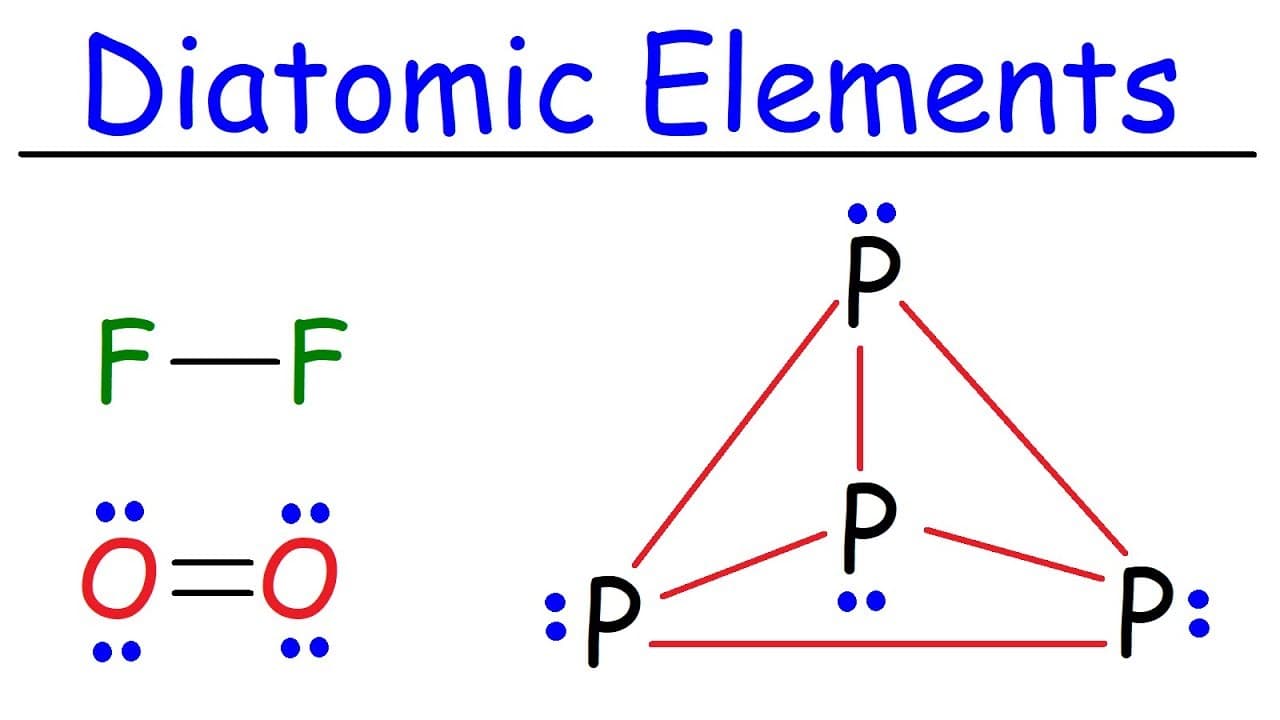
- 💁 Nitrogen and phosphorus prefer to form three bonds to achieve a stable electron configuration.
- 💁 Oxygen is most stable in the form of O2 under standard conditions but can also exist as ozone in the upper atmosphere.
- 🌀 Halogens, such as fluorine, chlorine, bromine, and iodine, have similar Lewis structures with one bond and three lone pairs.
- ❓ Phosphorus and sulfur have bonding patterns similar to diatomic elements, despite not being diatomic themselves.
- 💁 The Lewis structure of sulfur in its common form consists of an octahedral shape.
Install to Summarize YouTube Videos and Get Transcripts
Explore YouTube Video Summarizer or Get YouTube Transcript Extractor
Questions & Answers
Q: What are diatomic elements?
Diatomic elements are those that naturally exist as diatomic molecules, including hydrogen, nitrogen, oxygen, fluorine, chlorine, bromine, and iodine.
Q: How do diatomic elements differ from other elements?
Diatomic elements exist in pairs, with each molecule having two atoms of the same element bonded together, while other elements can exist as individual atoms.
Q: What is the significance of Lewis structures?
Lewis structures show the bonding patterns and arrangement of electrons in molecules, helping to understand the chemical properties and behaviors of diatomic elements.
Q: Are there any other forms of oxygen besides O2?
Yes, ozone (O3) is another form of oxygen, predominantly found in the upper atmosphere, while O2 is the most common form on Earth.
Q: Why do nitrogen and phosphorus prefer to form three bonds?
Both nitrogen and phosphorus need three more electrons to complete their outermost energy levels and satisfy the octet rule, making them more stable with three bonds.
Q: How do the Lewis structures of halogens look like?
Halogens, including fluorine, chlorine, bromine, and iodine, have similar Lewis structures with one bond and three lone pairs around each atom.
Q: Why did the video include phosphorus and sulfur even though they are not diatomic?
Phosphorus and sulfur were mentioned to provide additional information on their common forms and their similarities to diatomic elements in terms of bonding patterns.
Q: What is the structure of sulfur in its most common form?
Sulfur forms an octahedral structure, represented by an octagon, with each sulfur atom forming two bonds and having two lone pairs.
Summary & Key Takeaways
-
Diatomic elements consist of hydrogen, nitrogen, oxygen, fluorine, chlorine, bromine, and iodine, which exist as diatomic molecules in their natural states.
-
Each diatomic element has specific properties, such as hydrogen existing as H2 and oxygen existing as O2 under standard conditions.
-
Lewis structures illustrate the bonding patterns of diatomic elements, with hydrogen forming one bond, nitrogen three bonds, and oxygen two bonds.
Read in Other Languages (beta)
Share This Summary 📚
Summarize YouTube Videos and Get Video Transcripts with 1-Click
Try YouTube Summary with ChatGPT & Claude or YouTube Transcript Generator
Explore More Summaries from The Organic Chemistry Tutor 📚




Summarize YouTube Videos and Get Video Transcripts with 1-Click
Try YouTube Summary with ChatGPT & Claude or YouTube Transcript Generator