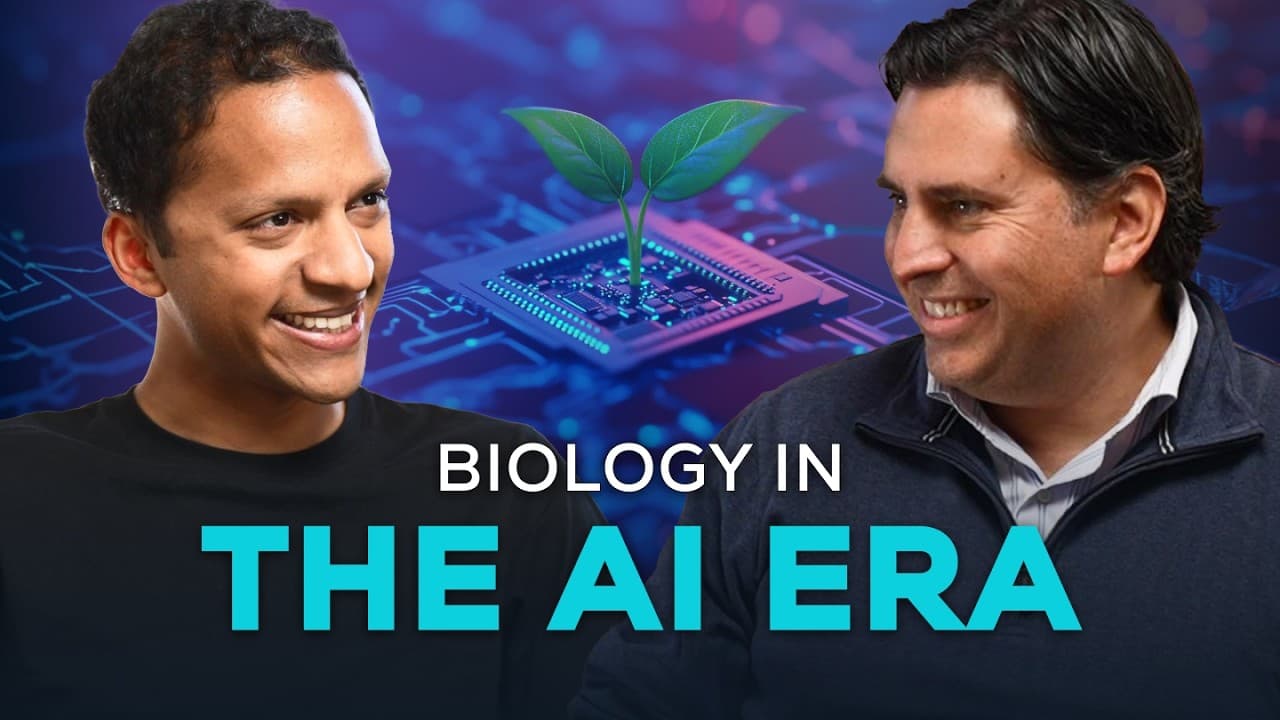
Mastering Your Data with Sajith Wickramasekara
TL;DR
The 21st century presents opportunities in biology for solving global challenges through advanced biotech solutions.
Transcript
you've talked about we've talked about other people have talked about the fact that the 21st century is in many ways the century of biology in your mind what does that mean fundamentally I'm I'm very much a you know techno Optimist type um I think biology offers the solution to many of humankind's biggest problems we have all these diseases we need... Read More
Key Insights
- 🧑⚕️ The 21st century offers unprecedented opportunities in biology, particularly for addressing global health and sustainability issues.
- 👨🔬 Benchling's emergence highlights the need for specialized software solutions tailored for the complexities of biological research and development.
- 👶 The integration of AI in biology is poised to revolutionize drug discovery, increasing efficiency and accuracy in identifying new therapeutic candidates.
- 😀 Many life sciences organizations still face significant hurdles in data organization and infrastructure, limiting their ability to capitalize on contemporary technological advances.
- ⚾ The biotech industry's shift from chemistry-based to biology-based solutions requires dynamic and adaptable software tools to support evolving research demands.
- 🐢 Historically, companies have relied on in-house solutions, often slowing the widespread adoption of innovative software that could streamline their processes.
- 🎰 Effective data management is crucial for leveraging machine learning technologies and enabling robust scientific decision-making in biotech environments.
Install to Summarize YouTube Videos and Get Transcripts
Explore YouTube Video Summarizer or Get YouTube Transcript Extractor
Questions & Answers
Q: What is meant by the 21st century being the "century of biology"?
The phrase "century of biology" refers to the growing significance of biological sciences in solving critical global issues, including healthcare and sustainability challenges. Advancements in biotechnology and genetic engineering promise transformative solutions to diseases and environmental problems, making biology a key focus in innovation and industry.
Q: How did Benchling originate, and what problem does it solve?
Benchling originated when a software engineer in a biology lab questioned the outdated methods of scientific documentation. Frustrated by the inefficiencies of paper lab notebooks and inadequate existing software, he built Benchling to provide a modern, intuitive platform that helps scientists digitize and automate laboratory workflows, enhancing productivity.
Q: How is artificial intelligence transforming the biotech industry?
AI is transforming biotech by significantly increasing the number of potential therapeutic ideas through advanced modeling and analysis. AI technologies also streamline various stages of drug discovery, which involves complex processes from target identification to clinical trials, thereby reducing time and resources spent on drug development.
Q: What challenges does the life sciences industry face regarding data organization?
The industry struggles with data organization due to the complexity and volume of data generated from various sources. Many companies lack standardized systems to capture and utilize this data effectively, hindering their ability to leverage AI and machine learning, which require well-structured and traceable data for accurate insights.
Q: Why have companies historically been slow to adopt modern software in biotech?
Companies have been slow to adopt modern software due to the inherent complexities of biological data compared to chemistry-based data. Additionally, many established companies have relied on their in-house systems to manage data, leading to a lack of urgency to switch to external solutions, despite the clear need for better tools.
Q: What is the importance of structured data in the biotech space?
Structured data is vital in biotech as it enables organizations to aggregate, analyze, and leverage vast amounts of information efficiently. By organizing data effectively, companies can accelerate drug development processes, enhance decision-making, and improve collaboration across research and development teams, leading to quicker advancements in healthcare.
Q: How does Benchling plan to evolve in the future?
Benchling aims to transition from simply digitizing data to helping biotech companies derive actionable insights from their data. The company seeks to enhance decision-making capabilities, facilitate faster drug market entry, and further embed its solutions across various stages of drug development and manufacturing.
Q: What lessons can entrepreneurs learn from Benchling's journey?
Entrepreneurs can learn the importance of listening to user feedback, remaining flexible, and adapting to the evolving needs of their market. Benchling's journey highlights the significance of persistence, the value of domain expertise, and the need to balance innovation with user expectations as a company scales.
Summary & Key Takeaways
-
The speaker expresses optimism about the potential of biology to address major global challenges, such as disease treatment and reducing petrochemical use in manufacturing.
-
Benchling, a biotech software company, emerged from the need for modern tools in biology, evolving from initial struggles to significant industry impact.
-
The integration of artificial intelligence with biological data enhances drug discovery and development, while the industry grapples with data organization challenges and legacy systems.
Read in Other Languages (beta)
Share This Summary 📚
Summarize YouTube Videos and Get Video Transcripts with 1-Click
Try YouTube Summary with ChatGPT & Claude or YouTube Transcript Generator
Explore More Summaries from a16z 📚

Summarize YouTube Videos and Get Video Transcripts with 1-Click
Try YouTube Summary with ChatGPT & Claude or YouTube Transcript Generator