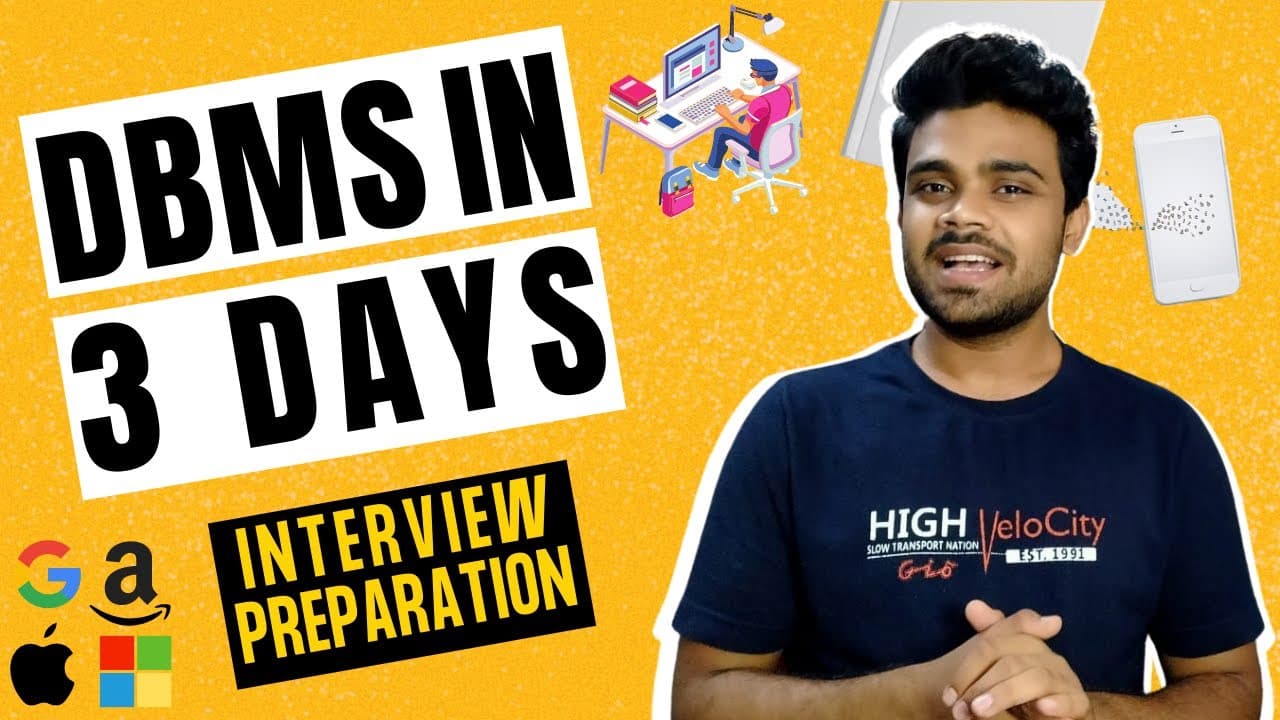
DBMS Roadmap for Placements | Complete DBMS in just 3 Days | All resources #Day 9
TL;DR
Key resources for mastering DBMS concepts for interviews.
Transcript
Hi everyone, Welcome back to leadcoding. I am Fraz and I am an incoming SDE at curefit. In today's video we are going to talk about Database management system. We will see what are the important topics of DBMS and from where we can study them. You will be ready for the interviews after doing this. But before that you should know that there are two ... Read More
Key Insights
- ❓ SQL constitutes approximately 60% of DBMS knowledge necessary for interviews, emphasizing its importance.
- 🥳 Theoretical parts cover critical concepts such as data normalization, transaction properties, and database selection, essential for comprehensive understanding.
- 💁 Fraz stresses using specific, vetted resources to prevent overwhelming candidates with unnecessary volume of information.
- 🤩 Time management is key in preparation; a focused study plan can yield effective learning in a short period.
- 🫵 Viewers are encouraged to engage by updating their interview progress, fostering a community of support during preparation.
- 🪡 Understanding client-specific database needs can enhance project discussions and is often a topic in practical interviews.
- ⛩️ The video also hints at advanced DBMS topics like system design, valuable for candidates seeking roles in startups or competitive environments.
Install to Summarize YouTube Videos and Get Transcripts
Explore YouTube Video Summarizer or Get YouTube Transcript Extractor
Questions & Answers
Q: Why is DBMS important in software development interviews?
DBMS is crucial because it constitutes a significant portion of technical assessments, with SQL accounting for 60%. Understanding DBMS ensures candidates can efficiently handle data manipulation and data structure questions, which are foundational skills for many software development roles.
Q: What resources does Fraz recommend for DBMS preparation?
Fraz suggests several resources, including short videos on specific topics like data abstraction and normalization. He highlights platforms like Prepinsta for concise notes and GFG for commonly asked questions, emphasizing the need to focus on quality over quantity when studying material.
Q: How should one allocate time for DBMS study?
Fraz recommends planning to cover DBMS materials over 2-3 days, dedicating a few hours each day. This approach allows students to digest the concepts fully and revise them multiple times, rather than cramming, which is less effective for long-term retention.
Q: What is the difference between SQL and NoSQL databases?
SQL databases are structured and use a predefined schema, making them suitable for complex queries and transactions. In contrast, NoSQL databases are more flexible and can handle unstructured data well, which is ideal for fast-paced development environments or big data applications.
Q: What are deadlocks in DBMS, and why are they important?
Deadlocks in DBMS refer to situations where two or more processes cannot proceed because each is waiting for the other to release resources. Understanding deadlocks is important because they can severely impact the performance and reliability of database systems, making knowledge of resolution techniques essential for candidates.
Q: How significant are theoretical questions in DBMS interviews?
While practical SQL questions dominate early interview rounds, theoretical questions still hold importance in technical interviews, especially for assessing candidates' understanding of fundamental database concepts. Being well-prepared in both areas enhances overall interview performance.
Summary & Key Takeaways
-
The video discusses important topics and resources related to Database Management Systems (DBMS), emphasizing the significance of SQL and theoretical aspects for interviews.
-
Fraz provides a structured approach to studying DBMS, offering links to specific resources and strategies to help viewers prepare efficiently within a few days.
-
Viewers are encouraged to engage with the content by commenting on their interview preparation and subscribing for future videos on various technical topics.
Read in Other Languages (beta)
Share This Summary 📚
Summarize YouTube Videos and Get Video Transcripts with 1-Click
Try YouTube Summary with ChatGPT & Claude or YouTube Transcript Generator
Explore More Summaries from Fraz 📚


Summarize YouTube Videos and Get Video Transcripts with 1-Click
Try YouTube Summary with ChatGPT & Claude or YouTube Transcript Generator