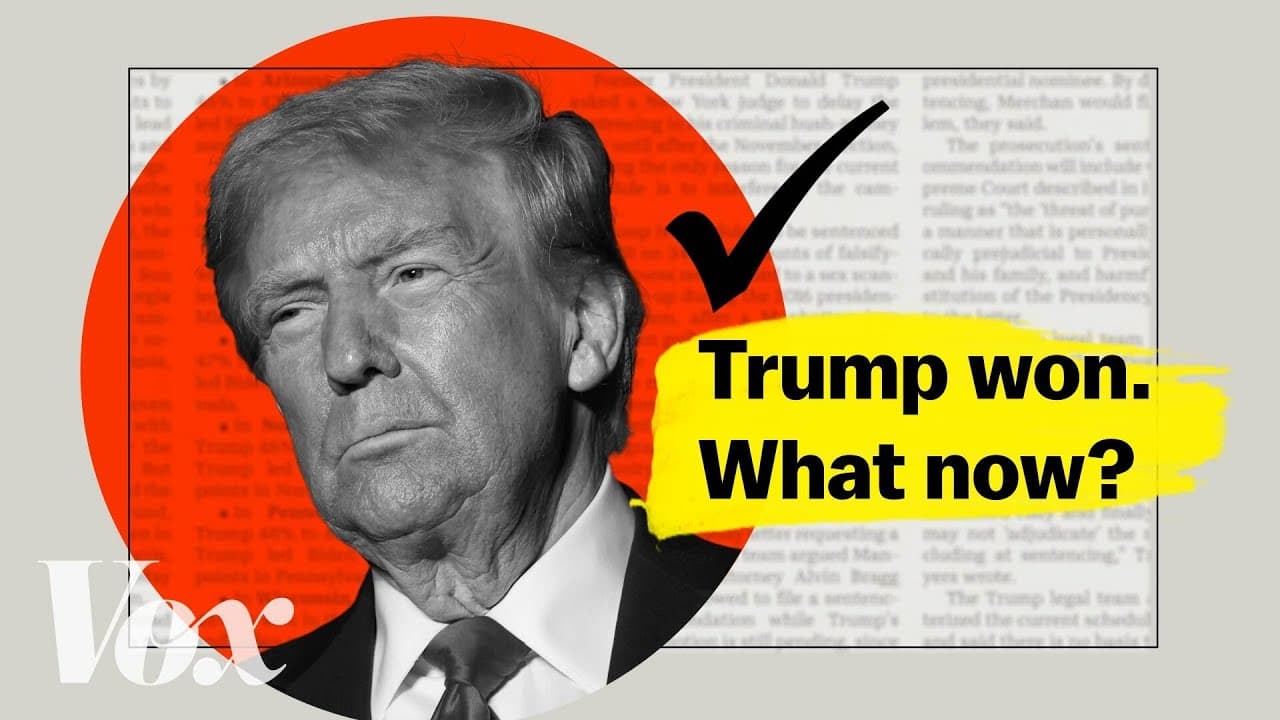
How Trump’s second term will be different
TL;DR
Trump's second term will be more organized and impactful.
Transcript
Donald Trump will become the 47th president of the United States. I want to thank the American people for the extraordinary honor of being elected your 47th president and your 45th president. [Crowd] USA! USA! USA! So I think we should start off by just saying what’s happening. And then my big question is going to be, how should we be thinking abou... Read More
Key Insights
- Trump's second presidency will differ significantly from his first, with a more organized approach and distinct policy objectives.
- The courts and Congress have become more Trump-friendly, potentially enabling him to implement more controversial policies.
- Trump aims to reclassify civil service positions to replace them with MAGA loyalists, increasing political influence within the government.
- Immigration policy under Trump will focus on mass deportations, requiring cooperation from local law enforcement in various states.
- Trump's influence on the Supreme Court has led to a decision granting him immunity from criminal prosecution for official acts.
- In foreign policy, Trump supports a blank check approach to Israel, potentially leading to significant geopolitical shifts in the region.
- Abortion rights are at risk under Trump's presidency, with potential enforcement of the Comstock Act banning abortion-related materials.
- Trump's proposed tariffs could raise consumer prices, reflecting his longstanding economic nationalism despite potential opposition within Congress.
Install to Summarize YouTube Videos and Get Transcripts
Explore YouTube Video Summarizer or Get YouTube Transcript Extractor
Questions & Answers
Q: How will Trump's second term differ from his first?
Trump's second term is expected to be more organized with clear policy objectives. He has learned from his first term and aims to implement more controversial policies with the support of a more Trump-friendly Congress and judiciary. This could lead to significant changes in immigration, foreign policy, and domestic governance.
Q: What changes are expected in immigration policy under Trump?
Trump plans to focus on mass deportations within the US, targeting undocumented individuals who have lived in the country for years. This policy shift will require cooperation from local law enforcement agencies, particularly in states supportive of Trump's agenda, such as Texas and Florida.
Q: What is the significance of the Supreme Court's decision regarding Trump's immunity?
The Supreme Court's decision grants Trump immunity from criminal prosecution for official acts, allowing him to potentially bypass legal constraints. This decision reflects the influence of Trump's appointees on the court and could have far-reaching implications for presidential power and accountability.
Q: How might Trump's foreign policy impact the Middle East?
Trump's foreign policy supports a blank check approach to Israel, potentially leading to significant geopolitical shifts. His administration may not restrain Israeli actions in Gaza and the West Bank, leading to increased tensions and possible permanent changes in regional dynamics, including the creation of a large refugee population.
Q: What are the potential implications for abortion rights under Trump's presidency?
Trump's presidency poses challenges for abortion rights, particularly with the potential enforcement of the Comstock Act, which could ban mailing abortion-related materials. This action could effectively create a nationwide ban on abortion, significantly impacting reproductive rights in the US.
Q: How do Trump's proposed tariffs reflect his economic policy?
Trump's proposed tariffs reflect his longstanding economic nationalism, aiming to impose a 10% tariff on all foreign imports. This policy could raise consumer prices and potentially undermine American manufacturing, despite potential opposition from Congress. It highlights Trump's belief in protectionist trade policies.
Q: What changes are expected in the US government's structure under Trump?
Trump aims to reclassify civil service positions, replacing them with MAGA loyalists to increase political influence within the government. This could lead to a more politicized bureaucracy, impacting the implementation of laws and potentially using government agencies for political ends.
Q: How might Trump's presidency affect US-Israel relations?
Trump's presidency is expected to strengthen US-Israel relations, with a supportive stance towards Israeli policies. This could lead to significant geopolitical changes, including potential annexation of parts of the West Bank and increased Israeli control over Gaza, with little restraint from the US.
Summary & Key Takeaways
-
Donald Trump's second term as president is expected to be markedly different from his first, with more organized policies and objectives. The political landscape has shifted in his favor, with a more supportive Congress and judiciary, allowing for potentially more controversial actions.
-
Immigration policy will see a shift towards mass deportations, focusing on the interior of the US rather than just the border. This will require significant law enforcement cooperation, particularly in states supportive of Trump's agenda.
-
Trump's presidency poses challenges for abortion rights, with potential enforcement of the Comstock Act. His foreign policy stance includes strong support for Israel, which could lead to major geopolitical changes. Economic policies, like tariffs, reflect his economic nationalism.
Read in Other Languages (beta)
Share This Summary 📚
Summarize YouTube Videos and Get Video Transcripts with 1-Click
Try YouTube Summary with ChatGPT & Claude or YouTube Transcript Generator
Explore More Summaries from Vox 📚



Summarize YouTube Videos and Get Video Transcripts with 1-Click
Try YouTube Summary with ChatGPT & Claude or YouTube Transcript Generator