Childhood growth | Miscellaneous | Heatlh & Medicine | Khan Academy
TL;DR
Genetics, hormonal balance, nutrition, and psychosocial factors play crucial roles in determining a child's growth pattern.
Transcript
SAL KHAN: I'm here with the Dr. Laura Bachrach at Stanford Medical School. And what are we going to talk about? DR. LAURA BACHRACH: We're going to talk about normal and abnormal growth in children. SAL KHAN: Fascinating. DR. LAURA BACHRACH: So this is an important concern. Parents really worry if their child is growing normally. And physicians worr... Read More
Key Insights
- 🖐️ Genetics is the primary determinant of a child's growth, but there are other factors at play.
- 🤕 Babies born small for their gestational age can catch up on the growth curve in the first few years of life.
- 👶 Nutrition, hormonal balance, and psychosocial factors also influence a child's growth.
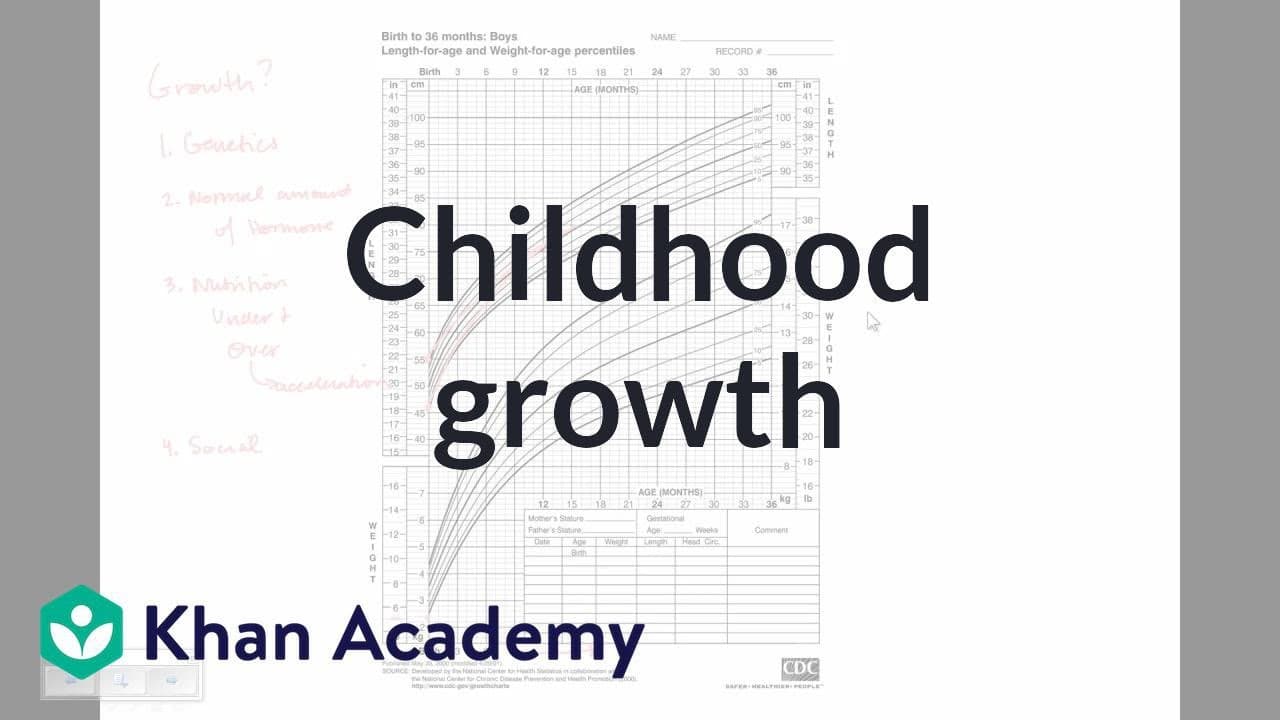
- 👶 Growth curves and percentiles help track a child's growth pattern.
- ☠️ Deviations from the normal growth rate may require further investigation.
- 🧡 Height predictions based on mid-parental height have a broad range of variability.
- 🥰 Psychosocial factors like love and support can impact a child's growth.
Install to Summarize YouTube Videos and Get Transcripts
Explore YouTube Video Summarizer or Get YouTube Transcript Extractor
Questions & Answers
Q: What are the determinants of a child's growth pattern?
The most important determinant is genetics, but other factors like prenatal care, nutrition, hormones, and psychosocial support also influence a child's growth pattern.
Q: Can a baby's size at birth accurately reflect their genetics?
No, a baby's size at birth can be influenced by factors like lack of prenatal care or smoking during pregnancy. Babies born small for their gestational age can catch up on the growth curve in the first few years of life.
Q: Can a child's height at age three predict their adult height?
Generally, a child's height at age three or four reflects their genetic potential. While there can be exceptions like late bloomers, a child's percentile at a young age is a good indicator of their future height.
Q: How do psychosocial factors impact a child's growth?
Psychosocial factors like inadequate interpersonal support or eating disorders can affect a child's physical development. Lack of parental love and support can even lead to a condition called psychosocial dwarfism.
Summary & Key Takeaways
-
Growth in children is an important concern for parents and physicians as it reflects overall health.
-
Genetics is the most important determinant of a child's growth, but other factors like prenatal care, nutrition, hormones, and psychosocial support also play a role.
-
Growth curves and percentiles are used to track a child's growth, and deviations from the normal rate may indicate potential issues that require investigation.
Read in Other Languages (beta)
Share This Summary 📚
Summarize YouTube Videos and Get Video Transcripts with 1-Click
Try YouTube Summary with ChatGPT & Claude or YouTube Transcript Generator
Explore More Summaries from Khan Academy 📚



Summarize YouTube Videos and Get Video Transcripts with 1-Click
Try YouTube Summary with ChatGPT & Claude or YouTube Transcript Generator