Contextualization--Islam | World History | Khan Academy
TL;DR
Islam rapidly spread across the Arab world within a century of Mohammed's death. The emergence of Islam can be attributed to a combination of factors such as unifying fragmented tribes, religious zeal, and taking advantage of conflicts between empires.
Transcript
- [Instructor] Here is a passage from the Scottish philosopher, writer, even a little bit of mathematics, historian Thomas Carlyle. And, he wrote this On Heroes, Hero-Worship, & the Heroic in History. And this is in reference to his view on Mohammed and the spread of Islam. A poor shepherd people, he's referring to the Arabs before Mohammed, roamin... Read More
Key Insights
- 🇦🇪 Mohammed's teachings unified fragmented Arab tribes and provided them with a sense of purpose through religious zeal.
- 💡 The influence of Christianity and Judaism shaped the ideas and beliefs of Islam, contributing to its emergence.
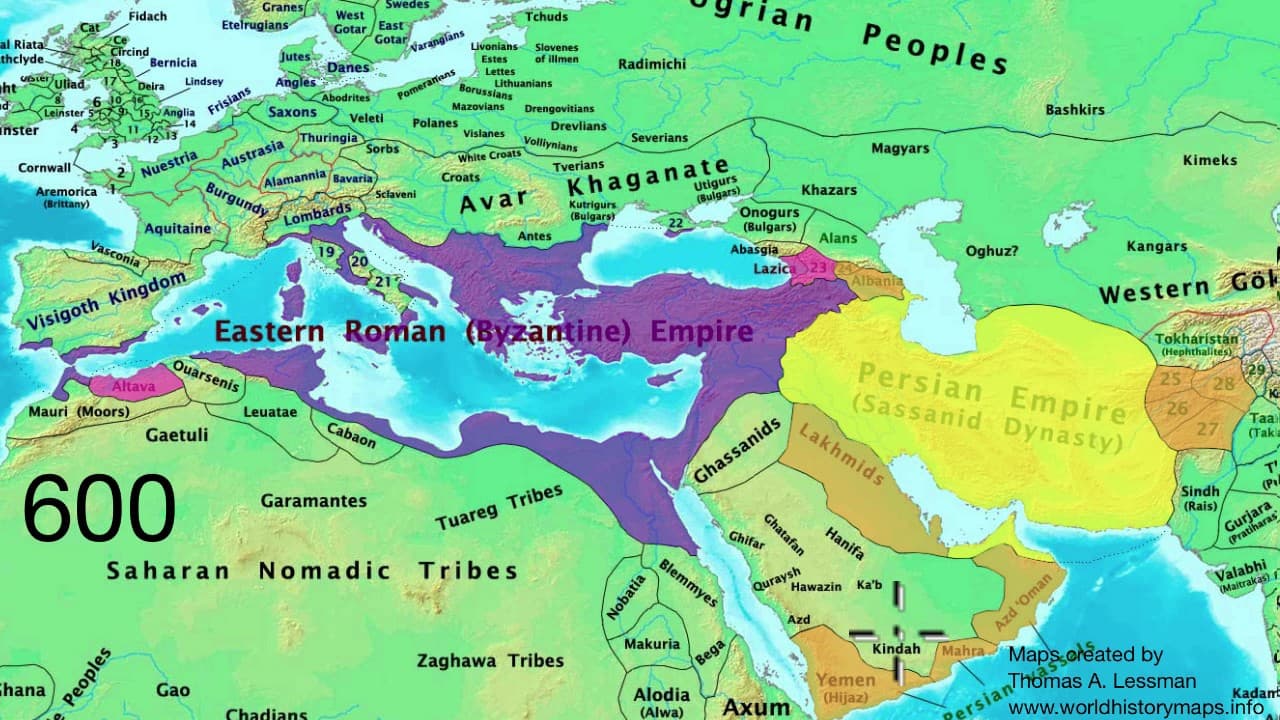
- 🥡 The Arabs took advantage of the Byzantine-Persian conflict to expand their influence rapidly.
- 😮 The combination of religious faith and governance under Mohammed allowed for the rapid rise and spread of Islam.
Install to Summarize YouTube Videos and Get Transcripts
Explore YouTube Video Summarizer or Get YouTube Transcript Extractor
Questions & Answers
Q: How did Mohammed's teachings unify the Arab tribes?
Mohammed's teachings provided a common belief system and purpose for the fragmented Arab tribes, fostering a sense of unity and collective identity among them.
Q: What role did Christianity and Judaism play in the rise of Islam?
The exposure to Christianity and Judaism in Arabia may have influenced the ideas and beliefs of Islam, contributing to its formation and the unification of the Arab tribes under a new religious framework.
Q: How did the Byzantine-Persian conflict benefit the spread of Islam?
The conflict between the Byzantine and Persian empires created a power vacuum and discontent among the people, making them more receptive to the message of Islam. The Arabs took advantage of this opportunity to expand their influence rapidly.
Q: Are there any other historical examples of rapid religious and territorial expansion like Islam?
The Mongol empire is a comparable example where initially fragmented tribes were unified under Genghis Khan, allowing them to swiftly spread and conquer vast territories, similar to the rapid expansion of Islam.
Summary & Key Takeaways
-
Mohammed's teachings brought together fragmented Arab tribes and gave them a sense of unity and purpose through religious zeal.
-
The influence of Christianity and Judaism in Arabia may have helped shape the ideas and beliefs of Islam.
-
The Byzantine-Persian conflict provided an opportunity for the Arabs to take advantage of discontent and expand their influence rapidly.
Read in Other Languages (beta)
Share This Summary 📚
Summarize YouTube Videos and Get Video Transcripts with 1-Click
Try YouTube Summary with ChatGPT & Claude or YouTube Transcript Generator
Explore More Summaries from Khan Academy 📚



Summarize YouTube Videos and Get Video Transcripts with 1-Click
Try YouTube Summary with ChatGPT & Claude or YouTube Transcript Generator