Why Armies don't stand a Chance in the Cold
TL;DR
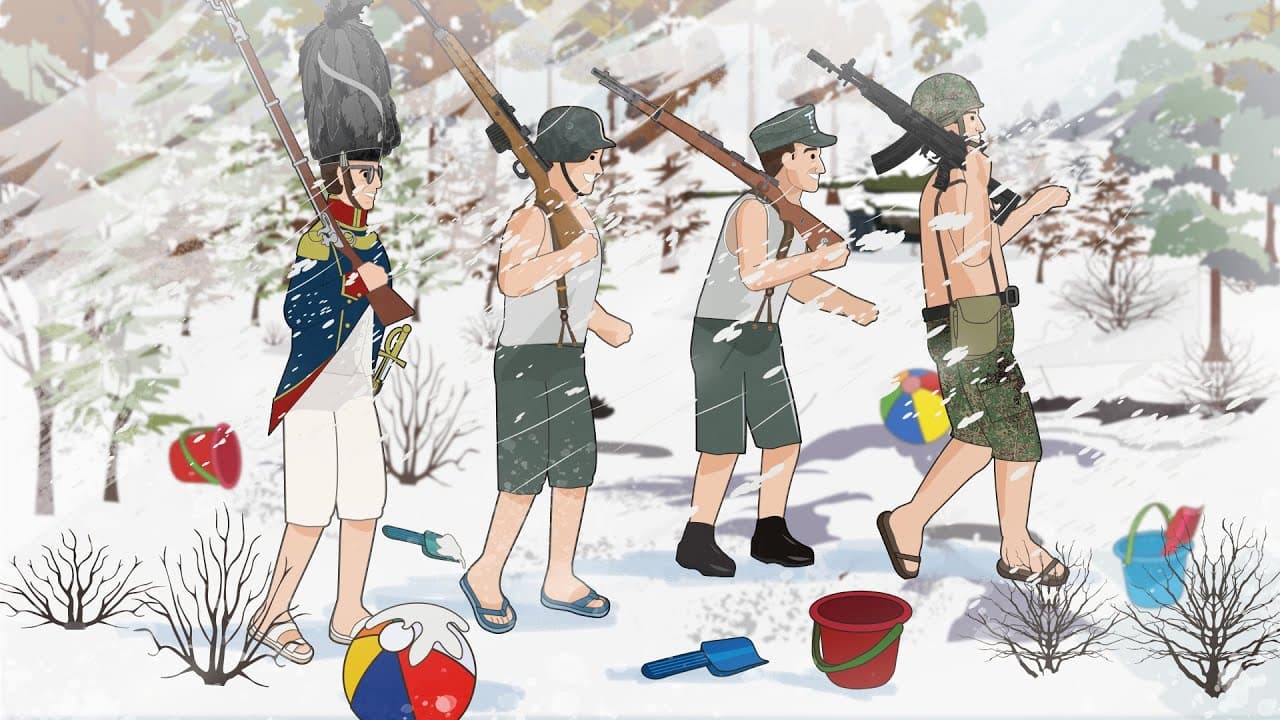
Various historical conflicts, such as the French invasion of Russia and the Winter War between Finland and the Soviet Union, highlight the challenges and consequences of fighting in harsh winter conditions.
Transcript
foreign Russian winter invasions the vast expanse of Russia has been a tantalizing prize for centuries the vast resources and land mass too much for many leaders to resist while Russian soldiers do their part they are often helped and sometimes hindered by General winter Russia's fickle Ally by 1812 the French Empire under Napoleon Bonaparte was in... Read More
Key Insights
- ❄️ Winter weather has been a decisive factor in many historical conflicts, posing significant challenges to invading forces and favoring defenders who are acclimated to the conditions.
- 🥺 Harsh winters can limit military operations, cause logistical difficulties, and lead to high casualty rates, as seen in the French invasion of Russia.
- 😀 Winter warfare tactics, such as ski mobility, camouflage, and guerrilla tactics, can provide advantages to smaller, less-equipped forces facing larger enemies, as demonstrated by Finland's resistance against the Soviet Union in the Winter War.
- 👾 The Russian winter has historically been a formidable adversary, not only for invading forces but also for Russian troops, as seen in the defeat of Napoleon's Grand Army and the German invasion in World War II.
Install to Summarize YouTube Videos and Get Transcripts
Explore YouTube Video Summarizer or Get YouTube Transcript Extractor
Questions & Answers
Q: How did the Russian winter impact the French invasion in 1812?
The Russian winter played a significant role in the failure of Napoleon's invasion. The harsh weather, coupled with the Russian scorched earth strategy, severely weakened the French Army and led to the loss of many soldiers.
Q: What tactics did Finland use during the Winter War against the Soviet Union?
Finland employed tactics such as camouflage, ski mobility, and guerrilla warfare to counter the Soviet forces. They utilized the harsh winter conditions to their advantage, inflicting heavy casualties on the larger and better-equipped Red Army.
Q: Which other conflicts were heavily influenced by winter conditions?
The Siege of Leningrad, the Battle of the Bulge during World War II, and Russia's invasion of Ukraine in 1917-1921 were all heavily impacted by winter conditions. These conflicts experienced severe logistical challenges, high casualties, and dire living conditions due to the winter weather.
Q: How did the Winter War impact Finland and the Soviet Union?
The Winter War was a costly conflict for both Finland and the Soviet Union. While Finland inflicted heavy losses on the Red Army and retained its independence, it ultimately had to cede territory to the Soviet Union. The war also showcased Finland's resilience in the face of a much larger enemy.
Summary & Key Takeaways
-
From the French invasion of Russia in 1812 to the Winter War between Finland and the Soviet Union in 1939-1940, winter proved to be a challenging and influential factor in these conflicts.
-
The French Army faced the brutal Russian winter during their invasion, leading to significant casualties and the eventual retreat of Napoleon's forces.
-
In the Winter War, Finland put up a fierce resistance against the Soviet Union, utilizing tactics like camouflage, ski mobility, and guerrilla warfare to hold off the larger and better-equipped enemy.
-
Other conflicts, such as the Siege of Leningrad, the Battle of the Bulge, and Russia's invasion of Ukraine, also experienced the harsh realities and consequences of fighting in winter conditions.
Read in Other Languages (beta)
Share This Summary 📚
Summarize YouTube Videos and Get Video Transcripts with 1-Click
Try YouTube Summary with ChatGPT & Claude or YouTube Transcript Generator
Explore More Summaries from Simple History 📚

Summarize YouTube Videos and Get Video Transcripts with 1-Click
Try YouTube Summary with ChatGPT & Claude or YouTube Transcript Generator