How Did Lunar Landers Re-Launch When There's No Oxygen?
TL;DR
Different types of propellants, such as solid and liquid, are used to generate power for vehicles and rockets in space travel.
Transcript
Whether it’s two-strokes or four, one cylinder or eight, most of the engines we use today are powered by the internal combustion of fuel and air; however, mixing gasoline and oxygen isn’t the only way to generate the energy needed to propel a craft, and in fact, sometimes it’s the least efficacious choice. In the typical gasoline-fueled car engine,... Read More
Key Insights
- ✊ Internal combustion engines in vehicles rely on oxygen from the atmosphere to produce power, while rockets carry their own propellants.
- ❤️🔥 Solid propellants combine the fuel and oxidizer together, while liquid propellants store them separately until firing.
- 🚀 Solid propellants have been used in launch vehicles, while liquid propellants offer higher efficiency and are used in various rockets.
- 😘 Cryogenic propellants, which require extremely low temperatures, have limited applications due to storage challenges.
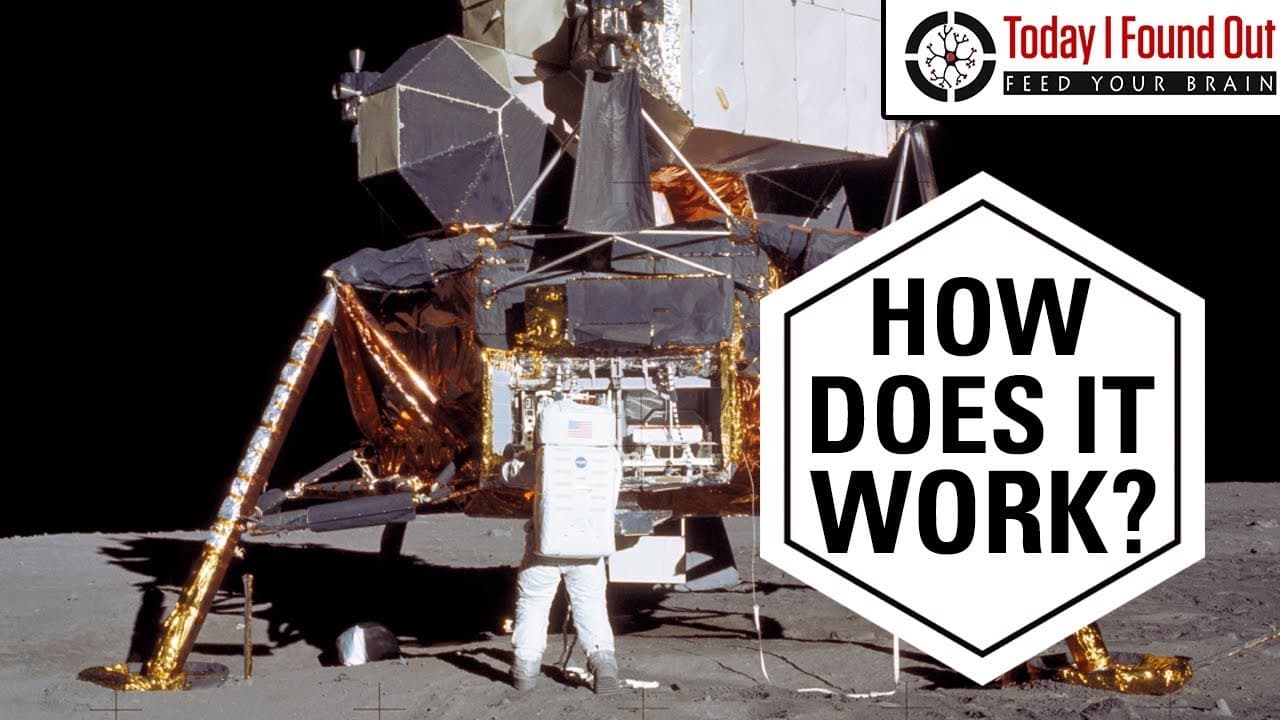
- ❓ Hypergolic propellants, despite being toxic and corrosive, have been widely used in maneuvering systems and the Apollo lunar module.
- 🚒 Engineering challenges and the corrosive nature of hypergolic propellants required frequent engine rebuilds for the Apollo lunar ascent module.
- 💦 Different subcontractors worked on the development of the lunar module's ascent engine, which used hypergolic propellants.
Install to Summarize YouTube Videos and Get Transcripts
Explore YouTube Video Summarizer or Get YouTube Transcript Extractor
Questions & Answers
Q: How do gasoline-fueled car engines generate power?
Gasoline-fueled car engines generate power by drawing in air and gasoline, compressing the mixture, and igniting it through a spark plug. The resulting explosion drives a piston, which in turn moves the crankshaft to produce power.
Q: How do rockets generate propulsion without oxygen in space?
Unlike vehicles that can draw air from the atmosphere for oxidation, rockets carry all their propellant. Rockets expel something, whether it's gas, liquid, solid, or radiant energy, through a nozzle to generate propulsion.
Q: What are the different types of solid propellants?
There are two main types of solid propellants: homogenous and composite. Homogenous solid propellants are a single, unstable compound of oxidizer and fuel. Composite solid propellants consist of distinct materials combined into a powdery or crystallized mixture.
Q: How do liquid propellants work in rockets?
Liquid propellants store oxidizers and fuels separately and combine them in a combustion chamber during the firing of the rocket. Petroleum-based, cryogenic, and hypergolic are the three main types of liquid propellants.
Summary & Key Takeaways
-
Most engines today, whether two-stroke or four-stroke, use the internal combustion of fuel and air to generate power.
-
Gasoline-fueled car engines work by drawing in air and gasoline, compressing the mixture, and igniting it to produce power.
-
Rockets, on the other hand, rely on the expulsion of gas, liquid, solid, or radiant energy through a nozzle for propulsion.
Read in Other Languages (beta)
Share This Summary 📚
Summarize YouTube Videos and Get Video Transcripts with 1-Click
Try YouTube Summary with ChatGPT & Claude or YouTube Transcript Generator
Explore More Summaries from Today I Found Out 📚






Summarize YouTube Videos and Get Video Transcripts with 1-Click
Try YouTube Summary with ChatGPT & Claude or YouTube Transcript Generator