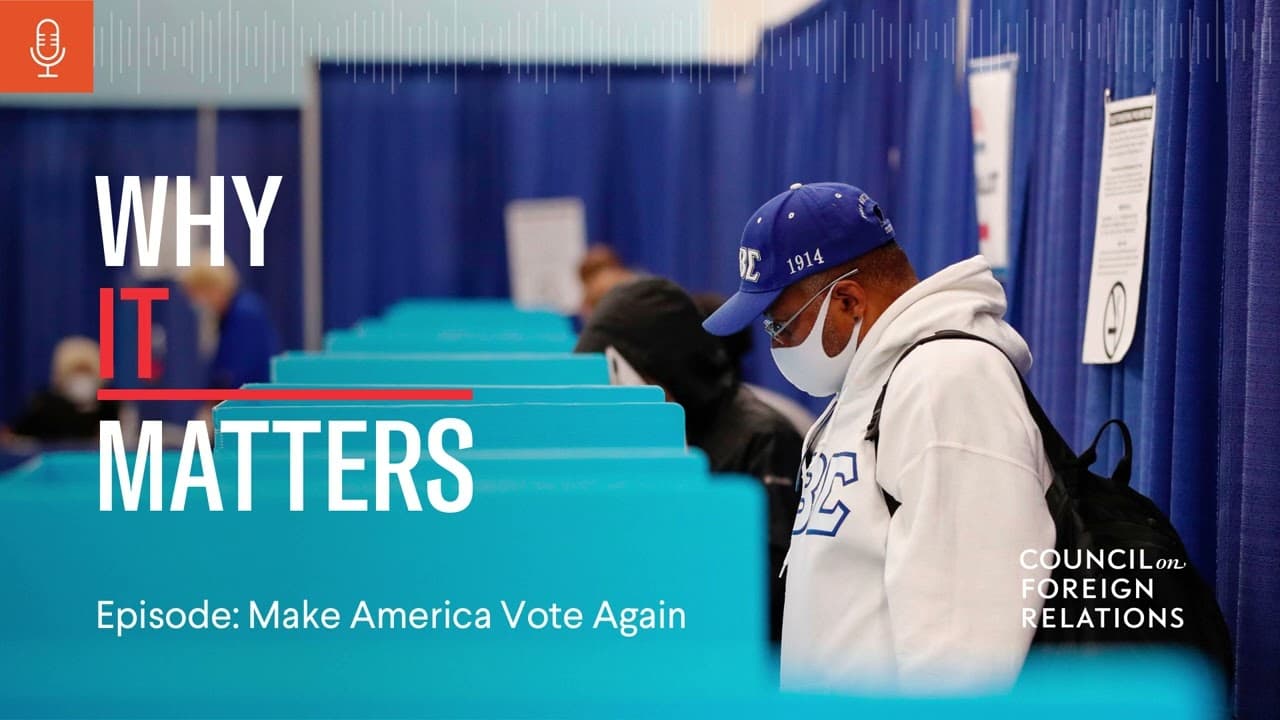
How Can the U.S. Increase Voter Turnout?
TL;DR
Explores reasons for low U.S. voter turnout and potential solutions.
Transcript
HELGA: Hi, my name is Helga and I’m from Iceland. Election day in Iceland is always on a Saturday and the government encourages people to vote. Election day is also always in the summertime, so no one is weather-trapped or can’t make it because of bad weather conditions. FATIMAH: Hi everyone, my name is Fatimah. I’m from Ecuador and I just want... Read More
Key Insights
- U.S. voter turnout is significantly lower compared to other democracies, with only 55% participating in the 2016 election.
- Experts argue that low voter turnout in the U.S. undermines democracy by allowing politicians to ignore non-voting groups.
- Systemic issues like voter suppression, complex voting processes, and lack of a national voter registry contribute to low turnout.
- Countries like Australia have high voter turnout due to mandatory voting, easy access, and a strong sense of civic duty.
- Mandatory voting in Australia is seen as a social norm rather than a constraint, fostering widespread participation.
- Educational and psychological barriers, such as the belief that votes don't matter, deter many Americans from voting.
- Long lines and complex ballots in the U.S. discourage voter participation, highlighting the need for streamlined processes.
- Improving civic education and fostering a culture of voting are crucial for increasing turnout and democratic engagement.
Install to Summarize YouTube Videos and Get Transcripts
Explore YouTube Video Summarizer or Get YouTube Transcript Extractor
Questions & Answers
Q: What are the main reasons for low voter turnout in the U.S.?
Low voter turnout in the U.S. is attributed to several factors, including voter suppression, complex voting processes, and a lack of civic education. Systemic barriers, such as registration difficulties and long voting lines, also discourage participation. Additionally, many Americans feel their votes don't matter, leading to apathy.
Q: How does Australia's voting system differ from the U.S.?
Australia's voting system includes mandatory voting, which requires citizens to vote or face a penalty. Voting is designed to be easy and enjoyable, with elections held on weekends and a strong sense of civic responsibility. This contrasts with the U.S., where voting is voluntary and often complicated by varying state laws and procedures.
Q: What role does civic education play in voter turnout?
Civic education is crucial for voter turnout as it informs citizens about the importance of voting and how to participate effectively. A decline in civic education in the U.S. has contributed to voter apathy and a lack of understanding about the voting process, which in turn lowers participation rates.
Q: Why is high voter turnout important for democracy?
High voter turnout is vital for democracy because it ensures that elected officials represent a broader spectrum of the population. It encourages politicians to address the needs of all citizens, not just their base, leading to more balanced and inclusive policies. High turnout also strengthens the legitimacy and functionality of democratic institutions.
Q: What are some proposed solutions to increase voter turnout in the U.S.?
Proposed solutions to increase voter turnout in the U.S. include implementing same-day voter registration, automatic voter registration, and weekend voting. Enhancing voter education, simplifying the voting process, and establishing a national voting holiday are also suggested to make voting more accessible and appealing.
Q: How does voter suppression impact turnout in the U.S.?
Voter suppression impacts turnout by creating barriers that make it difficult for certain groups, particularly minorities and low-income individuals, to vote. Tactics such as strict ID laws, limited polling places, and purging voter rolls disproportionately affect these groups, leading to lower participation and less representation in the democratic process.
Q: What are the challenges of implementing mandatory voting in the U.S.?
Implementing mandatory voting in the U.S. faces challenges such as cultural resistance to perceived constraints on freedom and potential legal issues related to the First Amendment. Additionally, there is a lack of political will, and the diverse and decentralized nature of the U.S. voting system complicates nationwide implementation.
Q: How does long-term voter engagement benefit democracy?
Long-term voter engagement benefits democracy by ensuring continuous representation and accountability. It encourages politicians to address the needs of a diverse electorate, leading to more equitable policies. Sustained engagement also strengthens democratic institutions, increases public trust, and fosters a political culture that values participation and civic responsibility.
Summary & Key Takeaways
-
The U.S. ranks low in voter turnout among advanced democracies, with systemic issues like voter suppression and complex voting processes being major barriers. Experts suggest that enhancing civic education and simplifying voting could improve participation.
-
Countries like Australia achieve high voter turnout through mandatory voting and creating a culture where voting is a social norm. The U.S. could benefit from similar practices, though implementing them poses challenges due to cultural differences.
-
Efforts to increase voter turnout in the U.S. face obstacles, including political resistance and lack of a unified voting system. However, fostering a culture of voting and improving educational outreach could help bridge the gap in participation.
Read in Other Languages (beta)
Share This Summary 📚
Summarize YouTube Videos and Get Video Transcripts with 1-Click
Try YouTube Summary with ChatGPT & Claude or YouTube Transcript Generator
Explore More Summaries from Council on Foreign Relations 📚


Summarize YouTube Videos and Get Video Transcripts with 1-Click
Try YouTube Summary with ChatGPT & Claude or YouTube Transcript Generator