How To Make Your Own Flour At Home
TL;DR
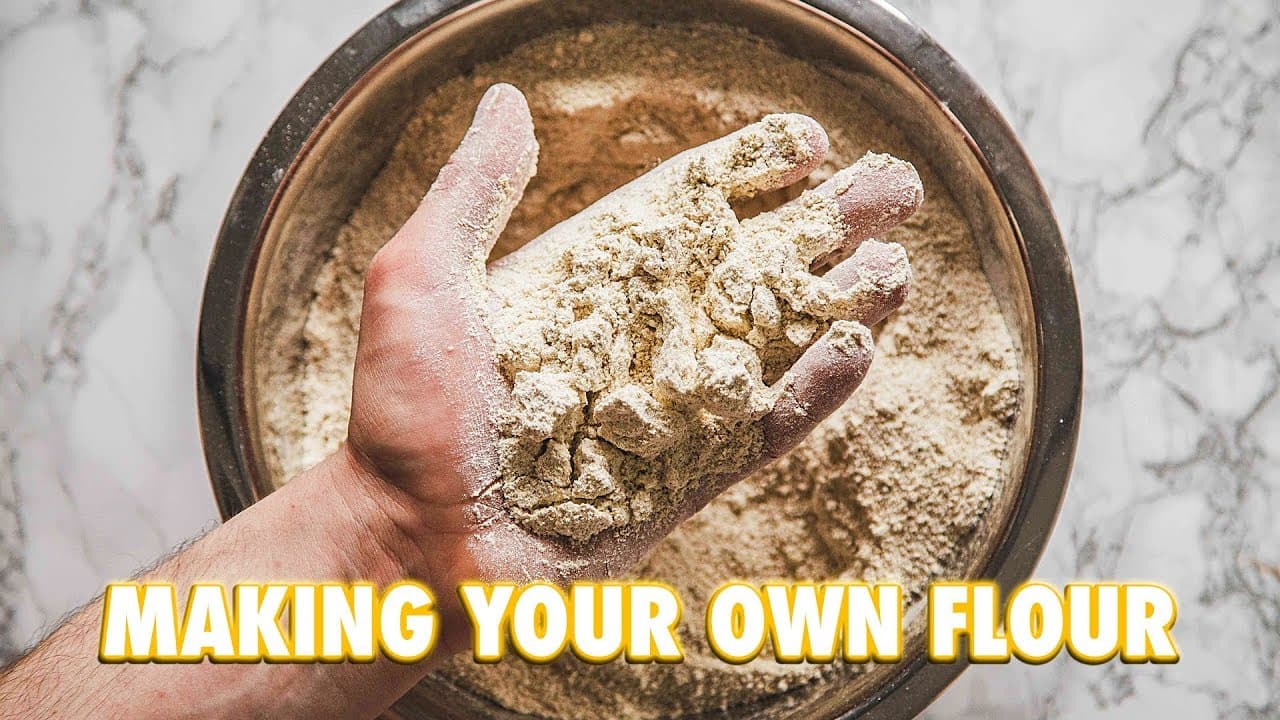
Learn how to mill your own flour, which offers better control, superior flavor, and nutritional benefits for your homemade baked goods.
Transcript
hey are you extra and do you like to bake well let me present to you milling flour with our patented we're not gonna do that look it's 2019 we can no our own darn flour now I know that the number one question here is gonna be well why no your own flour that's so well extra and to that I ask you well why do anything why go through the process of mak... Read More
Key Insights
- 👻 Milling your own flour gives you complete control over the baking process and allows for a more personalized and enjoyable baking experience.
- 💄 Different varieties of wheat have different protein and gluten contents, making some more suitable for bread making while others are better for cakes and cookies.
- 🛟 Temperature control during milling is crucial to preserve the natural yeast in the flour and ensure a successful fermentation process.
- 😮 Sifting freshly milled flour is optional and depends on personal preference, as it affects the rise, flavor, and texture of the final bread.
Install to Summarize YouTube Videos and Get Transcripts
Explore YouTube Video Summarizer or Get YouTube Transcript Extractor
Questions & Answers
Q: Why should I mill my own flour instead of buying it from a bakery?
Milling your own flour allows you to have complete control over the process, from selecting the wheat berries to grinding the flour to your desired consistency. It gives you the opportunity to create a unique product and enjoy the benefits of fresh, nutritious, and flavorful homemade bread.
Q: What types of wheat are suitable for bread making?
Hard wheat is recommended for bread making due to its higher protein and gluten content. Varieties such as hard red spring wheat or hard red winter wheat are commonly used. Each variety has its own unique flavor profile, so it's a matter of personal preference to find your favorite.
Q: Is temperature important when milling flour?
Yes, temperature plays a crucial role, especially if you're making sourdough bread. The friction produced during the grinding process can generate heat, which may affect the yeast in the flour. It is essential to test the temperature of the freshly ground flour to ensure it stays below 115°F (46°C) to preserve the natural yeast's fermentation properties.
Q: Do I need to sift my freshly milled flour?
Sifting is optional and depends on personal preference. Sifting can remove some bran and germ, resulting in a lighter, higher-rise bread with a different flavor profile and texture. If you prefer the full effect of fermentation properties and flavor, it's perfectly fine to use unsifted flour.
Summary & Key Takeaways
-
Milling your own flour allows you to have control over every aspect of the process, from choosing the wheat berries to achieving the desired grind consistency.
-
Hard wheat is recommended for bread making due to its higher protein and gluten content, while soft wheat is better suited for cakes and cookies.
-
Temperature and grind consistency are crucial factors when milling flour, as maintaining a suitable temperature and finely grinding the flour can result in better rise and flavor.
Read in Other Languages (beta)
Share This Summary 📚
Summarize YouTube Videos and Get Video Transcripts with 1-Click
Try YouTube Summary with ChatGPT & Claude or YouTube Transcript Generator
Explore More Summaries from Joshua Weissman 📚






Summarize YouTube Videos and Get Video Transcripts with 1-Click
Try YouTube Summary with ChatGPT & Claude or YouTube Transcript Generator