Attributes of IdMaaS
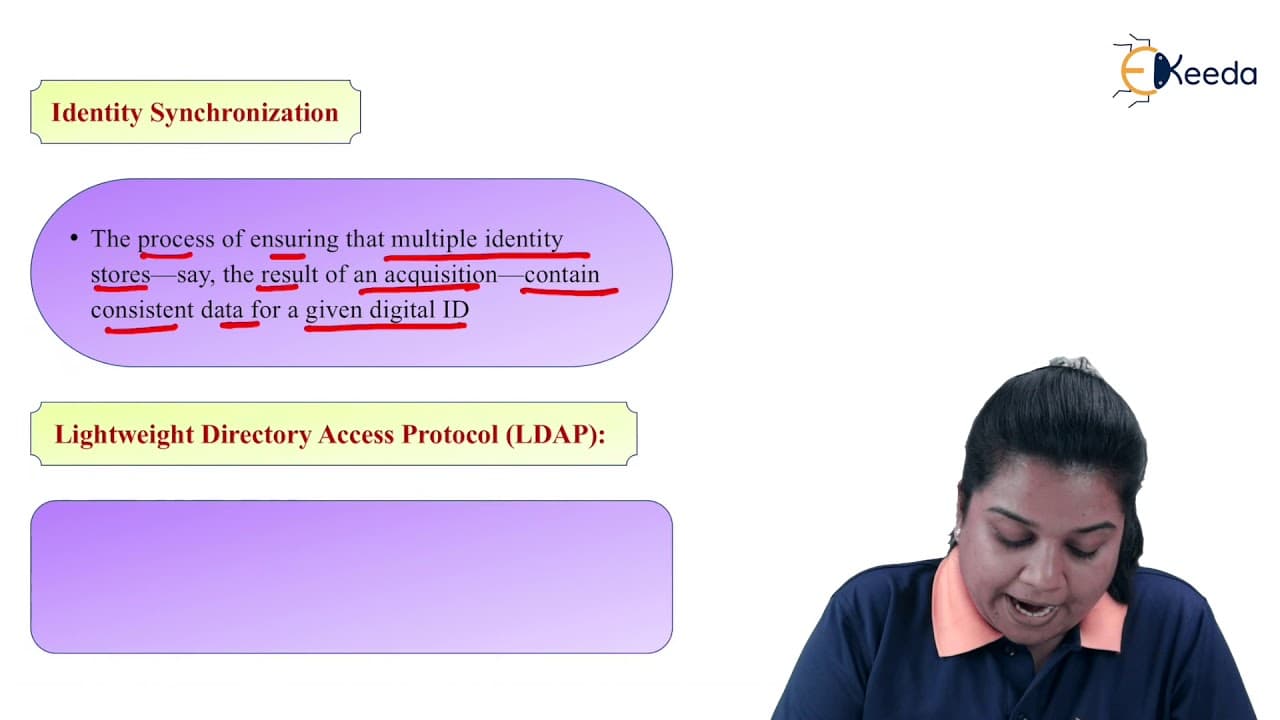
TL;DR
Learn about the key attributes of Identity as a Service, including access management, active directory, biometric authentication, and more.
Transcript
hello friends today we are going to learn about the topic attributes of identity as a service in which we are going to learn what are the things or attributes identity as a service has so that it can improve a users experience and users jump to identity as a service for its values identity as a service or attributes of identity as a service identit... Read More
Key Insights
- ♿ Access management is crucial for controlling and monitoring network access in Identity as a Service.
- 🖐️ Active Directory, developed by Microsoft, plays a vital role as a user identity directory service in Windows domain networks.
- 👤 Biometric authentication enhances security by using unique user characteristics for identity verification.
- ♿ Context-aware network access control ensures that only authorized users can access network resources based on the current context.
- ❓ Identity lifecycle management encompasses the processes and technologies for maintaining and updating digital identities.
- 🤗 Lightweight Directory Access Protocol (LDAP) is an open standard protocol for managing and accessing distributed directory services.
- 🧑🏭 Multi-factor authentication adds an extra layer of security by requiring additional authentication steps beyond a username and password.
- 👤 Password reset features empower users to regain access to their accounts without administrator intervention.
Install to Summarize YouTube Videos and Get Transcripts
Explore YouTube Video Summarizer or Get YouTube Transcript Extractor
Questions & Answers
Q: What is access management in the context of Identity as a Service?
Access management refers to the processes and technologies used to control and monitor network access. It includes authentication, authorization, trust, and security auditing to ensure proper rights for users.
Q: How does biometric authentication work in Identity as a Service?
Biometric authentication relies on unique user characteristics like fingerprints, iris or retina scans, and facial recognition. The user's biometric data is compared with stored templates to grant authentication and access to cloud resources securely.
Q: What is the role of deprovisioning in Identity as a Service?
Deprovisioning is the process of removing an identity from an ID repository and revoking access privileges. It helps manage and ensure the security of user accounts, especially when an individual leaves an organization.
Q: How does risk-based authentication function in Identity as a Service?
Risk-based authentication dynamically adjusts authentication requirements based on the user's situation. For instance, if a user attempts to authenticate from an unfamiliar geographic location, additional verification steps may be required to mitigate potential security threats.
Summary & Key Takeaways
-
Identity as a Service, or IAM, focuses on managing user accounts and access rights for organizations.
-
The attributes of IAM include access management, active directory, biometric authentication, and context-aware network access control.
-
Other attributes include credentials, deprovisioning, digital identity, entitlements, identity lifecycle management, identity synchronization, lightweight directory access protocol, multi-factor authentication, password reset, privileged account management, provisioning, risk-based authentication, security principles, and single sign-on.
Read in Other Languages (beta)
Share This Summary 📚
Summarize YouTube Videos and Get Video Transcripts with 1-Click
Try YouTube Summary with ChatGPT & Claude or YouTube Transcript Generator
Explore More Summaries from Ekeeda 📚






Summarize YouTube Videos and Get Video Transcripts with 1-Click
Try YouTube Summary with ChatGPT & Claude or YouTube Transcript Generator