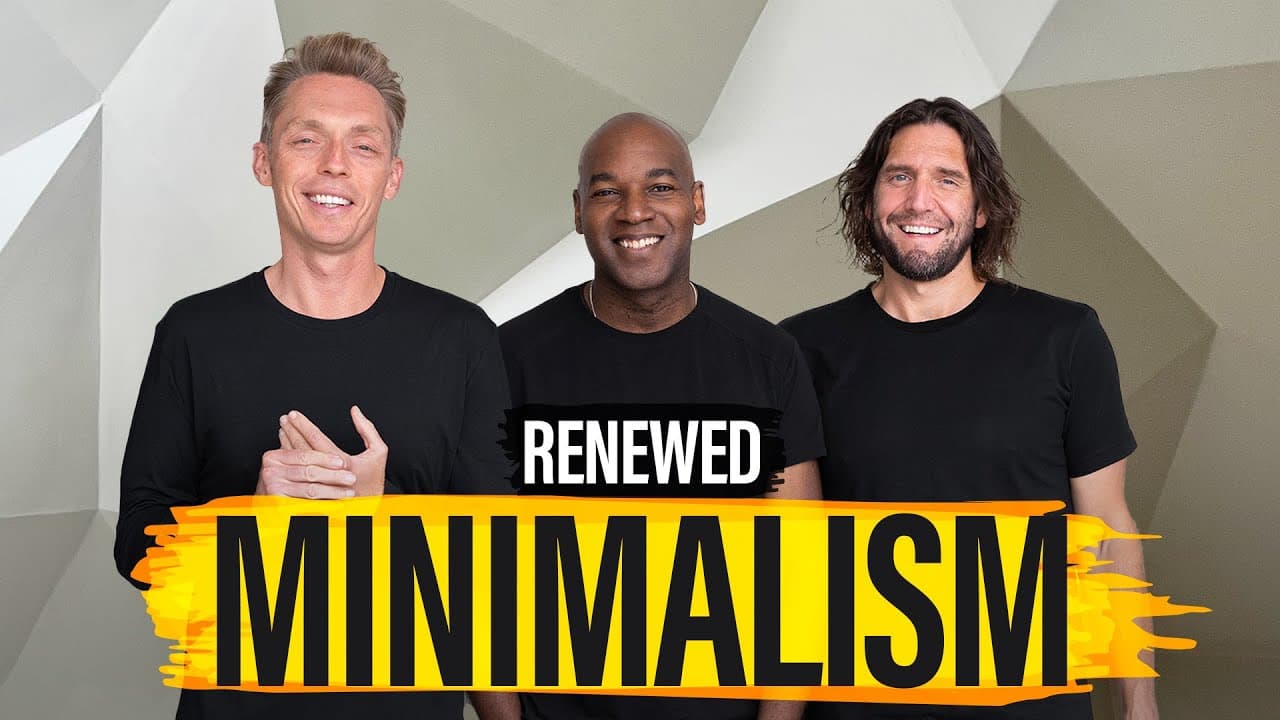
Ep. 397 | Renewed Minimalism
TL;DR
The Minimalists discuss overcoming shopping addiction and family exploitation.
Transcript
hello everybody Welcome to the minimalist podcast where we discuss what it means to live a meaningful life with less my name is Joshua fields milver and I'm Ryan Nicodemus and together we are the minimalists we're here with our favorite disembodied voice from Alabama hi everybody and of course welcome back ladies and gentlemen TK Coleman sir yes mu... Read More
Key Insights
- Shopping addiction can be addressed by setting boundaries and understanding the underlying emotional triggers. The Minimalists suggest using tools like the 'wait for it' rule to manage impulses.
- Family dynamics can become toxic when financial dependence is involved. It's crucial to establish boundaries and prioritize self-care over familial obligations.
- The sharing economy, including services like Uber and Airbnb, has both positive and negative impacts on communities and individuals. Users should weigh ethical considerations with personal needs.
- Supportive partners provide both encouragement and constructive criticism. They help maintain balance by acknowledging achievements while also addressing potential pitfalls.
- The death of a parent can significantly alter one's identity, prompting introspection and reevaluation of personal values and life direction.
- Minimalism: A Documentary About the Important Things is now available on YouTube, allowing wider access to its insights on living a meaningful life with less.
- The Minimalists emphasize that love is about seeing people as they are, and not trying to change them. True love requires risking relationships by being honest and transparent.
- Being bothered by external factors often stems from internal narratives. Choosing gratitude over bitterness can lead to a more fulfilling life.
Install to Summarize YouTube Videos and Get Transcripts
Explore YouTube Video Summarizer or Get YouTube Transcript Extractor
Questions & Answers
Q: How can I heal from shopping addiction and emotional abuse?
Healing from shopping addiction involves understanding the emotional triggers that lead to compulsive buying. The Minimalists recommend setting boundaries, such as the 'wait for it' rule, which adds friction to purchasing decisions and helps manage impulses. Emotional abuse recovery requires establishing boundaries with toxic relationships and prioritizing self-care. Seeking professional help and support from trusted individuals can also be beneficial.
Q: What are The Minimalists’ views on the ethics of using sharing-economy services like Uber and Airbnb?
The Minimalists recognize that sharing-economy services have both positive and negative impacts. While they provide convenience and income opportunities, they can also disrupt communities and exploit workers. Users should weigh these ethical considerations with their personal needs. The Minimalists encourage listeners to be mindful consumers and to consider the broader implications of their choices.
Q: What makes a supportive partner?
A supportive partner offers both encouragement and constructive criticism. They help maintain balance by acknowledging achievements while also addressing potential pitfalls. Open communication and honesty are crucial for healthy relationships. Supportive partners are willing to risk the relationship by being truthful, as genuine love involves seeing and accepting each other as they are, without trying to change them.
Q: Now that Minimalism: A Documentary About the Important Things is available for free on YouTube, will the bonus content still be available for purchase?
Yes, the bonus content for Minimalism: A Documentary About the Important Things will still be available for purchase. This includes additional interviews and extended footage that didn't make it into the final cut of the film. The Minimalists have made the documentary available for free on YouTube to reach a wider audience, but the bonus content remains accessible for those interested in deeper insights.
Q: How does the death of a parent affect one’s identity?
The death of a parent can significantly alter one's identity, prompting introspection and a reevaluation of personal values and life direction. It often leads to a deeper understanding of oneself and can catalyze personal growth. The loss may bring about a sense of independence and self-reliance, as individuals navigate life without parental guidance. This experience can also strengthen the appreciation for life and relationships.
Q: Why is hidden clutter considered the most toxic form of clutter?
Hidden clutter is considered the most toxic form of clutter because it represents unresolved issues and unaddressed emotional baggage. It can create a false sense of organization while contributing to mental and emotional stress. By concealing clutter, individuals may ignore the underlying problems associated with their possessions. Addressing hidden clutter involves confronting these issues and making conscious decisions about what to keep and what to let go.
Q: How can we avoid shame from others while downsizing?
Avoiding shame from others while downsizing involves focusing on personal values and priorities rather than external judgments. The Minimalists suggest being transparent about one's reasons for downsizing and embracing the benefits of a simpler life. It's important to remember that downsizing is a personal journey, and others' opinions should not dictate one's choices. Building a supportive community of like-minded individuals can also help reinforce positive change.
Q: What is the impact of being bothered by external factors?
Being bothered by external factors often stems from internal narratives and perceptions. It can lead to stress, dissatisfaction, and a sense of helplessness. The Minimalists encourage shifting focus from negativity to gratitude, as this can lead to a more fulfilling life. By choosing to let go of disempowering stories and embracing acceptance, individuals can cultivate resilience and find peace amid life's challenges.
Summary & Key Takeaways
-
The Minimalists address a listener's struggle with shopping addiction and family exploitation, offering advice on setting boundaries and understanding emotional triggers. They emphasize the importance of self-care and suggest practical tools like the 'wait for it' rule to manage impulses.
-
The podcast explores the ethical implications of using sharing economy services like Uber and Airbnb. While these services offer convenience and income opportunities, they also raise concerns about community impact and worker exploitation. The Minimalists encourage listeners to consider these factors in their decision-making.
-
A discussion on supportive partnerships highlights the balance between encouragement and constructive criticism. The Minimalists stress the importance of open communication and honesty in maintaining healthy relationships. They also reflect on the personal growth that can follow the death of a parent.
Read in Other Languages (beta)
Share This Summary 📚
Summarize YouTube Videos and Get Video Transcripts with 1-Click
Try YouTube Summary with ChatGPT & Claude or YouTube Transcript Generator
Explore More Summaries from The Minimalists Podcast 📚






Summarize YouTube Videos and Get Video Transcripts with 1-Click
Try YouTube Summary with ChatGPT & Claude or YouTube Transcript Generator