NVIDIA’s AI Learned On 40,000,000,000 Materials!
TL;DR
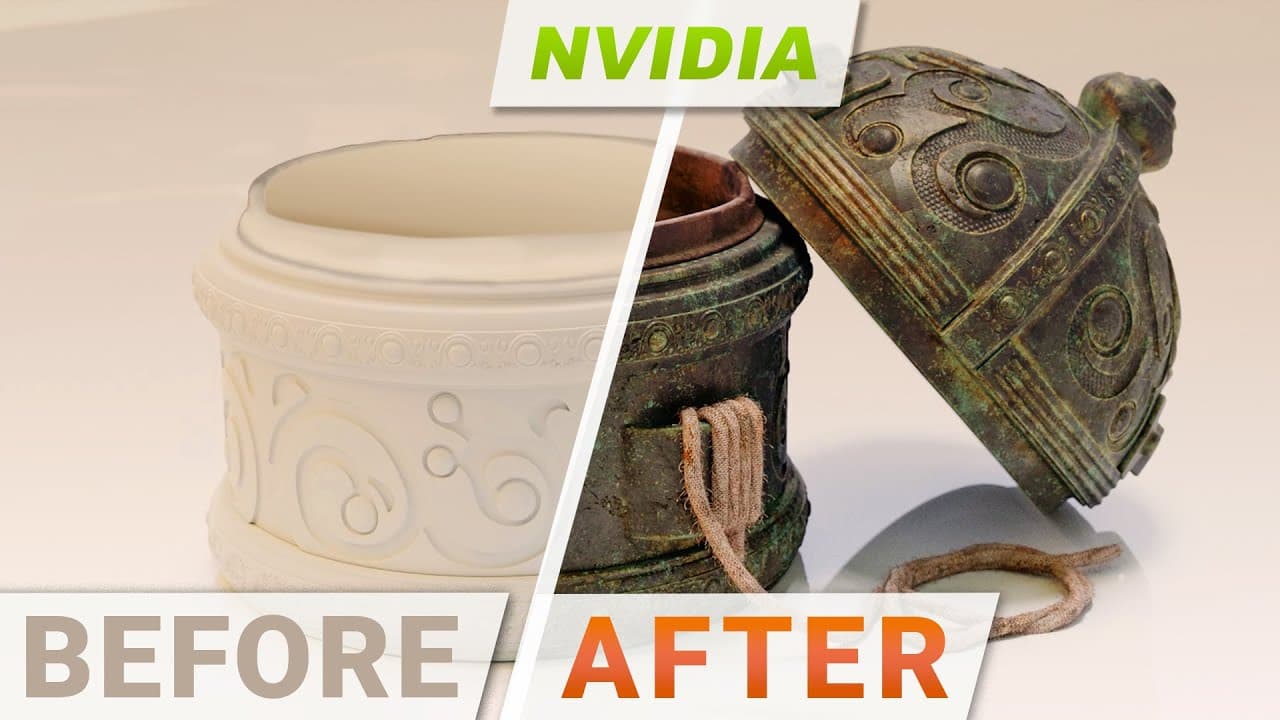
Computer graphics research paper introduces a neural network-based technique to simulate realistic materials that is faster and more accurate than traditional methods.
Transcript
Wow, I am really surprised by this paper. You see, we know from an earlier paper that in virtual worlds, glittery materials like this, and brushed aluminum surfaces like this can be rendered with ray tracing based techniques. Light simulations on a computer, if you will. That is wonderful, but I am not surprised by that. What I am surprised about i... Read More
Key Insights
- ✋ The paper introduces a breakthrough technique for simulating realistic materials in virtual worlds with high accuracy and efficiency.
- 💨 The neural network-based approach compresses a massive amount of data into a lightweight encoder for fast training and running.
- ❓ The simulation results are nearly indistinguishable from reference solutions and exhibit less noise.
- ⌛ The technique is 2-10 times faster than traditional methods, opening up possibilities for real-time simulations.
Install to Summarize YouTube Videos and Get Transcripts
Explore YouTube Video Summarizer or Get YouTube Transcript Extractor
Questions & Answers
Q: How does the neural network-based technique simulate realistic materials?
The technique takes a large amount of material reflectance data and uses a lightweight encoder to compress it into manageable parameters. This allows for efficient training and running of the simulation.
Q: Is the simulation technique as good as a true, reference simulation?
Yes, the simulation technique is not only as good as a true reference simulation but even better in terms of reducing noise. It produces nearly indistinguishable results and is more efficient.
Q: How fast is the simulation technique compared to reference solutions?
The simulation technique is 2-10 times faster than reference solutions. This speed improvement is significant and opens up possibilities for real-time simulations.
Q: Can the simulation technique be done in real time?
Although there is still some noise in the current simulations, advancements in noise filtering techniques tailored for ray tracing algorithms make it likely that real-time simulations will be achievable in the near future.
Summary & Key Takeaways
-
This research paper introduces a technique to simulate realistic materials in virtual worlds, including ceramics, fingerprints, dust, and smudges.
-
The technique utilizes a neural network that compresses a massive amount of material reflectance data into a lightweight encoder for efficient training and running.
-
The simulation results are nearly indistinguishable from reference solutions and are 2-10 times faster.
Read in Other Languages (beta)
Share This Summary 📚
Summarize YouTube Videos and Get Video Transcripts with 1-Click
Try YouTube Summary with ChatGPT & Claude or YouTube Transcript Generator
Explore More Summaries from Two Minute Papers 📚



Summarize YouTube Videos and Get Video Transcripts with 1-Click
Try YouTube Summary with ChatGPT & Claude or YouTube Transcript Generator