How Did Perestroika and Glasnost Change the USSR?
TL;DR
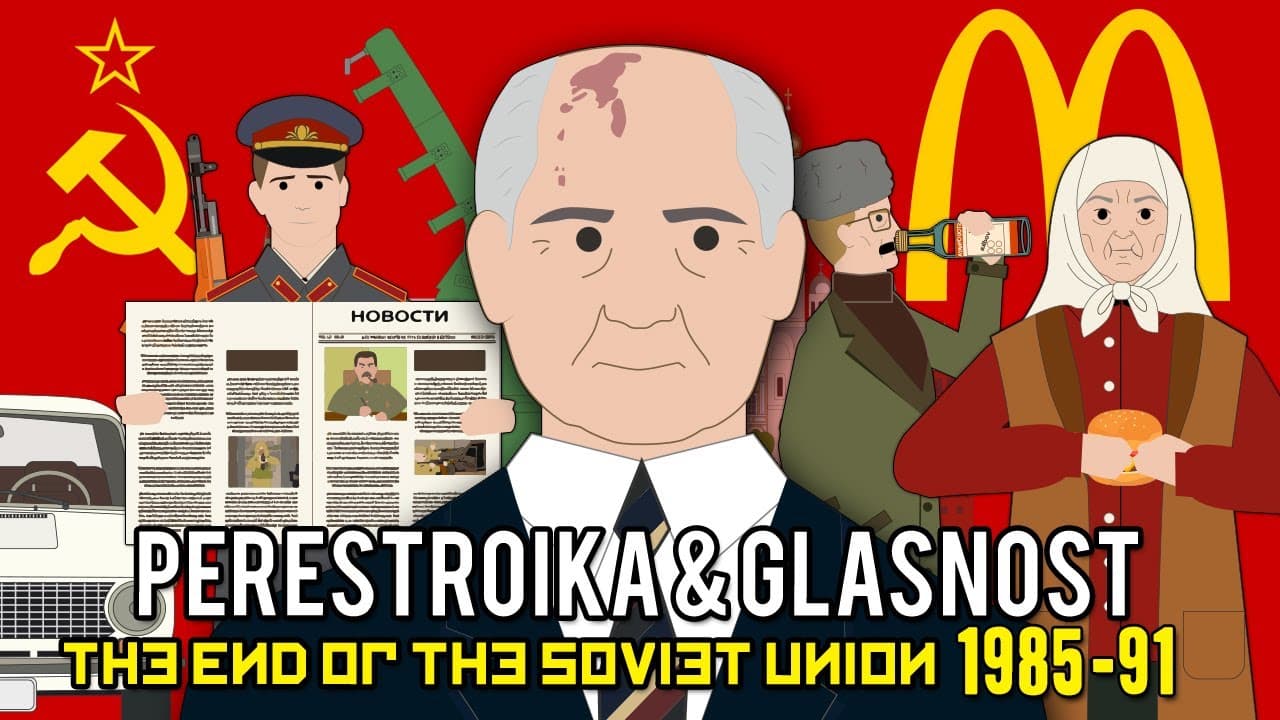
Perestroika aimed to restructure the stagnant Soviet economy by introducing market reforms, granting businesses more autonomy. Glasnost sought to increase government transparency, reduce censorship, and promote freedom of expression, leading to a cultural renaissance in Russia. Together, these reforms marked significant changes that ultimately contributed to the collapse of the Soviet Union.
Transcript
this episode is brought to you by ground news in today's world of online news and social media seeing the full picture and staying informed is harder than ever whether it's propaganda or sensationalized news ground news gives you the tools to see the underlying bias on every story judge the truth for yourself as the world's first news comparison pl... Read More
Key Insights
- 😀 The USSR in the 1980s faced economic struggles, political instability, and corruption.
- ❓ Mikhail Gorbachev implemented perestroika to revitalize the Soviet economy through market reforms.
- 😑 Glasnost aimed to increase transparency, reduce censorship, and promote freedom of expression.
- 👨💼 The reforms led to increased autonomy for businesses and the emergence of small independent businesses.
- 🎮 Corruption, media control, and censorship were prevalent in the USSR before glasnost.
- 😑 Glasnost allowed for the expression of dissenting opinions and the flourishing of Russian culture.
- 🌸 Gorbachev's reforms improved relations with the West but resulted in his loss of popularity within the state.
Install to Summarize YouTube Videos and Get Transcripts
Explore YouTube Video Summarizer or Get YouTube Transcript Extractor
Questions & Answers
Q: What were the main problems faced by the USSR in the 1980s?
The USSR faced economic struggles, political instability, corruption, food shortages, and declining agriculture.
Q: Why did Mikhail Gorbachev implement the reforms of perestroika and glasnost?
Gorbachev believed that the conservative communist approach was outdated and that the USSR needed new solutions to address its problems.
Q: How did perestroika aim to revitalize the Soviet economy?
Perestroika introduced market reforms, giving businesses more autonomy and allowing for small independent businesses to open, bringing a level of entrepreneurship and competition to the Soviet market.
Q: What were the goals of glasnost?
Glasnost aimed to increase transparency within the government, reduce censorship, and promote freedom of expression, allowing people to speak out against the regime and leading to a surge in Russian culture.
Summary & Key Takeaways
-
In the 1980s, the USSR was facing internal problems such as a struggling economy, political instability, and corruption.
-
Mikhail Gorbachev emerged as a leader in 1985, aiming to reform and modernize the Soviet Union.
-
Perestroika focused on restructuring the economy, while Glasnost aimed to increase transparency, reduce censorship, and promote freedom of expression.
Read in Other Languages (beta)
Share This Summary 📚
Summarize YouTube Videos and Get Video Transcripts with 1-Click
Try YouTube Summary with ChatGPT & Claude or YouTube Transcript Generator
Explore More Summaries from Simple History 📚


Summarize YouTube Videos and Get Video Transcripts with 1-Click
Try YouTube Summary with ChatGPT & Claude or YouTube Transcript Generator