Functions are very clean in golang
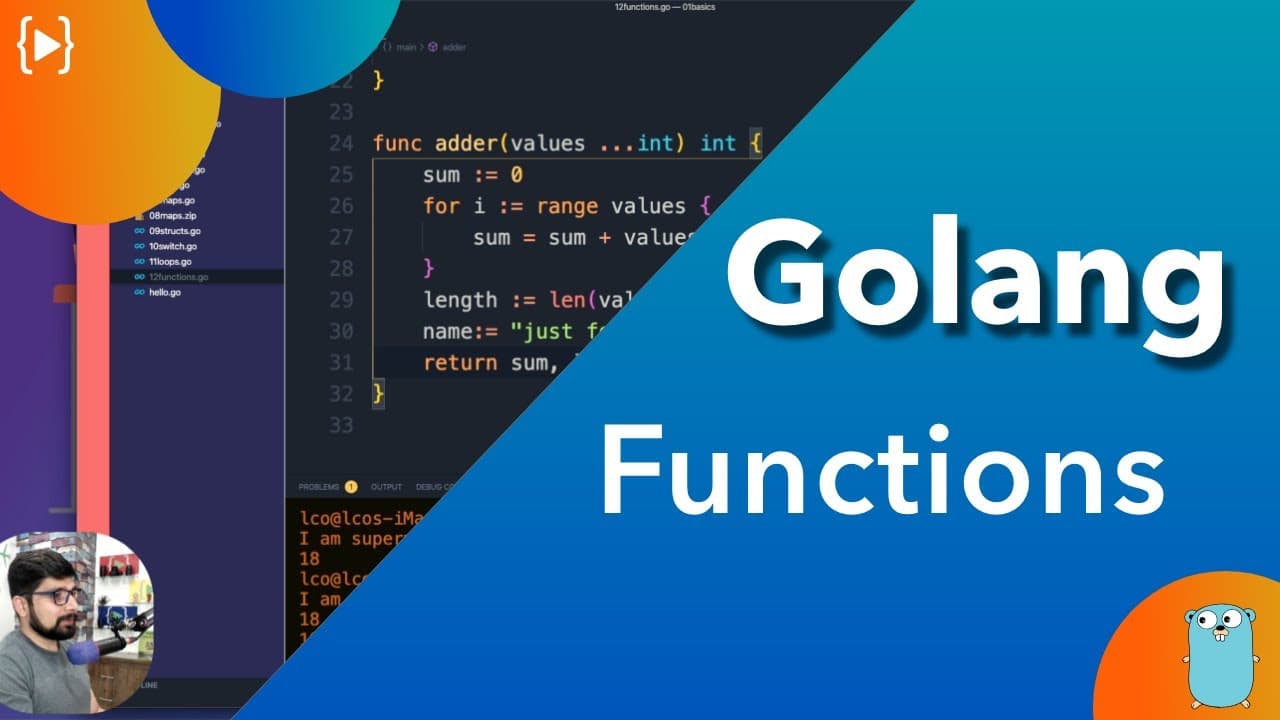
TL;DR
- Go functions well-structured, no ambiguity, multiple functions, returns, syntax, handling errors, loops, and multiple return values.
Transcript
functions in golang are pretty well organized and well-structured you're gonna enjoy every bit of it because there is no ambiguity inside the function declaration as well as the usage so let me show you what are the different kinds of things that you can do with the functions and some interesting stuff as well let's go ahead and get started with th... Read More
Key Insights
- ❓ Go functions are well-structured and organized, providing clarity in declaration and usage.
- ❓ Consistency in naming conventions is crucial for functions in Go to avoid ambiguity and errors.
- 👨💻 Handling errors in Go functions is essential to ensure code robustness and reliability.
- ↩️ Multiple return values in Go functions enhance flexibility and efficiency in data processing.
- ↩️ Syntax in Go functions includes loops for iterations, proper return types, and error handling mechanisms.
- 🅰️ Function parameters in Go can take multiple values of the same type for enhanced functionality.
- 😒 Go functions can return different types of data, including integers, strings, and more for diverse use cases.
Install to Summarize YouTube Videos and Get Transcripts
Explore YouTube Video Summarizer or Get YouTube Transcript Extractor
Questions & Answers
Q: How are functions in Go well-organized?
Functions in Go are well-organized with clear declaration and usage, allowing for multiple functions within a package.
Q: What is the syntax for declaring a function in Go?
The syntax for declaring a function in Go includes using the keyword func, defining the function name, and returning types, ensuring consistency in naming conventions.
Q: How can errors be handled in Go functions?
Errors in Go functions can be handled by ensuring proper return types, handling exceptions, and following Go's strict error-checking methodology.
Q: Can Go functions return multiple values?
Yes, Go functions can return multiple values, allowing for efficient handling of data and creating more versatile functions.
Summary & Key Takeaways
-
Go functions are structured with no ambiguity, allowing for multiple functions and returns.
-
Syntax includes func declaration, consistency in naming, return types, and handling errors.
-
Loops can be used, and multiple return values can be managed efficiently.
Read in Other Languages (beta)
Share This Summary 📚
Summarize YouTube Videos and Get Video Transcripts with 1-Click
Try YouTube Summary with ChatGPT & Claude or YouTube Transcript Generator
Explore More Summaries from Hitesh Choudhary 📚






Summarize YouTube Videos and Get Video Transcripts with 1-Click
Try YouTube Summary with ChatGPT & Claude or YouTube Transcript Generator