Workplace of Tomorrow: Automation on Future Jobs | Abhinav Menon | TEDxYouth@WalterMurrayCollegiate
TL;DR
Automation is increasingly replacing jobs, leading to concerns about the future of work and the need for proactive measures to reskill workers.
Transcript
[Applause] thank you if I were to ask you to imagine what the future workplace would look like would you tell me it's a world in which we expand our possibilities as humans or one where we discover our own limitations now it might sound like it posed a very existential question for what is effectively the first 10 seconds of my talk but what I actu... Read More
Key Insights
- ❓ Automation technology has become highly advanced, posing challenges and opportunities for various industries.
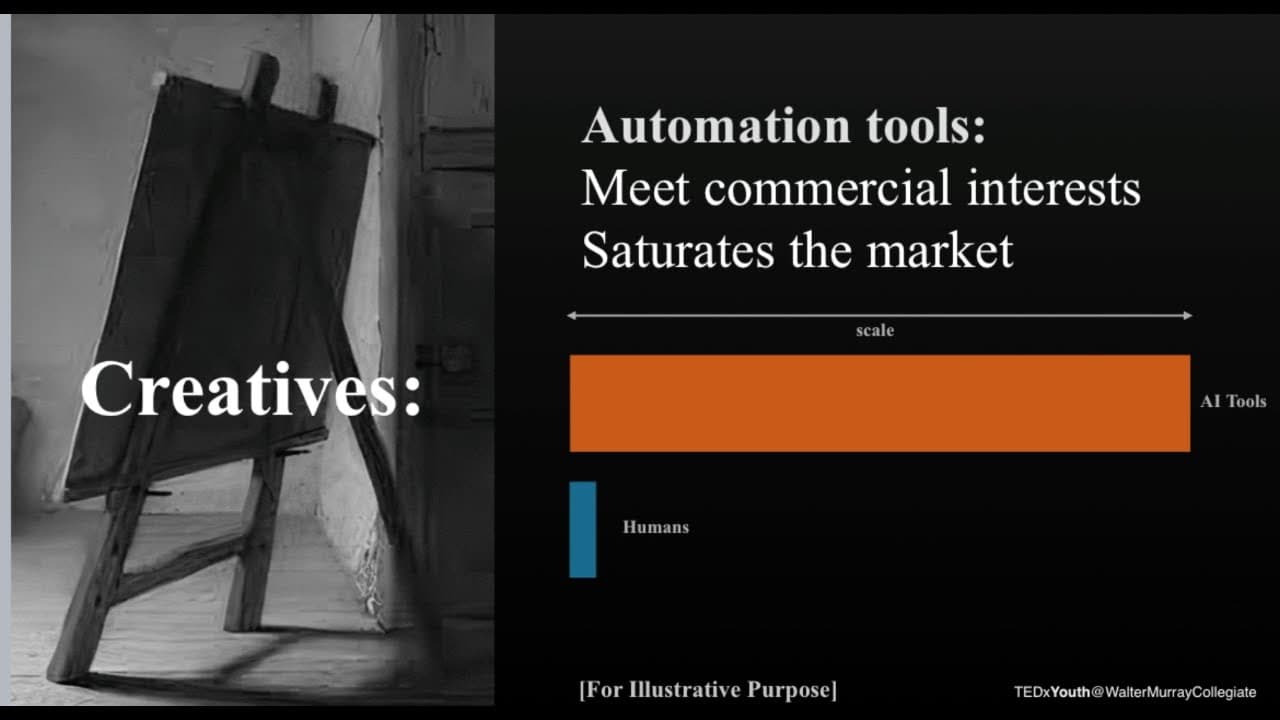
- 😑 Professions that involve creativity and individual expression are facing negative impacts due to the scalability of AI-generated content.
- 👻 Certain industries, such as skilled trades and medicine, can benefit from automation by removing unsafe or repetitive tasks, allowing professionals to focus on more valuable work.
Install to Summarize YouTube Videos and Get Transcripts
Explore YouTube Video Summarizer or Get YouTube Transcript Extractor
Questions & Answers
Q: Are jobs such as doctors and lawyers at risk of being replaced by automation?
While automation can handle certain aspects of these professions, such as research and basic tasks, there are still crucial components that require human expertise and judgment. Automation tools can free up time for professionals to focus on more valuable aspects of their work.
Q: How does automation impact creative industries like writing and music?
Automation tools have had a negative impact on creative fields by flooding the market with derivative products, making it harder for individual artists to stand out and profit from their work. The ability of AI to produce content at a large scale creates a challenge for human creators.
Q: Which industries can benefit the most from automation?
Industries that involve dangerous or repetitive tasks, like skilled trades and medicine, can benefit from automation. By taking on these tasks, professionals in these fields can focus on more meaningful, forward-facing work that requires human expertise and interaction.
Q: What are the main concerns for jobs in the middle skill and middle-income range?
Jobs in this category are at risk because automation tools excel at tasks that can be clearly defined and measured, making it easier for technology to compete and improve upon them. The constant advancement of automation technology also contributes to the risk of job redundancy.
Summary & Key Takeaways
-
Artificial intelligence and automation have advanced significantly, leading to concerns about job displacement in various industries.
-
While certain professions may benefit from automation tools that handle repetitive tasks, creative fields are experiencing negative impacts due to the ability of AI to produce large volumes of content.
-
Automation can be effective in industries such as skilled trades and medicine, where it removes unsafe tasks and allows professionals to focus on more meaningful work.
-
Jobs in the middle skill and middle-income range are most at risk of being affected by automation due to clear job scopes, competition from constantly improving technology, and the potential for job redundancy.
Read in Other Languages (beta)
Share This Summary 📚
Summarize YouTube Videos and Get Video Transcripts with 1-Click
Try YouTube Summary with ChatGPT & Claude or YouTube Transcript Generator
Explore More Summaries from TEDx Talks 📚






Summarize YouTube Videos and Get Video Transcripts with 1-Click
Try YouTube Summary with ChatGPT & Claude or YouTube Transcript Generator