What Are the Key Functions of the Endocrine System?
TL;DR
The endocrine system regulates vital functions through hormones, which act as chemical messengers between organs. These hormones, produced by glands like the pituitary and thyroid, control metabolism, growth, and reproduction. Understanding their roles unveils how hormonal balance is crucial for health.
Transcript
SALMAN KHAN: I'm here at Stanford Medical School with Neil Gesundheit, who's a faculty member here at the med school. NEIL GESUNDHEIT: Hi, Sal. SALMAN KHAN: So, what are we going to talk about? NEIL GESUNDHEIT: Well, the topic for today is endocrinology, which is the study of hormones. And the word hormone is derived from the Greek word which means... Read More
Key Insights
- 🖐️ Hormones are chemical messengers that play a vital role in coordinating and regulating various functions in the body.
- 🛩️ They can be small molecules or large proteins derived from amino acids.
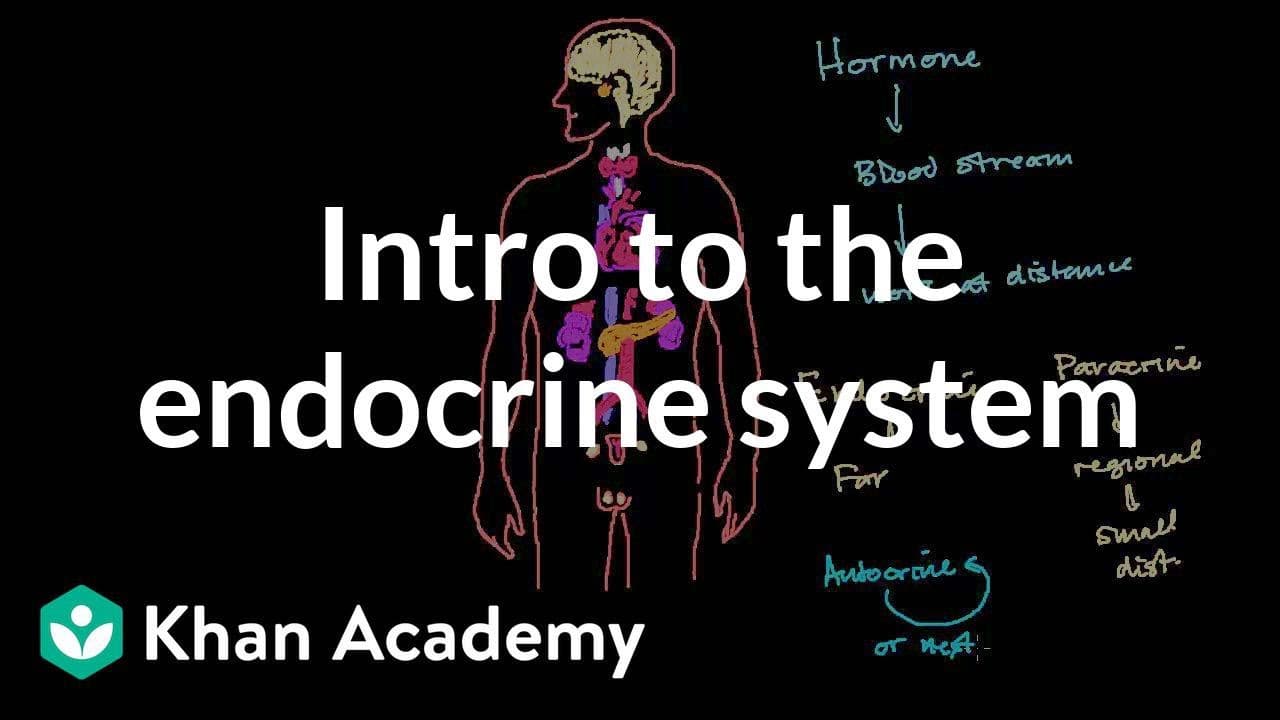
- ⚾ Hormones can be categorized into endocrine, paracrine, and autocrine based on their mode of action and distance of effect.
- 🏴 The pituitary gland is referred to as the master gland and controls the production of hormones that regulate other organs.
- 💪 The thyroid gland produces hormones that regulate metabolism, appetite, muscle function, and more.
- 🤽 The adrenal glands produce hormones that regulate glucose metabolism, blood pressure, salt and water balance, and play a role in stress response.
- 🏴 The gonads, stimulated by hormones from the pituitary gland, are responsible for reproductive functions and the production of reproductive hormones.
Install to Summarize YouTube Videos and Get Transcripts
Explore YouTube Video Summarizer or Get YouTube Transcript Extractor
Questions & Answers
Q: What are hormones and what is their function?
Hormones are chemical messengers that are produced in one part of the body and travel to another part to stimulate activity and function in that organ. They play a crucial role in regulating various body functions, including metabolism, appetite, muscle function, and more.
Q: How do hormones and nerves differ in their mode of communication?
Hormones work like wireless communication in the body, being made at one place and entering the bloodstream to reach another part of the body. In contrast, nerves directly connect and send signals to specific muscles or organs for immediate action.
Q: What are the different categories of hormones?
Hormones can be divided into endocrine hormones, which travel through the bloodstream to distant organs; paracrine hormones, which act within a small distance of their site of synthesis; and autocrine hormones, which act on the same or neighboring cells.
Q: What is the role of the pituitary gland?
The pituitary gland, also known as the master gland, produces hormones that regulate other organs, such as the thyroid, adrenal glands, and gonads. For example, it produces thyroid-stimulating hormone (TSH), which stimulates the thyroid gland to produce thyroid hormones that regulate metabolism.
Summary & Key Takeaways
-
Endocrinology is the study of hormones, which are chemical messengers that stimulate activity and function in different organs of the body.
-
Hormones can be small molecules or large proteins and can be divided into endocrine, paracrine, and autocrine hormones based on their mode of action and distance of effect.
-
The pituitary gland is known as the master gland and produces hormones that regulate other organs, such as the thyroid, adrenal glands, and gonads.
Read in Other Languages (beta)
Share This Summary 📚
Summarize YouTube Videos and Get Video Transcripts with 1-Click
Try YouTube Summary with ChatGPT & Claude or YouTube Transcript Generator
Explore More Summaries from Khan Academy 📚



Summarize YouTube Videos and Get Video Transcripts with 1-Click
Try YouTube Summary with ChatGPT & Claude or YouTube Transcript Generator