Graphs of Inverse Hyperbolic Functions
TL;DR
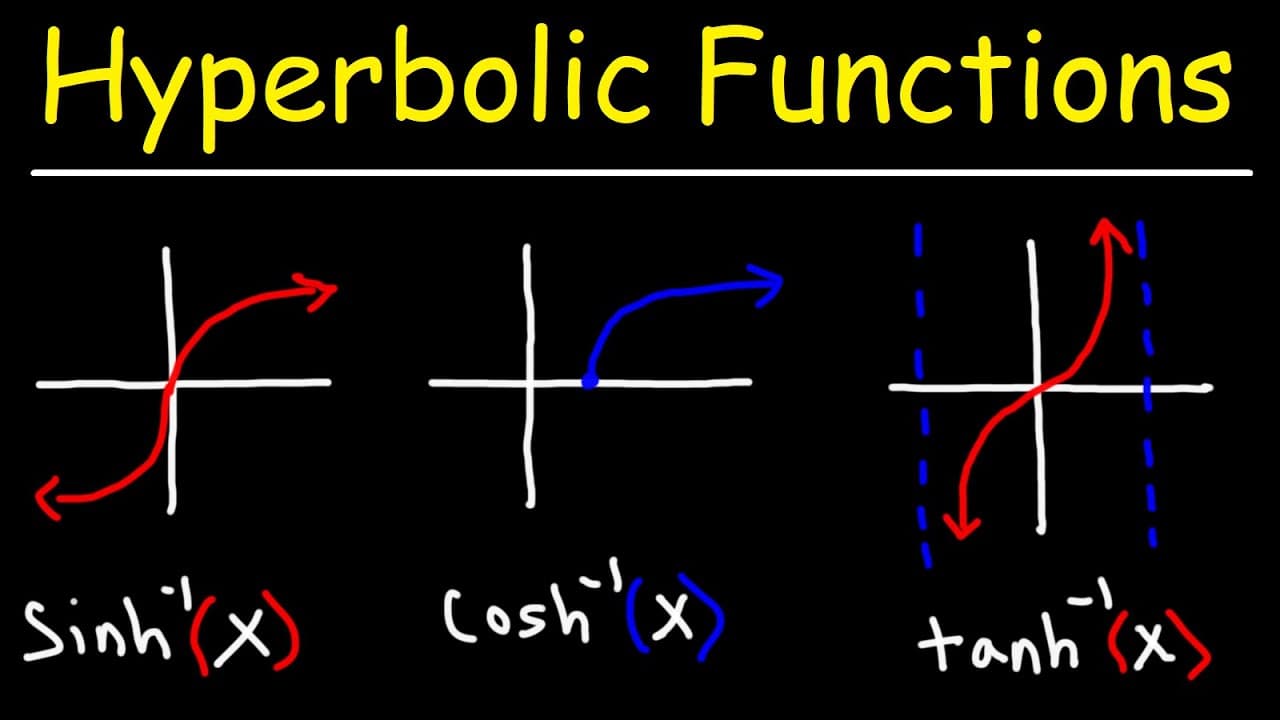
Learn how to graph inverse hyperbolic functions by reflecting the original graph across the line Y equals X.
Transcript
in this lesson we're going to talk about how we can graph the inverse hyperbolic functions so if you already know how to graph the regular hyperbolic functions all you need to do to graph the inverse hyperbolic functions is you need to reflect the original graph across the line Y equals X so we're going to talk about how to do that so here's a roug... Read More
Key Insights
- 📈 Graphing the inverse hyperbolic functions involves reflecting the original graph across the line Y equals X.
- 🧡 The domain of the regular hyperbolic functions becomes the range of their inverse counterparts.
- 🧡 The range of the regular hyperbolic functions becomes the domain of their inverse counterparts.
- 👨💼 The graph of the inverse hyperbolic sine function is obtained by reflecting the regular hyperbolic sine function.
- 📈 The graph of the inverse hyperbolic cosine function is obtained by reflecting the regular hyperbolic cosine function.
- 🚥 The horizontal asymptotes of the regular hyperbolic tangent function become vertical asymptotes when graphing its inverse.
Install to Summarize YouTube Videos and Get Transcripts
Explore YouTube Video Summarizer or Get YouTube Transcript Extractor
Questions & Answers
Q: How do you graph the inverse hyperbolic functions?
To graph the inverse hyperbolic functions, reflect the corresponding regular hyperbolic functions across the line Y equals X.
Q: What is the domain and range of the inverse hyperbolic sine function?
The domain of the inverse hyperbolic sine function is the range of the regular hyperbolic sine function, which is all real numbers. The range of the inverse hyperbolic sine function is the domain of the regular hyperbolic sine function, which is also all real numbers.
Q: How is the graph of the inverse hyperbolic cosine function related to the regular hyperbolic cosine function?
The graph of the inverse hyperbolic cosine function is obtained by reflecting the regular hyperbolic cosine function across the line Y equals X. The domain and range of the inverse hyperbolic cosine function are determined by the domain and range of the regular hyperbolic cosine function.
Q: What happens to the horizontal asymptotes of the regular hyperbolic tangent function when graphing its inverse?
The horizontal asymptotes of the regular hyperbolic tangent function become vertical asymptotes when graphing its inverse. The positions of the asymptotes are switched, with the vertical asymptotes at X equals negative one and X equals positive one.
Summary & Key Takeaways
-
To graph the inverse hyperbolic sine function, reflect the regular hyperbolic sine function across the line Y equals X.
-
The domain of the regular hyperbolic sine function becomes the range of the inverse hyperbolic sine function.
-
The inverse hyperbolic cosine function is graphed by reflecting the regular hyperbolic cosine function across the line Y equals X.
Read in Other Languages (beta)
Share This Summary 📚
Summarize YouTube Videos and Get Video Transcripts with 1-Click
Try YouTube Summary with ChatGPT & Claude or YouTube Transcript Generator
Explore More Summaries from The Organic Chemistry Tutor 📚




Summarize YouTube Videos and Get Video Transcripts with 1-Click
Try YouTube Summary with ChatGPT & Claude or YouTube Transcript Generator