Sleep stages and circadian rhythms | Processing the Environment | MCAT | Khan Academy
TL;DR
Sleep consists of four stages - N1, N2, N3, and REM - each with distinct brain patterns and functions. Circadian rhythms control our sleep-wake cycle.
Transcript
Voiceover: Even though you're not conscious during sleep, your brain is deceptively active. It goes through multiple cycles with distinct brain patterns, and it's very important to your ability to perform normal functions when you're awake. You have four main stages of sleep which occur in approximately 90 minute cycles during a normal night of sle... Read More
Key Insights
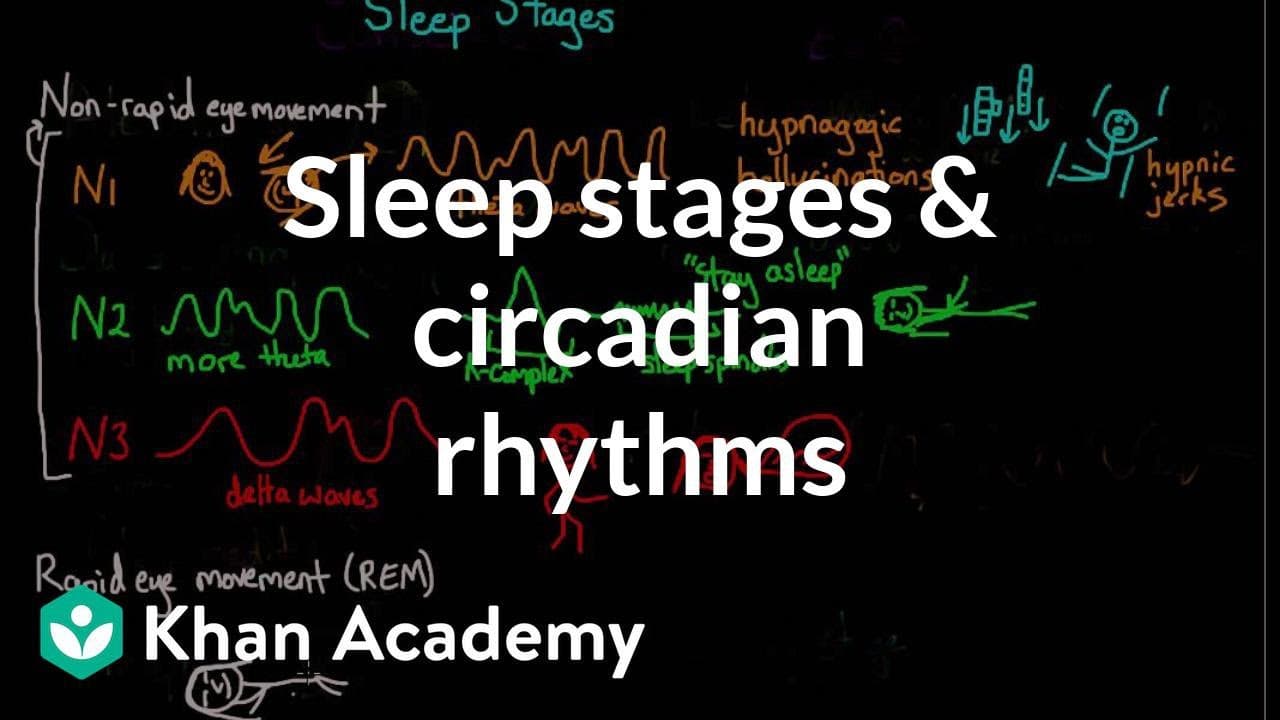
- 😪 Sleep consists of four stages: N1, N2, N3, and REM. Each stage has distinct brain patterns and serves different functions.
- 🔦 Hypnagogic hallucinations, such as seeing flashes of light or hearing sounds, may occur during the N1 stage.
- 😪 Sleep spindles and K-complexes in the N2 stage contribute to tranquil sleep and memory consolidation.
- 👹 N3 is the deepest non-REM stage, characterized by slow delta waves.
- 😃 REM sleep involves rapid eye movements and muscle paralysis, preventing the acting out of dreams.
- 😪 Circadian rhythms, our internal biological clock, regulate sleep-wake cycles and other bodily functions.
- 🙂 Light, both natural and artificial, can influence circadian rhythms.
Install to Summarize YouTube Videos and Get Transcripts
Explore YouTube Video Summarizer or Get YouTube Transcript Extractor
Questions & Answers
Q: What are hypnagogic hallucinations, and when do they occur?
Hypnagogic hallucinations are strange sensations like seeing flashes of light or hearing sounds that are not present. They occur during the N1 stage of sleep right before falling asleep.
Q: How does N2 sleep differ from N1 sleep?
N2 sleep is a slightly deeper stage than N1 sleep. It is harder to wake someone up during N2, and sleep spindles and K-complexes, bursts of brain activity, are present. Some researchers believe these brain waves inhibit certain cognitive processes and help maintain a tranquil state during sleep.
Q: What are delta waves, and when do they occur?
Delta waves are very slow brain waves with a frequency of about 0.5 to 2 hertz. They occur during the N3 stage of sleep, also known as slow-wave sleep.
Q: Why is REM sleep called paradoxical sleep?
REM sleep is called paradoxical sleep because the brain appears active and awake, but the body is paralyzed. Most dreaming occurs during this stage, and the paralysis prevents the muscles from acting out dreams, ensuring safety during sleep.
Key Insights:
- Sleep consists of four stages: N1, N2, N3, and REM. Each stage has distinct brain patterns and serves different functions.
- Hypnagogic hallucinations, such as seeing flashes of light or hearing sounds, may occur during the N1 stage.
- Sleep spindles and K-complexes in the N2 stage contribute to tranquil sleep and memory consolidation.
- N3 is the deepest non-REM stage, characterized by slow delta waves.
- REM sleep involves rapid eye movements and muscle paralysis, preventing the acting out of dreams.
- Circadian rhythms, our internal biological clock, regulate sleep-wake cycles and other bodily functions.
- Light, both natural and artificial, can influence circadian rhythms.
- Circadian rhythms change with age, causing younger people to be night owls and older people to wake up and go to bed early.
Summary & Key Takeaways
-
Sleep is comprised of four stages: N1, N2, N3, and REM, which occur in 90-minute cycles during a typical night's sleep.
-
N1 is the lightest stage where theta waves are produced, and hypnagogic hallucinations, such as seeing flashes of light or hearing sounds, may occur.
-
N2 is a deeper stage characterized by sleep spindles and K-complexes, which contribute to tranquil sleep and memory consolidation.
-
N3 is the deepest non-REM stage with slow delta waves, and REM sleep involves rapid eye movements and muscle paralysis, during which most dreaming occurs.
Read in Other Languages (beta)
Share This Summary 📚
Summarize YouTube Videos and Get Video Transcripts with 1-Click
Try YouTube Summary with ChatGPT & Claude or YouTube Transcript Generator
Explore More Summaries from khanacademymedicine 📚
Summarize YouTube Videos and Get Video Transcripts with 1-Click
Try YouTube Summary with ChatGPT & Claude or YouTube Transcript Generator