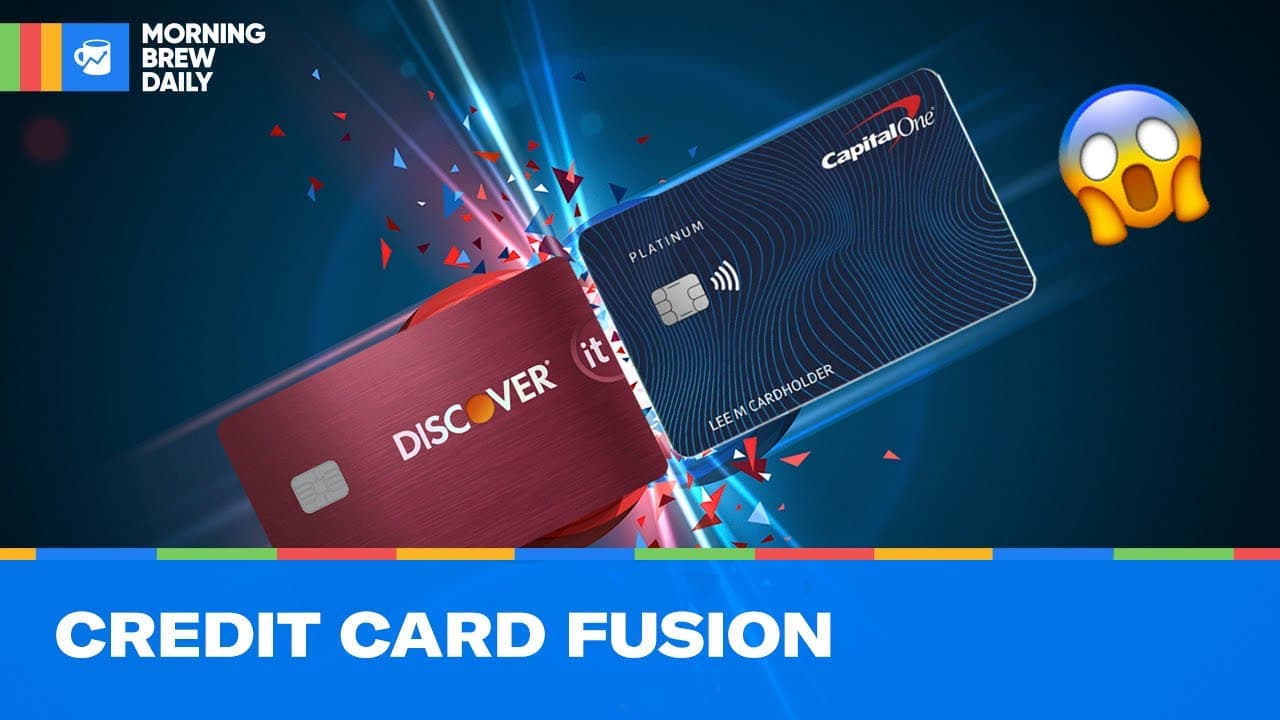
Capital One Buying Discover in MASSIVE Acquisition
TL;DR
Capital One acquires Discover for $35B; major financial implications.
Transcript
good morning Brew Daily Show I'm Neil Fryman and I'm Toby how today why is Donald Trump selling $400 high top sneakers Ben you might want to think twice about trusting the AI chat Bots that give you info on airline websites it's Tuesday February 20th let's ride it's been 4 days since our interview with Mark Zuckerberg dropped first of all go listen... Read More
Key Insights
- Capital One's acquisition of Discover for $35 billion is a strategic move to expand its presence in the credit card market and compete with giants like Visa and Mastercard.
- The merger will create the largest U.S. credit card company by loan volume, significantly impacting the payments ecosystem.
- Concerns about antitrust scrutiny arise due to the merger's size, but analysts believe it may challenge Visa and Mastercard's market dominance.
- Capital One aims to attract wealthier customers by leveraging Discover's affluent client base, challenging JP Morgan Chase and American Express.
- Both Discover and Capital One have faced financial challenges, with significant profit declines and regulatory scrutiny in recent years.
- Donald Trump's $355 million fraud penalty highlights legal challenges and financial pressures as he attempts to fund his political ambitions.
- The U.S. government is investing heavily in domestic chip production, with a $1.5 billion grant to Global Foundries, aiming to reduce dependency on foreign suppliers.
- Air Canada's chatbot misinformation case sets a precedent for corporate liability in AI-generated content, prompting a reevaluation of AI use in customer service.
Install to Summarize YouTube Videos and Get Transcripts
Explore YouTube Video Summarizer or Get YouTube Transcript Extractor
Questions & Answers
Q: What is the significance of Capital One's acquisition of Discover?
Capital One's acquisition of Discover for $35 billion is a landmark deal in the financial sector, creating the largest U.S. credit card company by loan volume. This move allows Capital One to expand its network and compete more effectively with Visa and Mastercard, two dominant players in the industry. By acquiring Discover, Capital One gains access to its card network, which could significantly impact the payments ecosystem and offer new opportunities for growth.
Q: How might the Capital One-Discover merger face antitrust scrutiny?
The Capital One-Discover merger might attract antitrust scrutiny due to its size and potential impact on market competition. Analysts suggest that blocking this merger could force regulators to address the substantial market share held by Visa and Mastercard. By approving the merger, regulators could encourage competition in the credit card industry, challenging the existing duopoly and potentially leading to better consumer options and pricing.
Q: What challenges have Discover and Capital One faced recently?
Discover and Capital One have encountered financial and regulatory challenges in recent years. Both companies reported significant declines in fourth-quarter profits, with Discover facing scrutiny for misclassifying credit card accounts dating back to 2007. Additionally, Discover received a consent order from the FDIC to improve its consumer compliance operations. These issues highlight the hurdles the companies must overcome to ensure a successful merger and future growth.
Q: How does Trump's fraud penalty affect his financial situation?
Donald Trump's $355 million fraud penalty significantly impacts his financial situation, adding to the legal and financial pressures he faces. This penalty, along with substantial legal fees and upcoming criminal trials, strains his resources as he attempts to fund his political ambitions. Reports suggest that Trump's legal war chest may run out by summer, potentially forcing him to dip into other funding sources, such as RNC funds, to cover his expenses.
Q: What is the U.S. government's strategy for boosting domestic chip production?
The U.S. government is investing heavily in domestic chip production to reduce dependency on foreign suppliers and strengthen national security. A $1.5 billion grant was awarded to Global Foundries as part of a broader $39 billion initiative under the CHIPS Act. This program aims to reinvigorate domestic semiconductor manufacturing by providing grants and tax incentives to companies, encouraging them to build chip production facilities in the U.S. and secure a reliable chip supply.
Q: What precedent does the Air Canada chatbot case set?
The Air Canada chatbot case sets a precedent for corporate liability in AI-generated content. The court ruled that Air Canada was liable for misinformation provided by its chatbot, highlighting the need for companies to ensure accurate information from AI systems. This case may prompt other companies to reevaluate their use of AI in customer service, potentially leading to improved oversight and the implementation of disclaimers to mitigate liability risks.
Q: How might the Capital One-Discover merger affect consumer credit card options?
The Capital One-Discover merger could lead to more competitive credit card options for consumers. By integrating Discover's network, Capital One may offer new products and services, potentially challenging the dominance of Visa and Mastercard. This increased competition could result in better consumer choices, improved pricing, and enhanced rewards programs, benefiting credit cardholders seeking diverse and competitive financial products.
Q: What impact might the U.S. chip production initiative have on the global semiconductor market?
The U.S. chip production initiative aims to bolster domestic manufacturing capabilities, potentially reshaping the global semiconductor market. By reducing reliance on foreign suppliers, the U.S. could enhance its national security and economic stability. This initiative may also prompt other countries to invest in their semiconductor industries, leading to increased global competition and innovation in chip technology. Ultimately, the program seeks to secure a reliable chip supply for various industries, including defense and technology.
Summary & Key Takeaways
-
Capital One's $35 billion acquisition of Discover is a significant move to enhance its position in the credit card industry, aiming to rival Visa and Mastercard. The merger will create the largest U.S. credit card company by loan volume, with potential antitrust scrutiny due to its size.
-
Donald Trump's legal and financial troubles continue as he faces a $355 million penalty for business fraud in New York. This situation underscores the financial pressures he faces, including substantial legal fees and upcoming criminal trials.
-
The U.S. government is embarking on a major initiative to boost domestic semiconductor production, granting $1.5 billion to Global Foundries. This move is part of a broader strategy to reduce reliance on foreign chip suppliers and strengthen national security.
Read in Other Languages (beta)
Share This Summary 📚
Summarize YouTube Videos and Get Video Transcripts with 1-Click
Try YouTube Summary with ChatGPT & Claude or YouTube Transcript Generator
Explore More Summaries from Morning Brew Daily 📚






Summarize YouTube Videos and Get Video Transcripts with 1-Click
Try YouTube Summary with ChatGPT & Claude or YouTube Transcript Generator