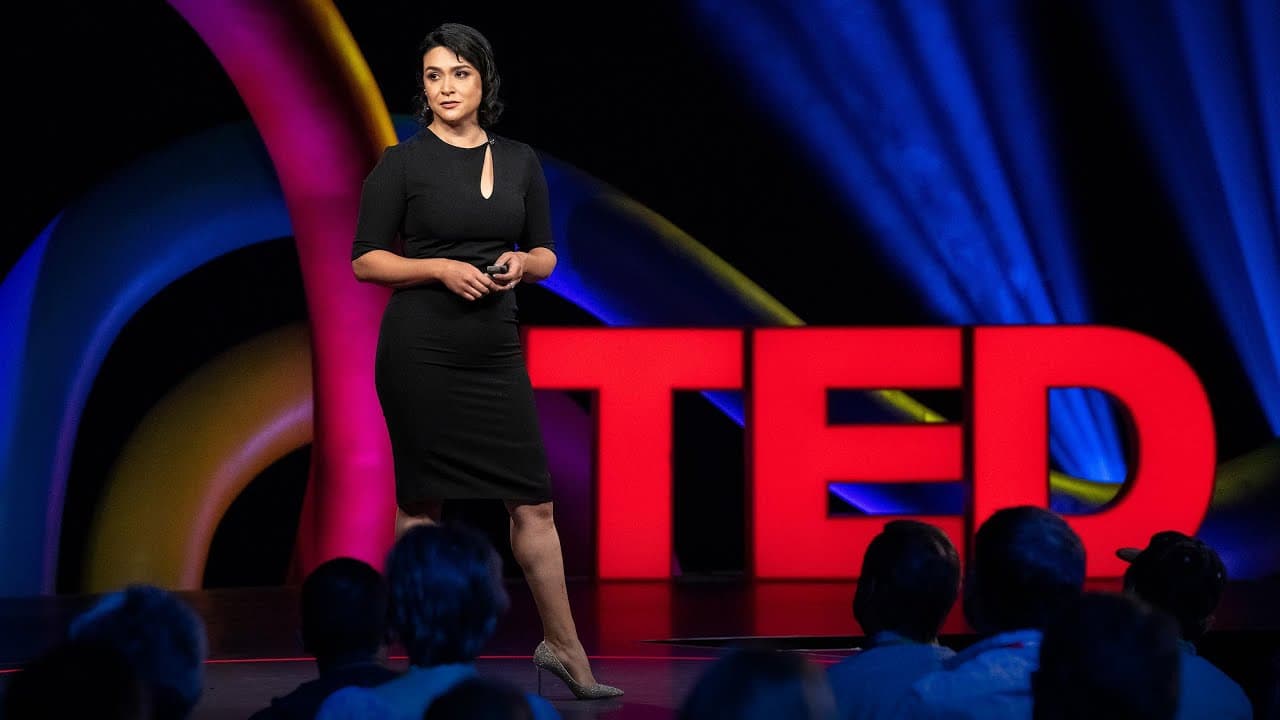
We Could Kick-Start Life on Other Planets. Should We? | Betül Kaçar | TED
TL;DR
In this content, the speaker explores the origin of life, the future of life in the universe, and the ethical dilemma surrounding the possibility of seeding life on other planets.
Transcript
Imagine two universes. In one of these universes, life flourishes on nearly every planet you can encounter. Floating in the atmosphere, swimming in the seas, lounging on the beaches. Life in every body form and size you can imagine. Now imagine the other universe where life is nowhere to be found. Stars collide, galaxies explode, meteorites crash, ... Read More
Key Insights
- 🌍 Earth was formed 4.5 billion years ago, and life emerged within the first few hundred million years. Life is a form of chemistry that explores solutions in response to its chemical environment, and the first solution was to copy itself.
- 🔬 In the past 10 years, there have been significant advancements in understanding the origin of life, using statistics, mathematical models, and ancient DNA synthesis. This knowledge allows us to understand the transition from nonliving to living and study different environments for signs of life.
- 🌌 Understanding the origins of life can help us connect the dots between nonliving and living and potentially obtain the "recipe" of life. This knowledge could guide our pursuit of finding life in the universe and assess the potential for life on other planets and moons.
- 🌱 It is proposed that instead of seeding other planets with Earth life through terraforming, we enable their own unique chemistry to spark the emergence of life by providing missing ingredients. This raises ethical questions about responsibility and the difference between spreading Earth life and the potential of life.
- 💡 A universe full of life would be interesting and valuable in having a solution in hand, but the spontaneity and unpredictability of discovering novel chemistries and life forms may also have unique merits. The choice of whether to seed life across the universe depends on ethical considerations.
- 🌎 Earth is our only home, and understanding its origins allows us to appreciate and protect it. Exploring the origins of life helps us understand the biology and life around us.
- 🧪 The possibility of life beyond Earth presents an exciting opportunity to explore and appreciate the diversity of life forms in the universe. It also raises questions about our role and responsibility in shaping and interacting with other planetary environments.
- ❓ Ultimately, the question remains: Which universe, an empty one or one teeming with life, is more interesting and valuable to us? The answer may lie in the balance between having solutions in hand and embracing the unknown and spontaneous emergence of life.
Install to Summarize YouTube Videos and Get Transcripts
Explore YouTube Video Summarizer or Get YouTube Transcript Extractor
Questions & Answers
Q: What is the origin of life on Earth?
Life on Earth began around 4.5 billion years ago, relatively quickly after the planet was formed. This means that life emerged within the first few hundred million years after Earth's formation.
Q: How does life work?
Life is essentially a form of chemistry that explores solutions to problems presented by its immediate chemical environment. It is a unique chemical system that can retain a memory of these solutions over billions of years.
Q: Compared to the known universe, what makes Earth so special?
Earth is the only place known to have life. While you can study various fields of science elsewhere in the universe, Earth is the only planet where you can study biology. This makes our planet incredibly exotic and valuable.
Q: What advancements have been made in understanding the origin of life?
In the past decade, there have been remarkable innovations in understanding the origin of life. Researchers are using statistics, mathematical models, and evolutionary systems to infer the sequences of ancient DNA. They are also synthesizing ancient DNA molecules and simulating ancient environments in the lab to gain insights into the origins of life.
Q: What can we do with our knowledge of the origin of life?
With our understanding of the origin of life, we might be able to connect the dots between nonliving and living systems. This could enable us to obtain the "recipe" of life and assess other planets and moons to determine how close they are to supporting life. It raises the possibility of seeding life in other planetary bodies, not by colonizing or altering them, but by providing missing ingredients.
Q: Should we seed life on other planets and moons?
The proposition of seeding life in other planetary bodies raises ethical dilemmas. It questions whether life, as a chemical system capable of answering questions about its existence, has a responsibility or prohibition against sponsoring more life across the universe. It is a complex issue without clear answers, and it necessitates considering the value and uniqueness of spontaneous life discovery versus deliberately spreading Earth-based life across the galaxy.
Q: Why is it important to understand the origins of life on Earth?
Exploring the origins of life on Earth allows us to truly understand the biology and life forms surrounding us. By understanding how life emerged on our own planet, we can gain a deeper appreciation and understanding of life as a whole. It is crucial in our pursuit of knowledge and appreciation of the incredible phenomenon of life itself.
Summary & Key Takeaways
-
Earth is the only known planet with life, making it unique in the universe and offering an opportunity to explore the origin of life.
-
Recent advancements in understanding the origin of life, including synthesizing ancient DNA and recreating ancient environments, may lead to a deeper understanding of how chemistry transforms into life.
-
The knowledge gained from studying the origin of life could potentially enable us to assess and potentially seed life on other planets and moons, raising ethical questions about our role in spreading life across the universe.
Read in Other Languages (beta)
Share This Summary 📚
Summarize YouTube Videos and Get Video Transcripts with 1-Click
Try YouTube Summary with ChatGPT & Claude or YouTube Transcript Generator
Explore More Summaries from TED 📚


Summarize YouTube Videos and Get Video Transcripts with 1-Click
Try YouTube Summary with ChatGPT & Claude or YouTube Transcript Generator