What Is Non-Buoyant Water and Is It Really Dangerous?
TL;DR
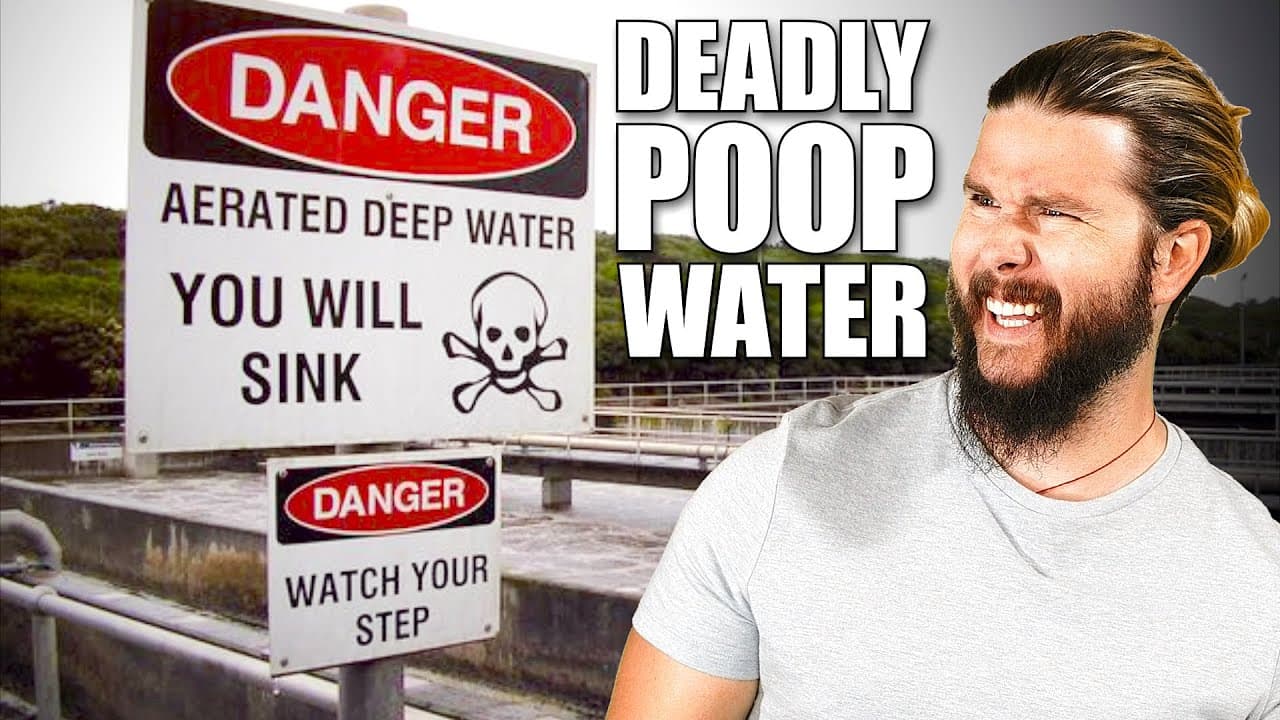
Non-buoyant water in aeration tanks consists of human sewage mixed with microorganisms for wastewater treatment. While warnings suggest extreme danger, studies show that falling into such water is not as perilous as believed due to the upward bubble flow that counteracts buoyancy loss. However, risks still exist, particularly near the edges of the tanks.
Transcript
what are three things everyone knows about water everyone knows that you can drink it it's chemical composition and that a lot of stuff floats in it but what if one of these facts suddenly changed what if you couldn't float in water anymore couldn't swim in it no matter how hard you tried well this is the liquid nightmare that i want to explore tod... Read More
Key Insights
- 🚱 Non-buoyant water found in aeration tanks is created by mixing human sewage with microorganisms for biological wastewater treatment.
- 💐 The warning signs about non-buoyant water in aeration tanks suggest extreme danger, but studies and tests have shown that the actual risk may be lower due to the counteracting force created by bubble flow.
- 🚱 Falling into non-buoyant water may still pose a risk, especially near the edges of the tanks where the downward circulating flow force from the bubbles can counteract buoyancy from life jackets.
- 💀 The controversy lies in the discrepancy between theoretical dangers and practical dangers of non-buoyant water in aeration tanks.
- 🖐️ Wastewater treatment plays a critical role in modern society, preventing waste from polluting cities, societies, and the environment.
- 🫢 Anaerobic biological wastewater treatment, which uses bugs that don't need oxygen, can produce methane that can be refined into clean natural gas.
- 🚱 Non-buoyant water and wastewater treatment present complex engineering challenges and opportunities for innovation and safety measures.
Install to Summarize YouTube Videos and Get Transcripts
Explore YouTube Video Summarizer or Get YouTube Transcript Extractor
Questions & Answers
Q: What is non-buoyant water and where is it found?
Non-buoyant water refers to the water inside aeration tanks of wastewater treatment plants, where human sewage is mixed with microorganisms. It is believed to be extremely dangerous due to its lower buoyancy.
Q: How does buoyancy work?
Buoyancy is the force that allows objects to float in a fluid. It depends on the weight of the fluid displaced by an object and the weight of the object itself. If the displaced fluid weighs more, the object floats.
Q: Are the warning signs about non-buoyant water valid?
While the warning signs imply extreme danger, there is controversy surrounding their validity. Studies and tests have shown that the practical danger of falling into non-buoyant water in aeration tanks may not be as severe as initially believed.
Q: What factors contribute to the safety of falling into non-buoyant water?
The upward flow of bubbles in aeration tanks creates a counteracting force that can partially or fully offset the loss of buoyancy due to density change in the water. This can make falling into the water less dangerous than expected.
Key Insights:
- Non-buoyant water found in aeration tanks is created by mixing human sewage with microorganisms for biological wastewater treatment.
- The warning signs about non-buoyant water in aeration tanks suggest extreme danger, but studies and tests have shown that the actual risk may be lower due to the counteracting force created by bubble flow.
- Falling into non-buoyant water may still pose a risk, especially near the edges of the tanks where the downward circulating flow force from the bubbles can counteract buoyancy from life jackets.
- The controversy lies in the discrepancy between theoretical dangers and practical dangers of non-buoyant water in aeration tanks.
- Wastewater treatment plays a critical role in modern society, preventing waste from polluting cities, societies, and the environment.
- Anaerobic biological wastewater treatment, which uses bugs that don't need oxygen, can produce methane that can be refined into clean natural gas.
- Non-buoyant water and wastewater treatment present complex engineering challenges and opportunities for innovation and safety measures.
- The warning signs about non-buoyant water may serve as effective precautions, even if they do not accurately represent the actual danger posed by falling into aeration tanks.
Summary & Key Takeaways
-
Non-buoyant water is a term used to describe water in aeration tanks where human sewage is mixed with microorganisms to treat wastewater.
-
The warning signs about non-buoyant water in aeration tanks suggest extreme danger, but the practicality of these warnings is debatable.
-
Studies and tests have shown that falling into an aeration tank filled with non-buoyant water may not be as dangerous as expected, thanks to the counteracting force created by the upward flow of bubbles.
Read in Other Languages (beta)
Share This Summary 📚
Summarize YouTube Videos and Get Video Transcripts with 1-Click
Try YouTube Summary with ChatGPT & Claude or YouTube Transcript Generator
Explore More Summaries from Kyle Hill 📚
![🔴 Viral "Hanger Reflex" Explained! | [OFFICE HOURS] Podcast 090 thumbnail](/_next/image?url=https%3A%2F%2Fi.ytimg.com%2Fvi%2F-GQPNu0erKc%2Fhqdefault.jpg&w=750&q=75)



![What Made MEGALODON So Huge? | [OFFICE HOURS] Podcast #025 thumbnail](/_next/image?url=https%3A%2F%2Fi.ytimg.com%2Fvi%2F2F_zCTfPt-I%2Fhqdefault.jpg&w=750&q=75)

Summarize YouTube Videos and Get Video Transcripts with 1-Click
Try YouTube Summary with ChatGPT & Claude or YouTube Transcript Generator