Why Does The US Import Oil When They Produce So Much?
TL;DR
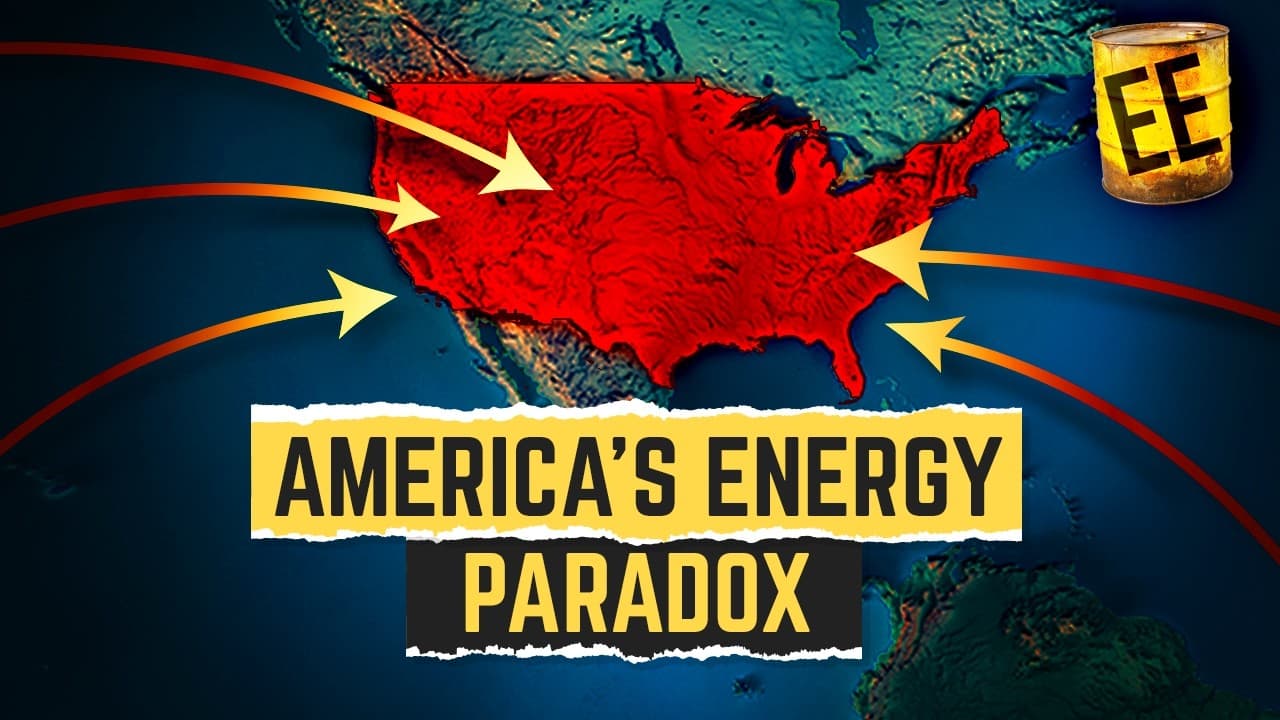
Despite high production, US imports oil due to refining limitations.
Transcript
in 2018 the United States of America became the largest oil producing nation in the world then just one year later it became the largest oil producer of all time producing 12.3 million barrels a day to exceed levels that expert analysis previously thought were unfeasible and despite a turbulent period during the covid-19 pandemic when oil prices te... Read More
Key Insights
- The US became the largest oil producer by 2018, surpassing previous expectations and geopolitical competitors like Russia and Saudi Arabia.
- Despite being a net exporter, the US remains a major oil importer due to its refining infrastructure designed for different oil types.
- Hydraulic fracking and horizontal drilling revolutionized US oil production, enabling extraction from shale formations at lower costs.
- The US oil industry has seen significant consolidation, with major companies acquiring competitors to maximize economies of scale and efficiency.
- Fracking's rapid extraction process raises concerns about the sustainability of current production levels and environmental impacts.
- US refineries are optimized for heavy sour crude, necessitating continued imports despite domestic production of light sweet crude from fracking.
- Strategic trade of oil types maximizes economic value, with the US exporting more expensive light crude and importing cheaper heavy crude.
- Environmental concerns and the shift toward renewable energy pose long-term challenges to the US oil industry, despite current profitability.
Install to Summarize YouTube Videos and Get Transcripts
Explore YouTube Video Summarizer or Get YouTube Transcript Extractor
Questions & Answers
Q: Why does the US import oil despite high domestic production?
The US imports oil because its refining infrastructure is primarily designed for heavy sour crude oil, which is imported from countries like Mexico and Saudi Arabia. The light sweet crude produced domestically through fracking is not compatible with many US refineries, necessitating continued imports.
Q: What technological advancements have contributed to the US oil boom?
The US oil boom is largely due to advancements in hydraulic fracking and horizontal drilling. These technologies allow oil extraction from shale formations at commercially viable levels, significantly increasing production and reducing costs compared to traditional methods.
Q: How has the US oil industry changed over the last decade?
Over the last decade, the US oil industry has seen a dramatic increase in production due to fracking. It has transitioned from import dependence to becoming a net exporter. The industry is also consolidating, with major companies acquiring competitors to maximize efficiency and economies of scale.
Q: What are the environmental concerns associated with fracking?
Fracking raises several environmental concerns, including methane leaks, which have a stronger greenhouse effect than carbon dioxide, and significant water usage. The process can also lead to groundwater contamination and contributes to air pollution through natural gas flaring.
Q: What are the economic benefits of the US oil boom?
The US oil boom has led to increased energy security, job creation, and economic growth, particularly in rural areas. It has also strengthened the US's position in global oil markets, allowing it to influence trade deals and reduce dependency on foreign oil.
Q: How does the US maximize value from its oil trade?
The US maximizes value by exporting more expensive light sweet crude and importing cheaper heavy sour crude. This strategy leverages the existing refining infrastructure and enhances economic returns from both oil trade and refining operations.
Q: What is the future outlook for US oil production?
The future of US oil production is uncertain due to environmental concerns, finite reserves, and the rise of renewable energy. While production is expected to peak around 2030, the industry faces challenges in maintaining current levels and adapting to a changing energy landscape.
Q: How is the US oil industry responding to renewable energy competition?
The US oil industry is beginning to invest in renewable energy and improve efficiency to remain competitive. Companies are focusing on maximizing current resources while preparing for a transition to cleaner energy sources, driven by political and environmental pressures.
Summary & Key Takeaways
-
The US has become a leading oil producer due to technological advancements in fracking and horizontal drilling, allowing extraction from shale formations. Despite this, the US remains a major oil importer because its refining infrastructure is not suited to the light sweet crude produced domestically.
-
Fracking has transformed the US oil industry, leading to rapid production increases and economic benefits. However, environmental concerns and the finite nature of oil reserves raise questions about the sustainability of this boom, especially as renewable energy becomes more competitive.
-
The US oil industry is consolidating, with major companies acquiring competitors to enhance efficiency. While the industry faces environmental and geopolitical challenges, strategic oil trade and refining practices continue to support economic growth and energy security.
Read in Other Languages (beta)
Share This Summary 📚
Summarize YouTube Videos and Get Video Transcripts with 1-Click
Try YouTube Summary with ChatGPT & Claude or YouTube Transcript Generator
Explore More Summaries from Economics Explained 📚






Summarize YouTube Videos and Get Video Transcripts with 1-Click
Try YouTube Summary with ChatGPT & Claude or YouTube Transcript Generator