Ancient Rome
TL;DR
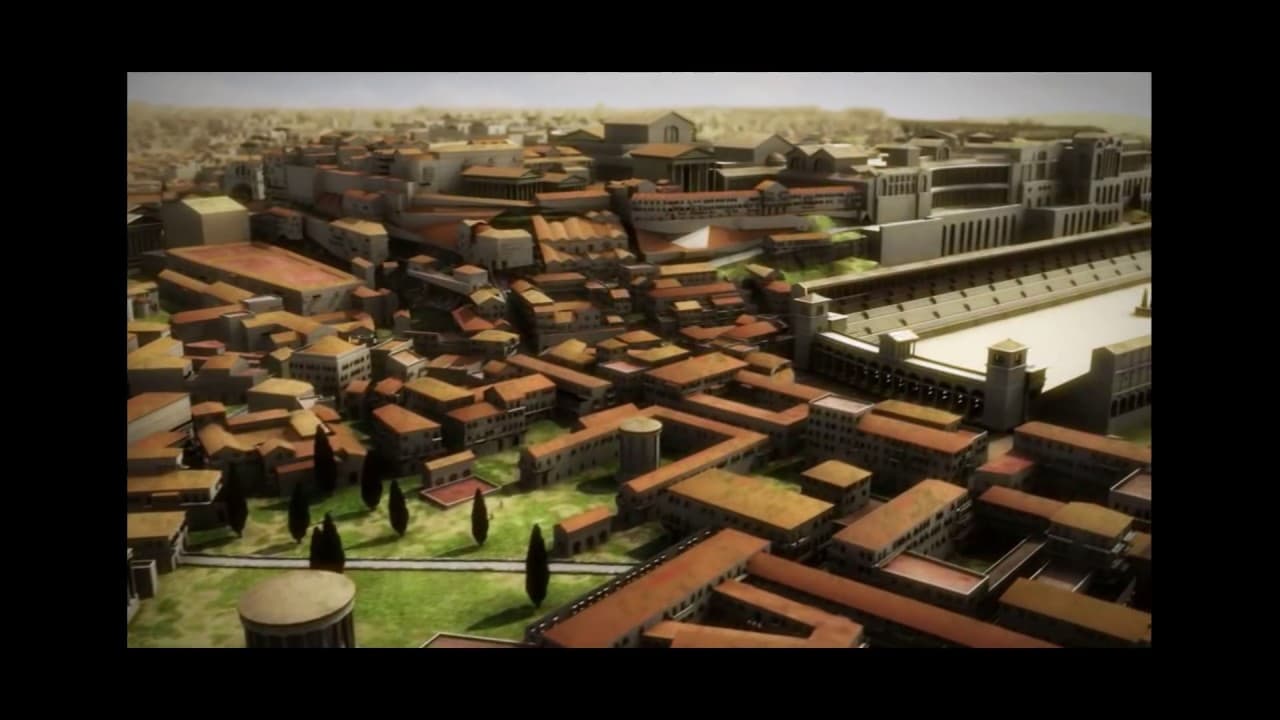
Dr. Bernard Frischer's video simulation allows us to visualize the ancient city of Rome, highlighting the challenges of reconstructing the city and showcasing its key landmarks and infrastructure.
Transcript
When I was studying ancient Rome one of the most difficult things for me to understand is how all of these ancient ruins fit together, but luckily we have Dr. Bernard Frischer who has built an extraordinary video simulation that allows us to move through this space. The difficulty is always two-fold. First of all, that ancient cities are now in rui... Read More
Key Insights
- 🏙️ Reconstructing ancient Rome's ruins poses challenges in understanding the city's original layout and appearance, but video simulations can help visualize its structures.
- 🗣️ Rome during the year 320 AD, with Constantine as Emperor, represents a peak in Rome's urban development and public architecture.
- 🛟 The Temple of Jupiter Optimus Maximus on the Capitoline Hill served as the center of the state cult and religion in ancient Rome.
- 🤽 Aqueducts played a crucial role in supplying water to Rome, allowing it to sustain its large population and support public baths and fountains.
- 🏙️ The cityscape of ancient Rome was characterized by iconic landmarks such as the Colosseum, Circus Maximus, and the Palatine and Capitol Hills.
- 🧡 Daily life in ancient Rome was diverse, with a wide range of trades, social classes, and an emphasis on public events like gladiatorial combats and animal hunts.
- 💁 The architecture of the Pantheon, with its dome and circular form, represents a remarkable engineering and design feat.
Install to Summarize YouTube Videos and Get Transcripts
Explore YouTube Video Summarizer or Get YouTube Transcript Extractor
Questions & Answers
Q: How does Dr. Bernard Frischer's video simulation help us understand the layout of ancient Rome?
Dr. Frischer's simulation visualizes the ruins of ancient Rome, allowing us to reconstruct the city's layout and understand how different structures were connected.
Q: What was the significance of the Temple of Jupiter Optimus Maximus?
The Temple of Jupiter Optimus Maximus was the main temple of the Roman state cult, situated on the Capitoline Hill. It was considered the center of the state religion during Rome's peak of urban development.
Q: How did aqueducts contribute to the development of ancient Rome?
Aqueducts were crucial in bringing water from distant sources into the city, allowing Rome to grow into a large metropolis. They supplied water for drinking, cooking, public fountains, and the great public baths.
Q: What can we learn about daily life in ancient Rome from the video simulation?
The simulation provides insights into the daily lives of people in ancient Rome, detailing their trades, professions, social classes, diet, and longevity. Scholars have reconstructed these aspects of everyday life in great detail.
Key Insights:
- Reconstructing ancient Rome's ruins poses challenges in understanding the city's original layout and appearance, but video simulations can help visualize its structures.
- Rome during the year 320 AD, with Constantine as Emperor, represents a peak in Rome's urban development and public architecture.
- The Temple of Jupiter Optimus Maximus on the Capitoline Hill served as the center of the state cult and religion in ancient Rome.
- Aqueducts played a crucial role in supplying water to Rome, allowing it to sustain its large population and support public baths and fountains.
- The cityscape of ancient Rome was characterized by iconic landmarks such as the Colosseum, Circus Maximus, and the Palatine and Capitol Hills.
- Daily life in ancient Rome was diverse, with a wide range of trades, social classes, and an emphasis on public events like gladiatorial combats and animal hunts.
- The architecture of the Pantheon, with its dome and circular form, represents a remarkable engineering and design feat.
- Ancient Rome was a cosmopolitan city, with a complex road network and a population between one and two million people.
Summary & Key Takeaways
-
Dr. Bernard Frischer's video simulation offers a comprehensive view of ancient Rome, overcoming the challenges of reconstructing the city's ruins and piecing together its layout.
-
The simulation focuses on Rome during the year 320 AD, showcasing its architectural highlights, including the Temple of Jupiter Optimus Maximus, the Palatine Hill, and the Circus Maximus.
-
The video also explores daily life in ancient Rome, including the significance of aqueducts, public baths, and the social hierarchy at events like gladiatorial combats.
Read in Other Languages (beta)
Share This Summary 📚
Summarize YouTube Videos and Get Video Transcripts with 1-Click
Try YouTube Summary with ChatGPT & Claude or YouTube Transcript Generator
Explore More Summaries from Smarthistory 📚
Summarize YouTube Videos and Get Video Transcripts with 1-Click
Try YouTube Summary with ChatGPT & Claude or YouTube Transcript Generator