Last Judgment Tympanum, Cathedral of St. Lazare, Autun
TL;DR
The Last Judgment Tympanum at Autun terrifies with its vivid depiction of Heaven and Hell.
Transcript
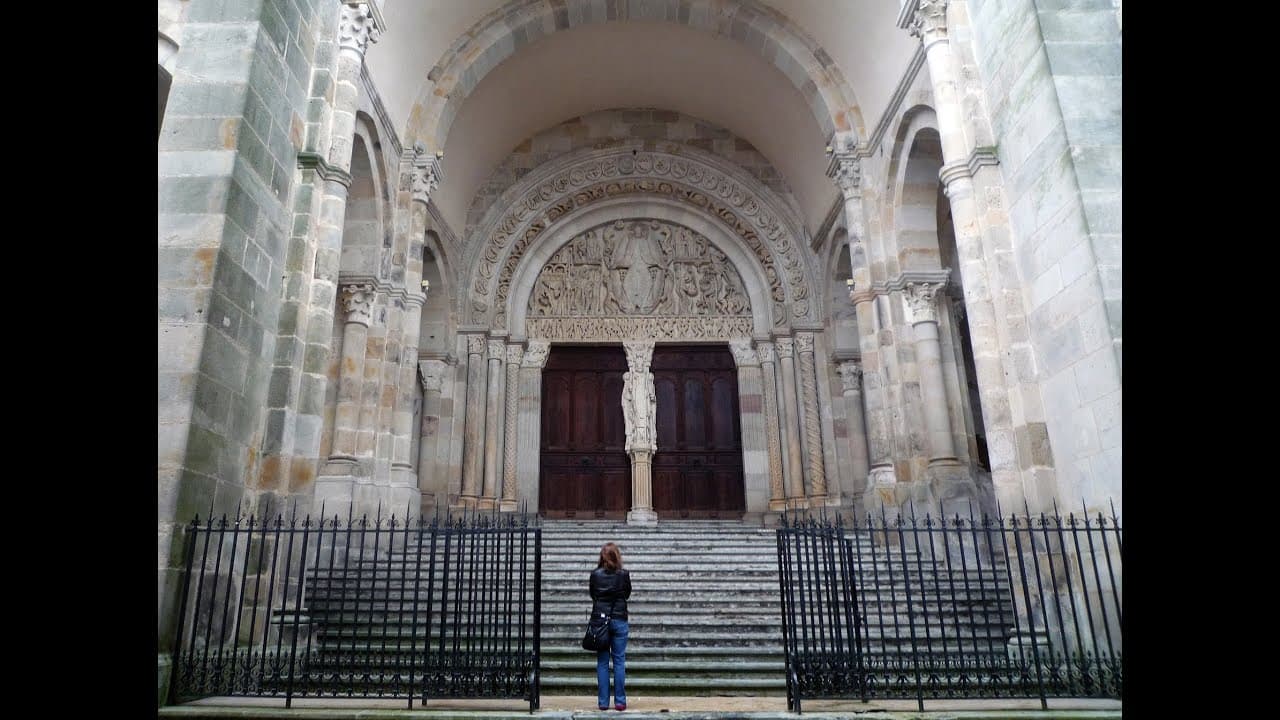
(piano playing) Dr. Zucker: The prospect of spending an eternity in Hell is terrifying even in the abstract, but to be confronted with images that depict this must have really scared the medieval mind. Dr. Harris: We're looking up at the doorway of the Cathedral of Autun which represents, I think, the most terrifying image of The Last Judge... Read More
Key Insights
- The Last Judgment Tympanum at the Cathedral of St. Lazare in Autun is one of the most terrifying depictions of the damned in Hell in art history, reflecting medieval fears of eternal damnation.
- This monumental sculpture is among the first of its kind since the fall of Ancient Rome, marking a revival of large-scale sculpture in the Medieval period due to economic and political stabilization.
- The cathedral was built to house relics of St. Lazarus, reflecting the importance of relics in medieval spirituality and their role as economic engines attracting pilgrims.
- The sculpture features Christ as the central, largest figure, depicted in an elongated, linear style, symbolizing his divine authority and judgment.
- The tympanum illustrates a clear division between the blessed and the damned, with Christ's right side showing Heaven and the left depicting Hell, emphasizing the moral choices of the faithful.
- The weighing of souls by St. Michael and the presence of demons trying to tip the scales portray a literal and dramatic representation of moral judgment.
- The expressive figures of the damned, with their contorted bodies and terrified expressions, highlight the horror and inevitability of their fate in Hell.
- The inscription 'Gislebertus made this' suggests a rare acknowledgment of the artist, although recent scholarship debates whether it refers to the sculptor or a Duke involved with the relics.
Install to Summarize YouTube Videos and Get Transcripts
Explore YouTube Video Summarizer or Get YouTube Transcript Extractor
Questions & Answers
Q: What is the significance of the Last Judgment Tympanum at Autun?
The Last Judgment Tympanum at Autun is significant as it represents one of the most terrifying depictions of the damned in Hell in art history. Created during a time of economic and political stabilization, it marks a revival of monumental sculpture in the Medieval period and reflects the spiritual and economic importance of relics.
Q: How does the sculpture depict Christ and his role in the Last Judgment?
In the sculpture, Christ is depicted as the central and largest figure, symbolizing his divine authority and role in the Last Judgment. His elongated and linear form emphasizes his otherworldliness, while his position in the center, with the blessed on his right and the damned on his left, underscores his role as the ultimate judge of humanity.
Q: What role do relics play in the context of the Cathedral of St. Lazare?
Relics play a crucial role in the context of the Cathedral of St. Lazare, as the church was specifically built to house the relics of St. Lazarus. These relics were believed to have spiritual powers, such as healing the sick and offering blessings, and served as economic engines by attracting pilgrims, boosting the local economy.
Q: How is the weighing of souls represented in the tympanum?
The weighing of souls is represented by the figure of St. Michael, who is depicted weighing souls on a scale. A demon attempts to tip the scales in favor of the damned, illustrating the moral gravity of the judgment process and the struggle between good and evil. This literal representation emphasizes the importance of moral choices in determining one's fate.
Q: What is the role of demons in the sculpture?
Demons play a significant role in the sculpture, depicted with gaping mouths and claws, appearing ravenous for souls. They are shown attempting to influence the weighing of souls and dragging the damned into Hell, contributing to the terrifying imagery and highlighting the consequences of moral failings, reinforcing the medieval fear of eternal damnation.
Q: What does the inscription 'Gislebertus made this' signify?
The inscription 'Gislebertus made this' is unusual for medieval art, as it suggests a rare acknowledgment of the artist. Traditionally, artists were seen as craftsmen rather than individual geniuses. However, recent scholarship debates whether the inscription refers to the sculptor or a Duke associated with the relics, complicating its interpretation.
Q: How does the tympanum serve as a 'sermon in stone' for the illiterate faithful?
The tympanum serves as a 'sermon in stone' by visually conveying the narrative of the Last Judgment to the illiterate faithful. The detailed imagery of Christ, the blessed, and the damned offers a clear moral lesson, educating viewers about the consequences of their actions and the importance of spiritual devotion, effectively communicating religious teachings without words.
Q: What new insights have recent scholarship provided about the tympanum?
Recent scholarship has provided new insights by questioning the traditional interpretation of the inscription 'Gislebertus made this.' It suggests that Gislebertus may not be the sculptor's name but rather a Duke associated with the relics, offering a different perspective on the historical context and challenging our understanding of authorship in medieval art.
Summary & Key Takeaways
-
The Last Judgment Tympanum at Autun Cathedral is a monumental medieval sculpture depicting Heaven and Hell, reflecting the era's spiritual and economic significance of relics. Christ is central, with the blessed on his right and the damned on his left, emphasizing the moral choices of the faithful.
-
The sculpture, one of the first since Ancient Rome, illustrates the weighing of souls by St. Michael, with demons attempting to influence the outcome. The expressive figures of the damned highlight the horror of eternal damnation, a vivid representation of medieval fears.
-
An inscription suggests the artist's identity, a rare acknowledgment in medieval art, though recent scholarship debates its accuracy. The tympanum's powerful imagery serves as a 'sermon in stone,' educating the illiterate faithful about the Last Judgment.
Read in Other Languages (beta)
Share This Summary 📚
Summarize YouTube Videos and Get Video Transcripts with 1-Click
Try YouTube Summary with ChatGPT & Claude or YouTube Transcript Generator
Explore More Summaries from Smarthistory 📚


Summarize YouTube Videos and Get Video Transcripts with 1-Click
Try YouTube Summary with ChatGPT & Claude or YouTube Transcript Generator