The Birth of Artificial Intelligence (How The Field Of AI Came To Be)
TL;DR
From ancient origins to modern developments, AI's journey is explored, highlighting key milestones and challenges.
Transcript
This video is brought to you in thanks to Brilliant, a problem-solving website that teaches you skills essential to have in this age of automation. In the last video in this series, we discussed the ancient origins of artificial intelligence progressing forward to the beginnings of the development of modern computing-based artificial intelligence, ... Read More
Key Insights
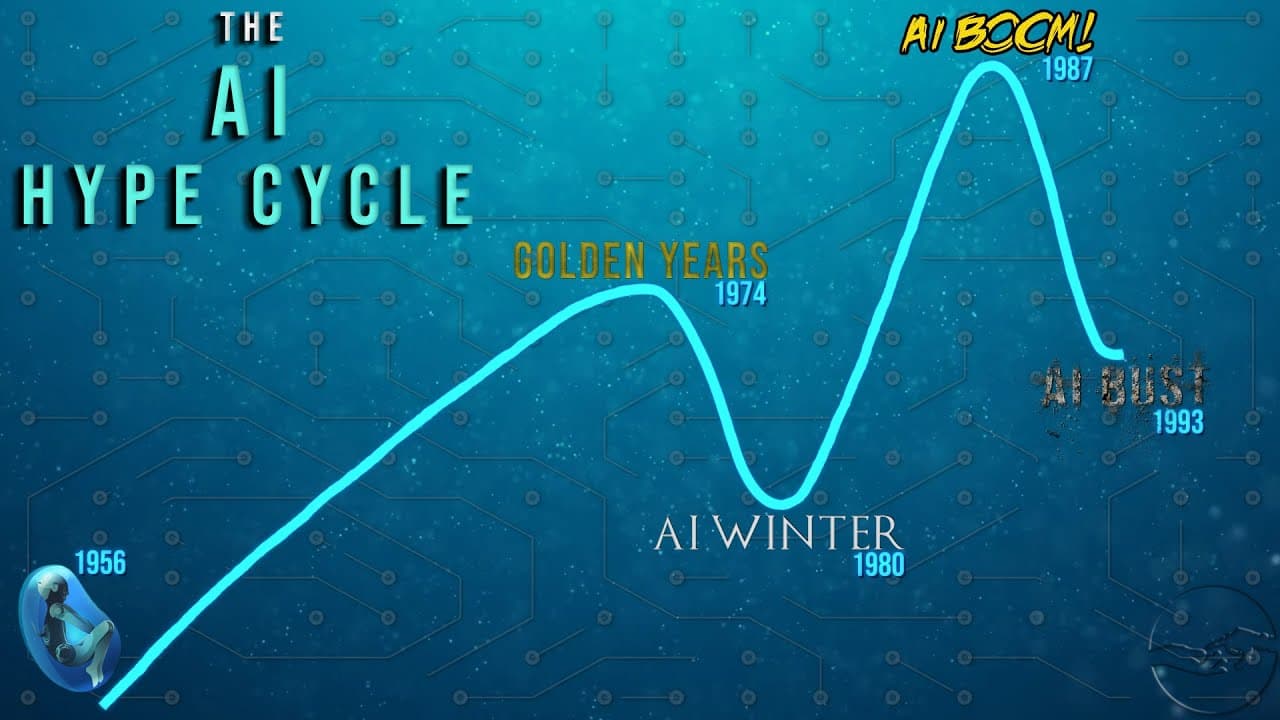
- 🥳 The official birth of modern AI dates back to the 1956 Dartmouth summer research project.
- 🤕 The golden age of AI saw significant developments in computing and AI algorithms.
- ❄️ Challenges like Moravec's Paradox and limited computing resources contributed to the first AI winter.
- 😀 Expert systems emerged as domain-specific AI solutions but faced scalability limitations.
- 🥺 The AI boom led to increased funding, optimism, and advancements in AI technologies.
- 🧑🏭 Factors like Black Monday and scalability issues contributed to the AI winter.
- 💋 The evolution of AI has been marked by cycles of hype and practical advancements.
Install to Summarize YouTube Videos and Get Transcripts
Explore YouTube Video Summarizer or Get YouTube Transcript Extractor
Questions & Answers
Q: What event marked the official birth of modern artificial intelligence?
The 1956 Dartmouth summer research project on artificial intelligence, organized by John McCarthy, set the foundation for modern AI development, with key figures like Marvin Minsky and Claude Shannon participating.
Q: What significant challenges did AI researchers face during the golden age of artificial intelligence?
Challenges included defining the field of computer science, limited computational power and data, Moravec's Paradox, limitations of connectionism, and evolving definitions of AI, contributing to the first AI winter.
Q: What role did expert systems play in the development of AI during the AI boom?
Expert systems, specialized in domain-specific tasks, gained popularity but faced limitations in scalability and flexibility, leading to a decline in their value proposition and funding during the AI winter.
Q: How did the hype around artificial intelligence impact funding and research during the AI boom and bust?
Excessive promises and unmet expectations led to reduced interest and funding in AI, exacerbated by economic factors like Black Monday in 1987, causing a shift towards projects with immediate results.
Summary & Key Takeaways
-
Ancient origins to modern developments in AI explored.
-
1956 Dartmouth conference marks official birth of modern AI.
-
Challenges and advancements in AI culminate in a cycle of hype and winter.
Read in Other Languages (beta)
Share This Summary 📚
Summarize YouTube Videos and Get Video Transcripts with 1-Click
Try YouTube Summary with ChatGPT & Claude or YouTube Transcript Generator
Explore More Summaries from Futurology — An Optimistic Future 📚

Summarize YouTube Videos and Get Video Transcripts with 1-Click
Try YouTube Summary with ChatGPT & Claude or YouTube Transcript Generator