Why Was the Roman Empire's Economy So Weak?
TL;DR
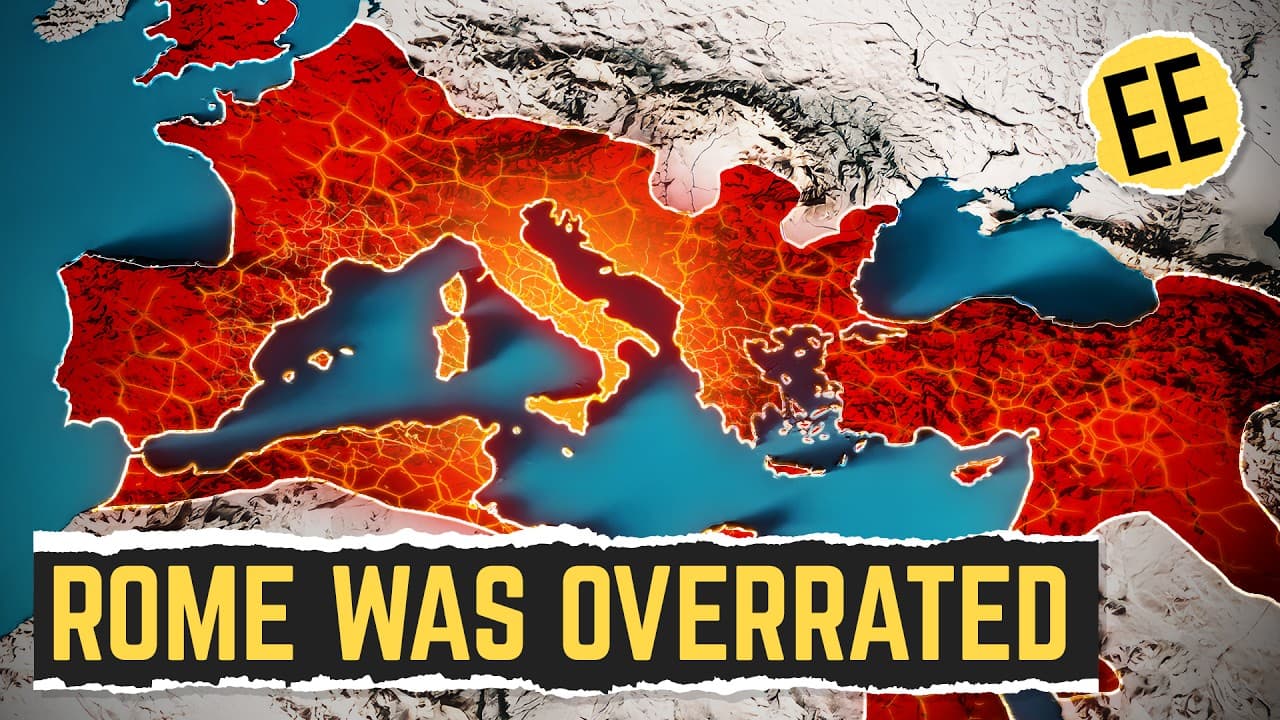
The Roman Empire's economy was surprisingly weak by modern standards, with a GDP per capita comparable to some of the poorest countries today. Despite its vast territory and historical significance, it remained primarily agrarian with limited industrial development. The lack of capital and technology hindered economic growth, making it difficult for Rome to achieve the economic prosperity seen in later centuries.
Transcript
So apparently a lot of people constantly think of Rome, and by the numbers alone it's hard to see why. Rome was not the largest empire to ever exist, it also wasn't the oldest, longest lasting, most globally dominant, or even the most innovative. Even still the influence of this loosely defined region and time period is still felt in our own modern... Read More
Key Insights
- The Roman Empire's GDP per capita was estimated at $1000-1277 in today's money, indicating a poor economy.
- Rome's economy was primarily agrarian, with limited industrial development and technological advancement.
- Most Romans lived in absolute poverty, with wealth determined largely by agricultural success.
- The Roman Empire lacked capital, which limited the productivity of its labor force.
- Despite its historical significance, Rome's economic output was small compared to modern standards.
- The Roman Empire's economy was comparable in size to modern countries like Uganda or Bolivia.
- Rome's longevity was marked by political instability and reliance on agricultural output.
- Modern economies benefit from technological advancements that Rome lacked, contributing to higher living standards today.
Install to Summarize YouTube Videos and Get Transcripts
Explore YouTube Video Summarizer or Get YouTube Transcript Extractor
Questions & Answers
Q: How did the Roman Empire's economy compare to modern economies?
The Roman Empire's economy was significantly weaker than modern economies, with a GDP per capita estimated at $1000-1277 in today's money. This places it on par with some of the poorest countries today. The economy was primarily agrarian, lacking the industrial development and technological advancements that drive modern economic growth.
Q: Why was the Roman Empire's economy considered weak?
The Roman Empire's economy was considered weak due to its reliance on agriculture, limited industrial development, and lack of technological advancement. Most of the population lived in poverty, with wealth heavily dependent on agricultural success. The empire lacked capital, which restricted productivity and economic growth.
Q: What factors limited the Roman Empire's economic growth?
The Roman Empire's economic growth was limited by a lack of capital and technology. The economy was primarily agrarian, with most resources dedicated to farming. This restricted the development of industry and innovation, which are crucial for economic growth. Additionally, political instability and reliance on agricultural output further hindered economic progress.
Q: How did the Roman Empire's economic output compare to modern countries?
The Roman Empire's economic output was small compared to modern standards, with estimates suggesting it was comparable to countries like Uganda or Bolivia today. Despite its vast territory and historical significance, the empire's GDP was limited by its agrarian economy and lack of industrial development.
Q: What role did agriculture play in the Roman Empire's economy?
Agriculture played a central role in the Roman Empire's economy, with most of the population engaged in farming. The economy was heavily reliant on agricultural output, and wealth was largely determined by the success of the harvest. This agrarian focus limited industrial development and technological advancement, contributing to the empire's economic weakness.
Q: How did the Roman Empire's lack of capital affect its economy?
The Roman Empire's lack of capital significantly affected its economy by limiting productivity and economic growth. Without sufficient tools and technology, most of the population was engaged in agriculture, leaving little room for industrial development. This lack of capital prevented the economy from achieving the prosperity seen in later centuries.
Q: What lessons can modern economists learn from the Roman Empire's economy?
Modern economists can learn about the importance of technological advancement and capital in driving economic growth from the Roman Empire's economy. Despite its vast territory, the Roman Empire's reliance on agriculture and limited industrial development hindered economic progress. Understanding these limitations can help economists appreciate the role of innovation in modern economies.
Q: Why didn't the Roman Empire develop more advanced technology?
The Roman Empire did not develop more advanced technology due to a lack of incentive and reliance on manual labor, including slavery. With abundant manpower, early technological innovations like steam engines were seen as unnecessary. Additionally, the absence of a pressing need for labor-saving devices and the lack of capital investment hindered technological advancement.
Summary & Key Takeaways
-
The Roman Empire's economy was surprisingly weak, with a GDP per capita similar to today's poorest countries. Despite its historical significance, Rome was primarily agrarian with limited industrial development and technology. This lack of capital hindered economic growth, making it difficult for Rome to achieve prosperity.
-
Rome's economy relied heavily on agriculture, with most citizens living in poverty. The empire's economic output was small by modern standards, comparable to countries like Uganda or Bolivia. Political instability and reliance on agricultural success marked Rome's economic history.
-
Modern economies benefit from technological advancements that Rome lacked, contributing to higher living standards today. The Roman Empire's lack of capital and technology limited its ability to produce wealth, despite its vast territory and historical influence.
Read in Other Languages (beta)
Share This Summary 📚
Summarize YouTube Videos and Get Video Transcripts with 1-Click
Try YouTube Summary with ChatGPT & Claude or YouTube Transcript Generator
Explore More Summaries from Economics Explained 📚






Summarize YouTube Videos and Get Video Transcripts with 1-Click
Try YouTube Summary with ChatGPT & Claude or YouTube Transcript Generator