5 Ways People Manipulate You (And How to Resist Them)
TL;DR
Learn about five common persuasion tactics and how to defend against them to make more informed decisions.
Transcript
- [Announcer] This video is sponsored by CuriosityStream and Nebula. - So in the movie, "Ratatouille" there's this scene where the villain, Chef Skinner, tries to pry Linguini for information about ze rat and to do it, he uses one of the oldest and most obvious persuasion tactics in the book and he gets him drunk, and unfortunately, for Chef Skinne... Read More
Key Insights
- 🫥 Commitment and consistency exploit our natural tendency to act in line with our past actions or statements.
- 💝 Reciprocity affects our decision-making by making us feel indebted to someone who has done us a favor or given us a gift.
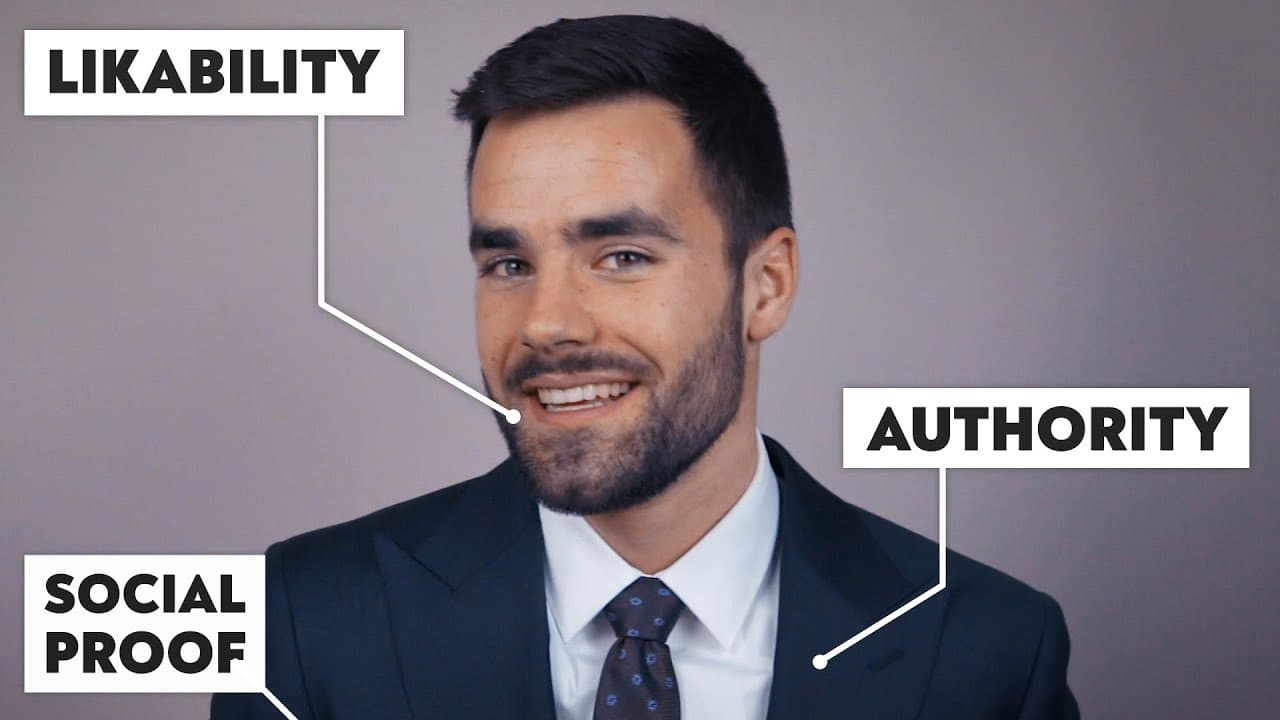
- ❓ Social proof relies on our inclination to follow the actions or opinions of others, but it can be manipulated through fake testimonials or biased representations.
- 🤬 Authority figures can easily manipulate our decision-making by leveraging symbols of authority rather than substance.
- 🉐 Likability is used to establish rapport and make us more likely to comply with requests, but it can also be manipulated to gain trust and influence decisions.
- 💄 Recognizing and being skeptical of these persuasion tactics is crucial to making informed decisions.
- 💝 Understanding the motives behind offers, gifts, testimonials, authority, and likability can help us defend against manipulation.
Install to Summarize YouTube Videos and Get Transcripts
Explore YouTube Video Summarizer or Get YouTube Transcript Extractor
Questions & Answers
Q: How does commitment and consistency influence our decision-making?
Commitment and consistency exploit our natural desire to act consistently with our past actions and statements. By making small commitments or public statements, we are more likely to align our future decisions accordingly.
Q: How can we defend against the reciprocity tactic?
Recognize when favors or gifts are being used to invoke reciprocity. Be aware that small gifts are often used to elicit larger commitments or purchases. Consider the motive behind the offer and be mindful of making decisions solely based on reciprocity.
Q: What is social proof and how can it be manipulated?
Social proof is the tendency to look to others' actions or opinions to guide our own decisions. It can be manipulated through fake testimonials, paid actors, or biased representations. Seek dissenting or unbiased opinions and consider the incentive behind social proof.
Q: How do authority figures influence our decision-making?
We are conditioned to trust figures of authority, often placing more importance on symbols of authority rather than substance. It is important to recognize when authority is being exploited and to question the motives behind their influence.
Q: What role does likability play in persuasion?
Likability is used to build rapport and make people more likely to comply with requests. However, it can also be manipulated to gain trust and influence decisions. Be cautious of sudden likability and consider the motives behind someone's friendliness.
Summary & Key Takeaways
-
The video explores five common persuasion tactics: commitment and consistency, reciprocity, social proof, authority, and liking.
-
These tactics are often used to manipulate people's decision-making by exploiting their natural tendencies.
-
To defend against these tactics, it is important to recognize when they are being used, be skeptical of offers and favors, consider alternative perspectives, and evaluate the substance behind the authority or likability.
Read in Other Languages (beta)
Share This Summary 📚
Summarize YouTube Videos and Get Video Transcripts with 1-Click
Try YouTube Summary with ChatGPT & Claude or YouTube Transcript Generator
Explore More Summaries from Thomas Frank 📚





Summarize YouTube Videos and Get Video Transcripts with 1-Click
Try YouTube Summary with ChatGPT & Claude or YouTube Transcript Generator