What Is a Zener Diode and How Does It Work?
TL;DR
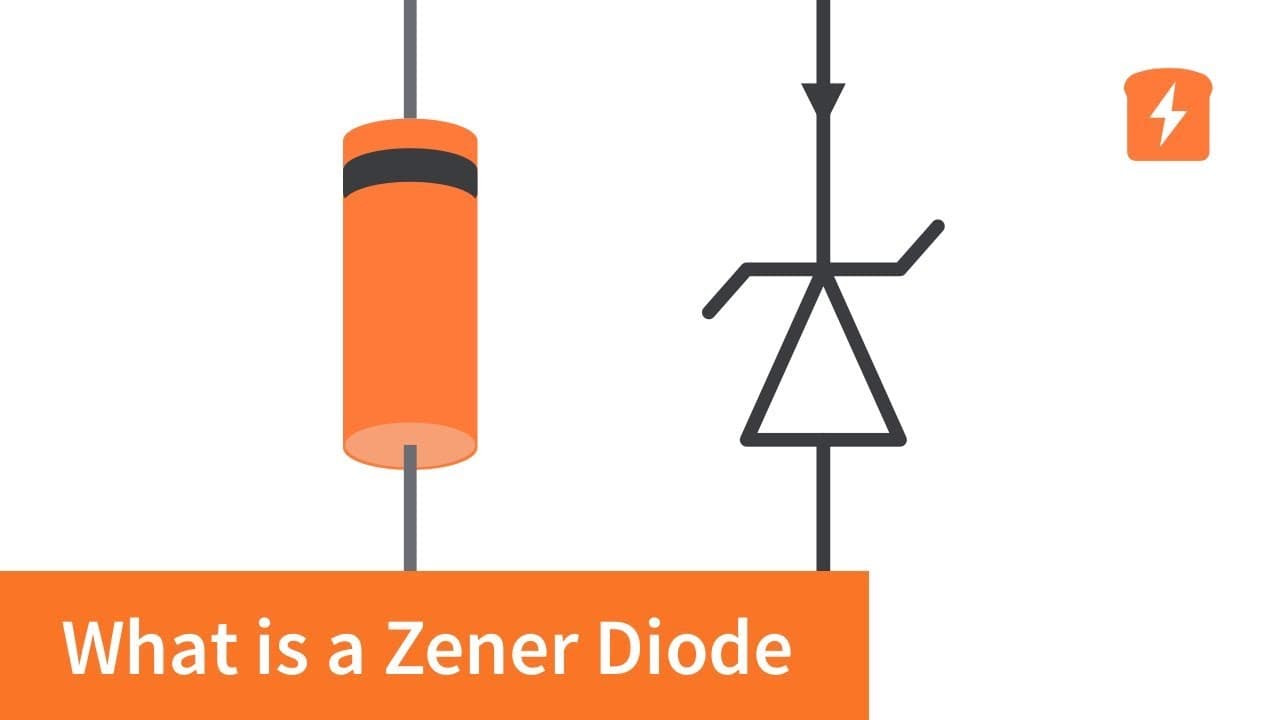
A Zener diode allows current to flow in both forward and reverse directions, designed to operate in the breakdown region. It maintains a constant voltage across its terminals, acting as a voltage regulator, and can experience two types of reverse breakdown: avalanche and Zener breakdown.
Transcript
So, what is a Zener diode? And how is it different from a typical diode? Or have you ever wondered why we operate a Zener in reverse bias unlike normal diodes that is operated in forward bias? This is because Zener diodes are meant to ‘break down’. Most of us are familiar with general-purpose and rectifier diodes. However, there are several other t... Read More
Key Insights
- 👻 Zener diodes allow current to flow in both forward and reverse directions.
- 🧑🏭 They are designed to operate in the breakdown region and act as voltage regulators.
- ◀️ Zener diodes experience two types of reverse breakdown: avalanche and Zener breakdown.
- 🧡 The breakdown voltage of Zener diodes can range from less than 1V to over 250V.
- 🧎 The reverse current in Zener diodes increases until it reaches the Zener knee current, causing the breakdown effect.
- ❓ Zener diodes have internal resistance known as Zener impedance.
- 🙂 The breakdown voltage of Zener diodes remains relatively constant, with slight increases as the Zener current increases.
Install to Summarize YouTube Videos and Get Transcripts
Explore YouTube Video Summarizer or Get YouTube Transcript Extractor
Questions & Answers
Q: How are Zener diodes different from typical diodes?
Zener diodes can conduct current in both the forward and reverse directions, while typical diodes only allow current in the forward direction.
Q: What is the purpose of operating Zener diodes in the breakdown region?
By operating in the breakdown region, Zener diodes act as voltage regulators, maintaining a constant voltage across their terminals.
Q: What is the difference between avalanche breakdown and Zener breakdown in Zener diodes?
Avalanche breakdown occurs at high reverse voltages in both rectifier and Zener diodes, while Zener breakdown occurs at low reverse voltages specifically in Zener diodes.
Q: What are the specifications of Zener diodes?
Zener diodes are commercially available with breakdown voltages ranging from less than 1V to over 250V, with tolerances ranging from 1% to 20%.
Key Insights:
- Zener diodes allow current to flow in both forward and reverse directions.
- They are designed to operate in the breakdown region and act as voltage regulators.
- Zener diodes experience two types of reverse breakdown: avalanche and Zener breakdown.
- The breakdown voltage of Zener diodes can range from less than 1V to over 250V.
- The reverse current in Zener diodes increases until it reaches the Zener knee current, causing the breakdown effect.
- Zener diodes have internal resistance known as Zener impedance.
- The breakdown voltage of Zener diodes remains relatively constant, with slight increases as the Zener current increases.
- Understanding the specifications of Zener diodes is important for achieving desired performance in practical applications.
Summary & Key Takeaways
-
Zener diodes are different from typical diodes as they can conduct current in both the forward and reverse directions.
-
They are designed to operate in the breakdown region and act as voltage regulators, maintaining a constant voltage across their terminals.
-
Zener diodes can experience two types of reverse breakdown: avalanche breakdown and Zener breakdown.
Read in Other Languages (beta)
Share This Summary 📚
Summarize YouTube Videos and Get Video Transcripts with 1-Click
Try YouTube Summary with ChatGPT & Claude or YouTube Transcript Generator
Explore More Summaries from CircuitBread 📚

Summarize YouTube Videos and Get Video Transcripts with 1-Click
Try YouTube Summary with ChatGPT & Claude or YouTube Transcript Generator