Scaffolding Discussion Skills With a Socratic Circle
TL;DR
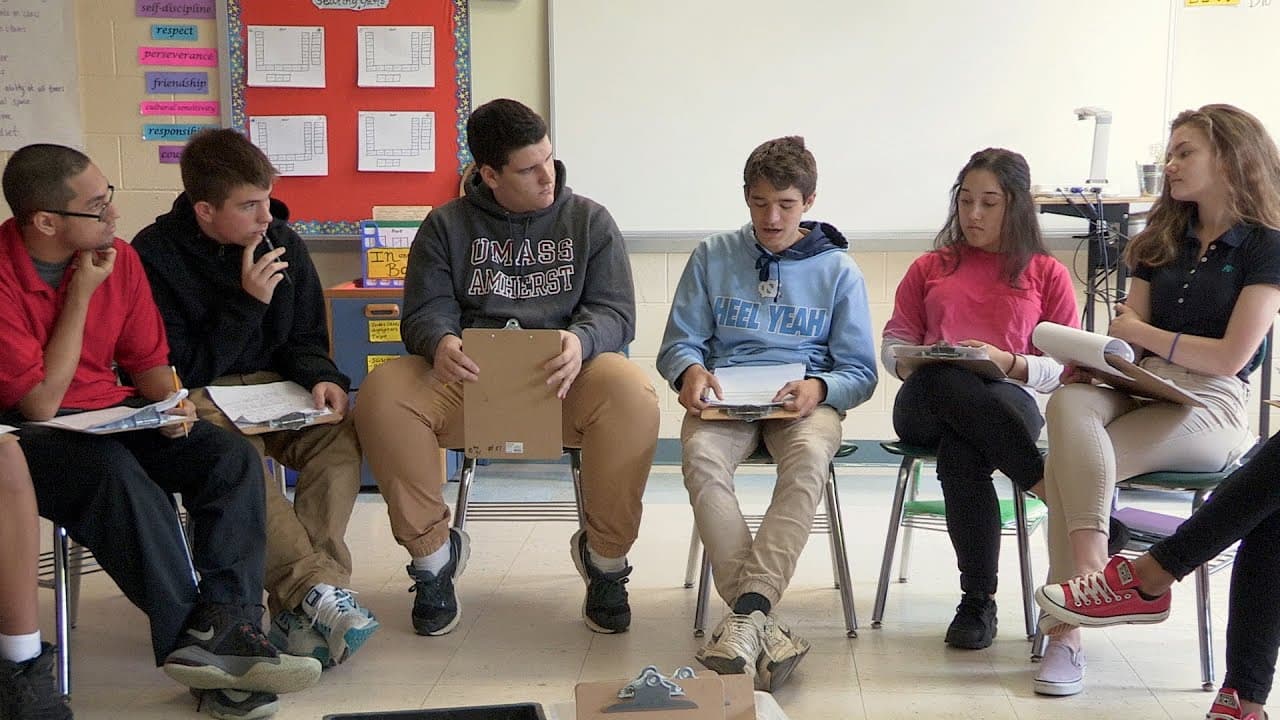
Students engage in a respectful and thoughtful discussion about whether Confederate monuments should be removed, using evidence and scaffolding to deepen understanding.
Transcript
Alison: I can discuss whether or not confederate monuments should be removed by listening to my peers, and using evidence. >>Linda: By talking and expressing oneself, we learn more deeply. >>One thing we know from the science of learning is that complex instruction needs to be scaffolded, that students need to be enabled to take each step along t... Read More
Key Insights
- 🧑🎓 Scaffolded instruction supports students in engaging with complex topics and having respectful discussions.
- 👻 Sourcing various texts allows students to bring evidence to discussions and increases accessibility for all learners.
- 😑 In a safe space, students can freely express their opinions and engage in healthy debates.
- 🥺 Understanding different perspectives leads to a deeper understanding of history.
- 🦻 Reflection aids students in carrying more learning from the discussion experience.
- ❓ Evidence is crucial in supporting arguments and critically analyzing viewpoints.
- 👻 Participating through tracking and reporting out allows students to feel comfortable engaging in the discussion.
Install to Summarize YouTube Videos and Get Transcripts
Explore YouTube Video Summarizer or Get YouTube Transcript Extractor
Questions & Answers
Q: How does scaffolding help students engage in complex discussions?
Scaffolding, such as sourcing various texts for students to read, enables them to understand and discuss complex topics by providing accessible evidence and points of view.
Q: How does a safe space impact student participation and learning?
A safe space fosters student engagement and encourages them to share their perspectives and take risks in discussions, leading to a deeper understanding of the topic at hand.
Q: What role does evidence play in the classroom discussion?
Evidence is essential in the discussion as it allows students to support their arguments, critically analyze different viewpoints, and develop a more nuanced understanding of the issue.
Q: How does reflection contribute to student learning?
Reflection helps students consolidate their learning and think metacognitively about how their thinking has changed or remained the same after engaging in the discussion, promoting deeper understanding and growth.
Summary & Key Takeaways
-
In a classroom, students engage in a six-week unit on the Civil War, creating a safe space to discuss racial and justice issues.
-
The teacher sources fifteen different articles for students to read, allowing them to bring evidence and accessible points to the discussion.
-
Healthy debates and respectful conversations lead to a deeper understanding of history and the importance of perspective.
Read in Other Languages (beta)
Share This Summary 📚
Summarize YouTube Videos and Get Video Transcripts with 1-Click
Try YouTube Summary with ChatGPT & Claude or YouTube Transcript Generator
Explore More Summaries from Edutopia 📚



Summarize YouTube Videos and Get Video Transcripts with 1-Click
Try YouTube Summary with ChatGPT & Claude or YouTube Transcript Generator