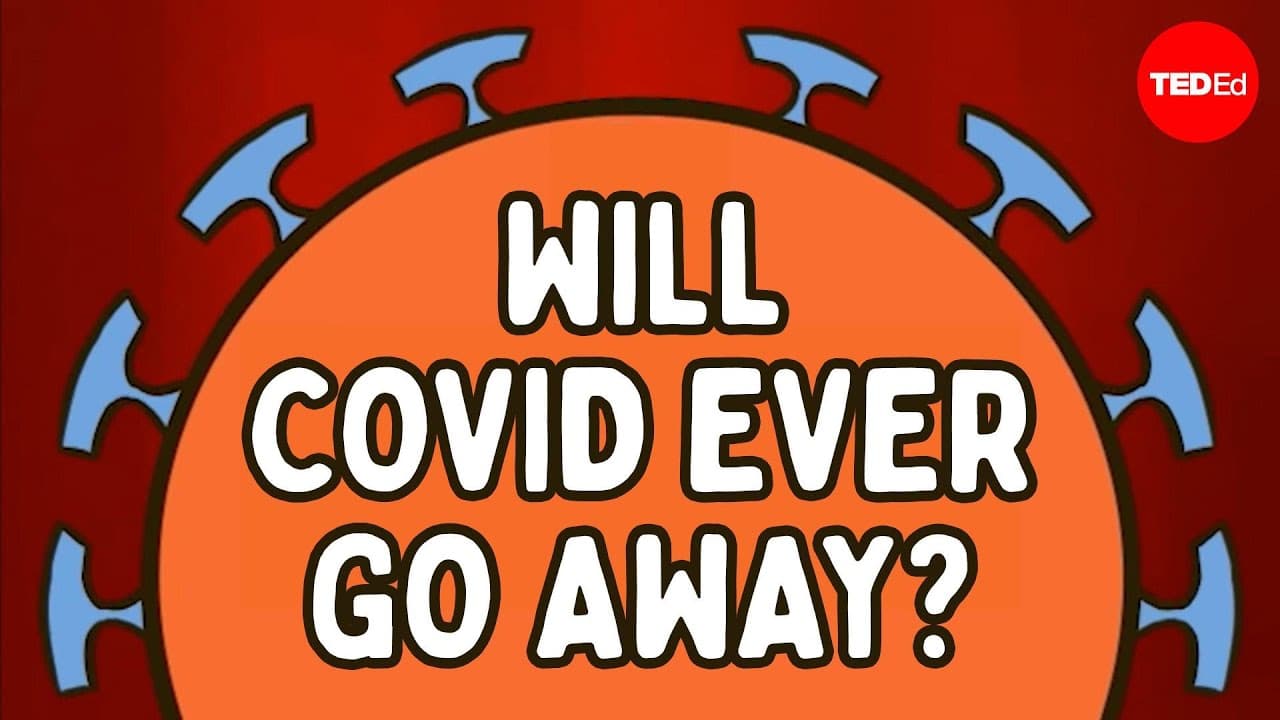
3 ways to end a virus
TL;DR
Different virus variants compete for dominance, with factors like transmission rate and host availability impacting extinction or survival.
Transcript
It’s spring 2021. The Alpha variant of the coronavirus has spread rapidly, becoming the dominant variant worldwide. But another, more transmissible variant is about to appear— Delta. What happens when two variants clash? Let’s do a thought experiment. Suppose that the variants reach a hypothetical isolated city of 1 million people who are complet... Read More
Key Insights
- ☠️ Transmission rates play a crucial role in the spread and potential extinction of virus variants.
- 👻 Viruses can go extinct by running out of hosts, causing severe diseases that kill hosts, or being outcompeted by other strains.
- 🎮 Effective vaccination campaigns have been successful in driving certain viruses to extinction, showcasing the importance of vaccination in controlling infectious diseases.
- 🙈 For a virus to go extinct, it needs to be outcompeted by another virus or strain, as seen in the case of the Delta variant driving the Alpha variant towards extinction.
- 👻 The evolution of viruses, host availability, and ecological niches all play a role in the dynamics of virus extinction or survival.
- 🪛 SARS-CoV-2 could potentially be driven to extinction through vaccination efforts, competitive interactions with other variants, or the invention of a universal vaccine.
- 👻 Factors like host availability, disease severity, and vaccination success all contribute to the potential extinction of viruses.
Install to Summarize YouTube Videos and Get Transcripts
Explore YouTube Video Summarizer or Get YouTube Transcript Extractor
Questions & Answers
Q: How does the transmission rate of different virus variants impact their spread and potential extinction?
The transmission rate of a virus variant, like Delta transmitting to 7.5 close contacts compared to Alpha's 5, significantly affects its spread and potential to drive the other variant towards extinction.
Q: What are the three main ways that a virus can go extinct?
A virus can go extinct by running out of hosts, causing severe diseases that kill hosts to the point of extinction, or being outcompeted by another virus or strain, as seen with the Delta and Alpha variants.
Q: How have effective vaccination campaigns contributed to the extinction of certain viruses?
Vaccination campaigns against viruses like smallpox and rinderpest have been successful in essentially driving these viruses to extinction, showcasing the role of vaccines in eradicating infectious diseases.
Q: Is there a possibility for SARS-CoV-2 to go extinct in the future?
SARS-CoV-2, the virus responsible for COVID-19, could potentially go extinct through various scenarios, including vaccination efforts, competition with other variants, or the development of a universal vaccine that prevents all infections.
Summary & Key Takeaways
-
Two virus variants, Alpha and Delta, compete in a hypothetical scenario, showing how a more transmissible variant can drive the other towards extinction.
-
Viruses can go extinct by running out of hosts, causing severe diseases that kill hosts, or being outcompeted by another virus or strain.
-
Effective vaccination campaigns, like those against smallpox and rinderpest, have led to the extinction of some viruses.
Read in Other Languages (beta)
Share This Summary 📚
Summarize YouTube Videos and Get Video Transcripts with 1-Click
Try YouTube Summary with ChatGPT & Claude or YouTube Transcript Generator
Explore More Summaries from TED-Ed 📚




Summarize YouTube Videos and Get Video Transcripts with 1-Click
Try YouTube Summary with ChatGPT & Claude or YouTube Transcript Generator